Tupac’s Murder Trial Finally Begins After 30 Years Of Mystery
Did Keffe D Talk Himself Into Prison Over Tupac’s Murder?
Duane “Keffe D” Davis denies orchestrating the 1996 drive-by shooting—but his own interviews, memoir and alleged admissions could now decide one of hip-hop’s most infamous cases.
For almost 30 years, the murder of Tupac Shakur has existed somewhere between a criminal cold case and an American legend.
There were rivalries, allegations, documentaries, books and countless theories—but no trial.
That silence is finally being broken.
Jury selection has begun in Las Vegas for Duane “Keffe D” Davis, the only person ever charged over the drive-by shooting that killed one of the most influential artists in hip-hop history.
Davis, 63, has pleaded not guilty to murder with the use of a deadly weapon. Prosecutors allege that he organised the retaliatory attack and supplied the gun used to shoot Shakur.
The trial could last between four and six weeks and feature dozens of witnesses. Yet even if jurors reach a verdict, one haunting question may remain unanswered:
Who actually pulled the trigger?
The Night Tupac Was Shot
On 7 September 1996, Tupac Shakur attended the heavyweight fight between Mike Tyson and Bruce Seldon at the MGM Grand in Las Vegas.
After the fight, Shakur and members of his entourage became involved in an assault on Orlando “Baby Lane” Anderson, Davis’s nephew and an alleged member of the South Side Compton Crips.
Prosecutors say the casino confrontation triggered an improvised revenge operation.
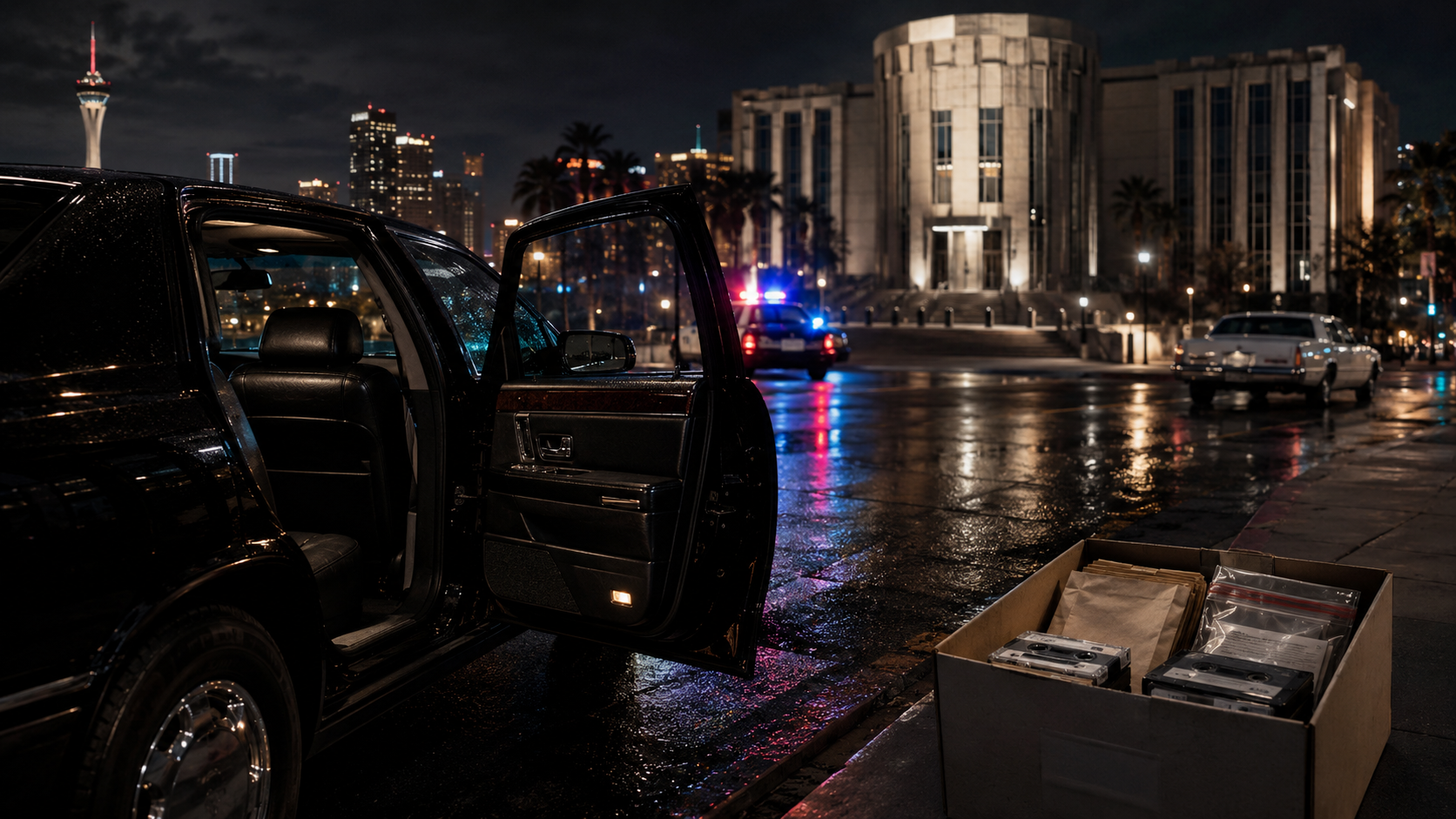
Shakur later left the MGM Grand in a black BMW driven by Death Row Records co-founder Marion “Suge” Knight. They were travelling towards a nightclub when a white Cadillac pulled alongside them at a red light near the Las Vegas Strip.
Gunfire erupted.
Shakur was struck four times. Knight suffered a minor injury after a bullet fragment grazed his head.
The 25-year-old rapper died in hospital six days later.
Davis, Anderson, Deandrae “Freaky” Smith and Terry “Bubble Up” Brown were allegedly inside the Cadillac. Davis is now the only one of those four men still alive.
None of the others was ever charged over Shakur’s death.
Prosecutors Say Davis Was The “Shot Caller”
The prosecution is not claiming Davis personally fired the fatal shots.
Instead, it alleges that he was the “shot caller” who led the group seeking revenge, obtained a handgun and passed it into the rear of the Cadillac before the shooting.
That distinction is crucial.
Under Nevada law, a person can be convicted of murder for knowingly helping to organise or carry out a killing—even if somebody else fired the weapon.
Davis therefore cannot necessarily defeat the charge simply by arguing that he was not the gunman.
Prosecutors must convince the jury that he knowingly participated in the operation that resulted in Shakur’s death.
Davis denies the charge.
Did Davis Talk Himself Into A Murder Trial?
The most extraordinary part of the case is how it was revived.
Police considered Davis a suspect for years but reportedly lacked enough admissible evidence to charge him. Investigators say the breakthrough followed his increasingly public descriptions of the shooting.
Davis discussed the killing during interviews and in his 2019 memoir, Compton Street Legend.
According to investigators, Davis acknowledged being in the front passenger seat of the Cadillac and obtaining the weapon before passing it into the back.
The prosecution has also been permitted to use a recorded police interview Davis gave in 2008.
His lawyers argued that the interview was protected because Davis had spoken under an immunity arrangement. They also attempted to prevent prosecutors from using his memoir, arguing that it was fictionalised, commercially motivated and written with a co-author.
Judge Carli Kierny rejected those attempts.
The judge ruled that the interview could be admitted and concluded that Davis had publicly adopted the book as his own account. Those decisions give prosecutors access to the material at the heart of their case. Associated Press
The defence is expected to argue that Davis exaggerated or invented elements of the story to generate publicity and sell books.
The jury will effectively have to decide whether his words were genuine admissions—or profitable storytelling.
The Gunman May Never Be Identified
For years, Orlando Anderson was widely suspected of firing the shots.
Davis reportedly told investigators in 2008 that Anderson had attacked Shakur. However, evidence presented elsewhere in the case has suggested Smith might have fired because Anderson did not have a clear shot.
Anderson always denied involvement. He was killed in an unrelated gang shooting in 1998.
Smith and Brown have also died.
Neither Davis’s memoir nor the authorities have conclusively identified the gunman, meaning the trial could convict or acquit the alleged organiser without definitively resolving who shot Tupac.
That leaves the case with an unusual divide: the court may determine legal responsibility without solving every historical mystery surrounding the attack.
Will Suge Knight Testify?
Suge Knight is one of the most important surviving witnesses.
He was driving the BMW, witnessed the attack and survived it. He is currently serving a 28-year prison sentence for an unrelated voluntary manslaughter conviction.
Knight may be called as a witness, but he has publicly resisted becoming involved, telling ABC News: “Leave me out of it.”
Prosecutors are expected to call between 35 and 45 witnesses. Reported names include people connected to Shakur, Davis and the events immediately preceding the shooting.
Leonard Jefferson, who took what became the last known photograph of Shakur, is reportedly among those expected to appear. Former Las Vegas mayor Oscar Goodman and members of Shakur’s family have also appeared on the state’s witness list.
Sean “Diddy” Combs has repeatedly been pulled into wider theories surrounding the East Coast–West Coast conflict, but he is not reportedly listed as a witness and is not charged in connection with Shakur’s murder.
Why Did It Take Nearly 30 Years?
The passage of time creates enormous difficulties for both sides.
Memories fade. Evidence disappears. Witnesses die. Stories change as they are repeated across interviews, documentaries and books.
That could help the defence, which can attack the reliability of witnesses attempting to reconstruct a chaotic night three decades later.
But Davis’s public statements also give prosecutors something unusually powerful in a cold case: the defendant’s own words.
Police said the investigation was reinvigorated after Davis began speaking publicly about his alleged involvement. He was arrested in 2023 and has remained in custody while the case moved towards trial.
If convicted, Davis could spend the rest of his life in prison.
A Verdict Decades In The Making
Tupac Shakur was only 25 when he died, but his influence continued to expand long after his murder.
His killing became inseparable from the violence, commercial rivalry and mythology surrounding 1990s hip-hop. The shooting death of Christopher Wallace—The Notorious B.I.G.—six months later deepened that mythology and produced decades of speculation about whether the two murders were connected.
Wallace’s killing remains unsolved.
The Davis trial cannot settle every rumour that has accumulated since 1996. It may not identify the gunman, explain every alleged motive or reveal the full truth behind one of music’s darkest periods.
But for the first time, a jury will hear evidence and decide whether someone is criminally responsible for Tupac Shakur’s murder.
After nearly 30 years of theories, the case is finally entering a courtroom.
