Iran Says It Hit US-Linked Targets — And The Bigger Danger Is Now At Sea
Why Iran’s Retaliation Could Make The Gulf Crisis Harder To Control
Iran’s Retaliation Has Raised The Stakes
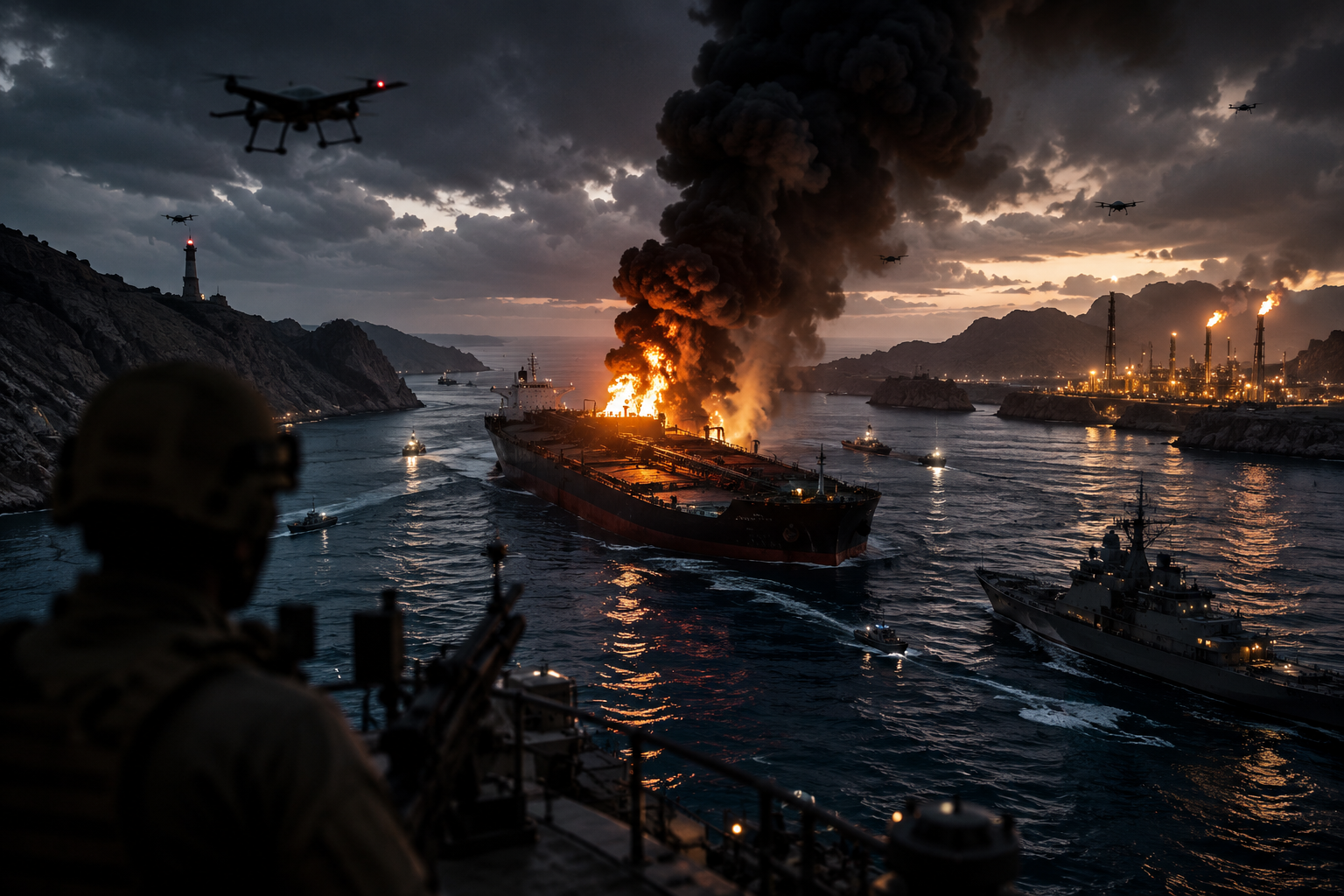
Iran says it has struck US-linked targets after American airstrikes hit Iranian military sites near the Strait of Hormuz, turning a fragile diplomatic pause into another test of power in the Gulf. The confirmed picture is still developing, but the known timeline is already dangerous: US forces carried out strikes after attacks on commercial shipping, Iran then claimed retaliation, and Bahrain reported a drone attack as regional governments warned that the violence was undermining efforts to de-escalate.
The reason this matters is not only that Iran and the United States are exchanging military pressure again. It is that the exchange is happening around the Strait of Hormuz, the narrow maritime corridor through which a large share of the world’s seaborne oil trade moves. When that corridor becomes part of a military argument, the story stops being local and starts becoming economic, political, and global.
The Strait Of Hormuz Makes This Bigger Than A Strike
The Strait of Hormuz is not just another stretch of water. It is a strategic choke point where geography gives Iran leverage far beyond its conventional military strength, and where any attack on shipping can instantly change the cost of energy, insurance, freight, and risk. That is why this moment connects directly to the wider pressure explored in Trump’s Switzerland Gamble Could Turn Iran From Crisis To Deal, where the real test was never only whether a diplomatic framework could be announced, but whether it could survive contact with force.
The latest escalation exposes that weakness. A deal or memorandum can create a political story, but ships, drones, radar sites, and coastal control create the real-world test. Once commercial vessels are hit and both sides claim justification for military action, diplomacy becomes less about signatures and more about whether either side can step back without looking weaker.
The US Wants Deterrence, Iran Wants Leverage
The American position is built around deterrence: strike back hard enough to show Iran that attacks on shipping or US-linked interests will carry a price. That is the logic of limited military response, especially when Washington wants to avoid a full war while still proving that the Gulf cannot be controlled by Iranian pressure. US officials have framed recent action as a response to threats against maritime security and commercial passage.
Iran’s logic is different. Tehran wants to show that it cannot be hit without consequence, and that any arrangement over the Strait of Hormuz must involve Iranian power. That creates the most dangerous kind of confrontation: one side is trying to restore deterrence, while the other is trying to prove that deterrence is no longer free.
The Shipping War Is The Hidden Economic Threat
The most immediate danger is military escalation, but the hidden cost is economic uncertainty. If shipping companies believe the Gulf is becoming too risky, the price of moving energy and goods can rise before any formal blockade exists. Insurance costs, rerouting decisions, naval escorts, and delayed cargo all become part of the pressure, even if politicians avoid using the word crisis.
This is why the situation echoes the earlier warning in Iran Warns Oil Could Hit $200 As Strait Of Hormuz Crisis Deepens. The point is not that $200 oil is inevitable. The point is that the market does not need certainty to react; it only needs enough fear that the world’s most important energy artery might become unreliable.
Trump’s Pressure Strategy Is Now Facing Its Hardest Test
For President Trump, the Iran strategy depends on a delicate balance: apply enough pressure to force concessions, but not so much that the confrontation breaks into a wider regional war. That is the theory behind hard-power diplomacy. It works only if the other side believes escalation will hurt more than compromise.
The problem is that Iran has its own domestic and regional incentives. A regime under pressure cannot easily appear passive after American strikes, especially when it has spent years presenting itself as resistant to US power. That is why each retaliation is not only a military move, but a status signal to allies, enemies, and domestic audiences.
The Fragile Deal Is Being Tested By Reality
Recent diplomatic efforts were supposed to reduce the risk of a wider conflict, but the latest exchange shows how thin those arrangements can be when the battlefield is still active. The core problem is not simply whether either side wants a wider war. It is whether each side believes limited escalation can be controlled. History suggests that limited escalation is often easiest to start and hardest to stop.
That danger is central to US And Iran Just Opened The World’s Most Dangerous 60-Day Clock, because deadlines and diplomatic frameworks only matter if they can survive repeated provocations. A ceasefire that is tested every few days is not stable. It is a pressure chamber waiting for one miscalculation.
Bahrain Changes The Political Meaning
Bahrain’s reported drone attack matters because Bahrain hosts the US Navy’s Fifth Fleet, making it more than a symbolic regional target. Even if the full details remain contested, the political implication is sharp: attacks near or involving US-linked infrastructure in Gulf states can pull American credibility, Gulf security, and regional alliance politics into the same moment.
That makes the crisis harder to contain. A strike at sea can be described as maritime security. A strike near a Gulf ally can become a test of American protection. Once allies start questioning whether Washington can keep the region safe, the crisis expands from Iran versus America into a broader question about who guarantees order in the Gulf.
The Real Question Is Who Controls The Chokepoint
Iran’s leverage is strongest when the world is reminded that the Strait of Hormuz is vulnerable. The United States’ leverage is strongest when it proves that the strait remains open despite Iranian pressure. That is the central contest now: not just who can strike harder, but who can convince global markets, regional allies, and commercial shipping that they control the risk.
This is why the latest retaliation cannot be treated as just another line in the Middle East conflict cycle. It has exposed the deeper struggle beneath the airstrikes: whether power in the Gulf belongs to the country with the geography, the superpower with the navy, or the markets that punish both when the illusion of control breaks. The danger now is not simply that Iran and America may strike again. It is that the world’s most sensitive energy corridor is becoming the place where both sides feel they cannot afford to blink.
