

Iran Threatens To Strike US Forces As Strait Of Hormuz Crisis Pushes World To The Brink
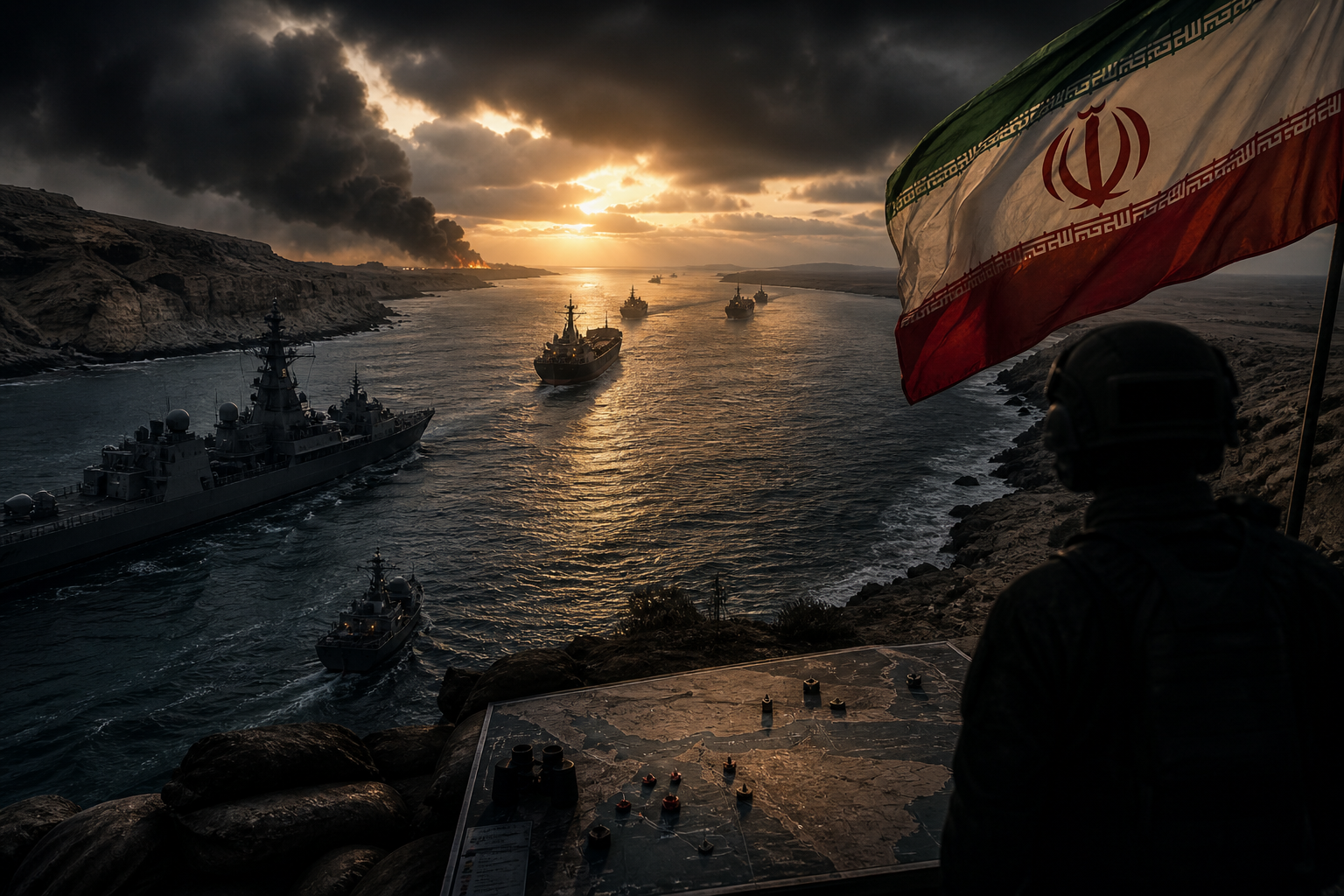
Iran’s Warning To The US: One Move Could Trigger A Wider War
Iran’s Threat Is Not Just Rhetoric—It Sits At The Center Of A Global Pressure Point
A direct threat from Iran to attack United States forces is no longer theoretical—it is tied to real movements, real ships, and one of the most strategically sensitive locations on Earth.
In recent hours, Iranian officials have warned they will strike US military assets if American forces enter or interfere in the Strait of Hormuz, a narrow waterway that controls a significant share of the world’s energy supply.
This is not a distant diplomatic dispute. It is a live confrontation with global consequences already unfolding.
What Actually Happened
The immediate trigger is a US-led effort to escort and guide ships through the Strait of Hormuz, where thousands of vessels and tens of thousands of seafarers have been stranded amid ongoing conflict.
The United States has framed this as a humanitarian and economic intervention — an attempt to restore global shipping routes disrupted by blockades and military escalation.
Iran has interpreted it very differently.
Iranian military officials have warned that any foreign naval presence in the strait without coordination will be treated as a hostile act and could be met with force.
Some Iranian reports have gone further, claiming that US naval movements were already confronted and forced to retreat, although US officials dispute those claims and deny any successful strike.
The gap between what is claimed and what is confirmed is important — but the threat itself is real.
Why The Strait Of Hormuz Changes Everything
This is not just about military pride or regional influence. The Strait of Hormuz is one of the most critical choke points in the global economy.
Roughly one-fifth of the world’s oil and gas flows through this narrow passage.
When Iran blocks or threatens this route, it does not just challenge the United States — it sends shockwaves through energy markets, supply chains, and national economies across the world.
Recent disruptions have already driven oil prices sharply higher and left ships stranded for weeks.
That means this conflict is not isolated. It is global by default.
The Bigger Context: A War Already In Motion
This threat does not exist in a vacuum. It sits inside a wider conflict that has been escalating since early 2026.
The United States and Israel launched major strikes on Iranian targets earlier in the year, including military infrastructure and leadership figures.
Iran responded with missile and drone attacks on US bases, allies, and regional targets, alongside closing the Strait of Hormuz.
Since then, both sides have been operating in a tense cycle of retaliation, pressure, and partial ceasefires—without reaching a stable resolution.
A US naval blockade of Iranian ports further intensified the situation, effectively turning the region into a controlled military zone where miscalculation becomes increasingly likely.
What looks like a single threat is actually part of a broader system of escalation.
What Makes This Moment Different
Threats between Iran and the United States are not new. What is different now is proximity.
US forces are physically positioned in contested waters
Iran has already demonstrated willingness to disrupt shipping
Both sides are operating under high tension and rapid decision cycles
In this environment, the line between warning and action becomes dangerously thin.
Even unverified claims — such as reports of missile strikes on US vessels — can increase pressure on both sides to respond, raising the risk of escalation even if the original incident is disputed.
That is how conflicts expand: not always through deliberate decisions, but through reactions to perceived threats.
The Economic And Strategic Stakes
The consequences of a direct Iran–US clash would not be contained to the battlefield.
If the Strait of Hormuz is closed or becomes too dangerous for shipping:
Global oil prices could spike dramatically
Energy-dependent economies would face immediate strain
Supply chains across Europe, Asia, and beyond would be disrupted
This is why even countries not directly involved in the conflict are watching closely and pushing for de-escalation.
The stakes are not just military — they are systemic.
What Most People Miss
The most important detail is not the threat itself. It is the structure around it.
Both Iran and the United States are operating under incentives that make backing down difficult:
Iran must maintain deterrence and regional influence
The US must maintain freedom of navigation and global credibility
That creates a scenario where both sides are rational—and still at risk of conflict.
This is not about one side acting irrationally. It is about two strategic systems colliding in a narrow space with global consequences.
What Happens Next
There are only a few realistic paths forward:
Controlled de-escalation through negotiation and coordination
Continued standoff with intermittent incidents and rising pressure
A miscalculation that triggers direct confrontation
At the moment, all three remain possible.
Diplomatic talks have not collapsed entirely, but they have not produced a stable outcome either.
That leaves the situation balanced between tension and escalation—with little margin for error.
The Bottom Line
Iran’s threat to attack US forces is not an isolated headline. It is a signal from the center of a geopolitical fault line.
The Strait of Hormuz is where military strategy, economic survival, and global stability converge.
When threats emerge there, they do not stay local. They ripple outward—fast.
The real risk is not just what Iran might do, or what the US might do next.
It is how quickly one move forces the other.
