Iran vs. the U.S. and Israel: The War Iran Can’t Win—and the Damage It Can Still Do
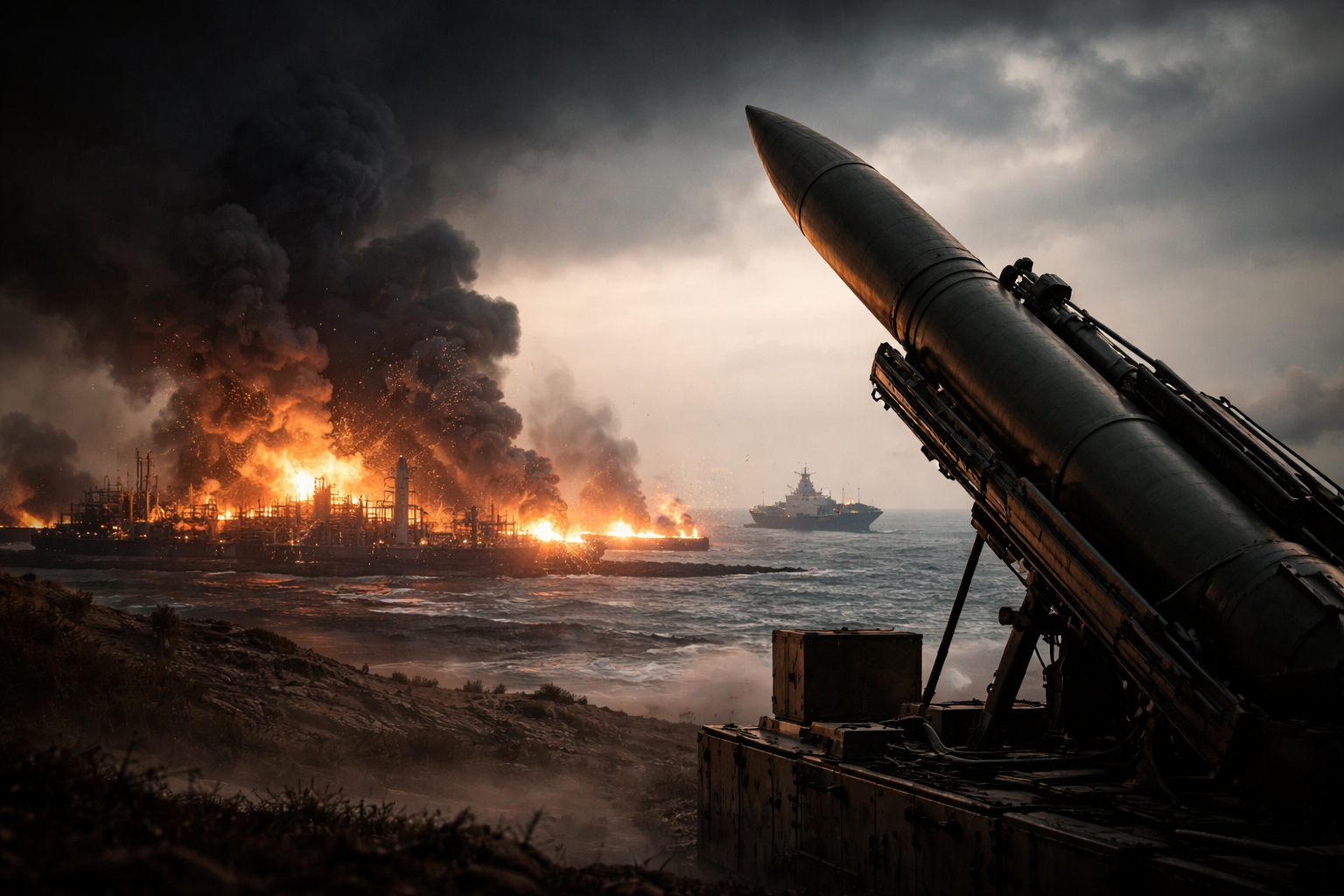
Why Iran’s Missile Pressure Matters More Than Its Air Force in a U.S.–Israel Fight
Iran’s “Nothing to Lose” Problem Has a Catch: Regime Survival Is the Hard Limit
The U.S. and Israel have now moved from threats and shadow conflict into direct strikes and direct retaliation. That changes the math overnight, because each side has to show strength without triggering a regional blowback it can’t fully control.
The issue is a live crisis on February 28, 2026. What matters most is not whether Iran can “beat” the U.S. and Israel in a conventional fight. It can’t. The real question is whether Iran can impose enough sustained pressure—on bases, air defenses, and regional economies—to force limits on how far the U.S. and Israel keep going.
Iran’s leadership talks in absolute terms in moments like this. But their incentives are usually more practical: preserve the regime, keep command-and-control intact, and avoid a spiral that risks internal collapse.
The story turns on whether Iran can sustain saturation pressure faster than the U.S. and Israel can absorb and adapt to it.
Key Points
Iran has far less conventional air and naval power than the U.S. and less high-end air power than Israel, which makes a classic battlefield “win” unlikely. What Iran can do is raise the cost of continued operations.
Iran’s most credible tools are missile and drone barrages, plus pressure through aligned armed networks and regional disruption. These can damage assets and shake markets even if they don’t “defeat” militaries.
Most regimes do not default to a "nothing to lose" posture. The usual driver is survival, which can restrain escalation even during intense retaliation.
The highest-risk pathway is a widening battlefield: attacks on regional bases, infrastructure, or shipping that pull more states into the conflict and turn days into months.
A short war is possible only if both sides quickly accept informal limits. Without limits, the likely pattern is a sharp opening phase followed by a long, uneven campaign of strikes, defense, and political pressure.
The most important near-term signals are target selection, attack tempo, and whether Iran chooses to spread pain across the Gulf’s military and economic nodes.
Iran sits at a strategic crossroads
It is weaker than the U.S. in conventional force projection, but it has built a deterrence system designed to survive that mismatch. That system leans on missiles, drones, dispersed launch capacity, and regional partnerships rather than large formations.
Israel has formidable intelligence, air power, and layered defenses, and it is geographically close enough that flight time and warning time can compress decisions on both sides. The U.S. brings global strike reach, large-scale logistics, and the ability to surge air and naval power, plus regional basing.
When direct strikes happen, each leadership faces a credibility test. Backing down too quickly risks looking weak. Escalating too far risks triggering a wider war that breaks economies and domestic stability.
Analysis
The war’s first boundary: air dominance vs. survivable retaliation
In a direct U.S.–Israel fight, Iran is unlikely to contest air dominance successfully. Air dominance shapes the scope, frequency, and risk of attacks.
Iran’s answer is survivable retaliation: attacks that don’t require air superiority. Missiles and drones let Iran reach targets while keeping pilots and aircraft out of the most dangerous zones. If Iran can keep launching under pressure, it can keep the crisis alive even while losing conventional platforms.
Two models collide: deterrence by punishment vs. deterrence by denial
The U.S. and Israel lean on deterrence by punishment: strike the assets that enable future attacks, raise the price of aggression, and reduce Iran’s capacity over time.
Iran leans on a different logic: deterrence by uncertainty and endurance. It attempts to persuade adversaries that even "successful" strikes will elicit repeated, unstoppable retaliation across a vast territory.
The clash between these models is what makes timeline predictions so difficult. Each side holds the belief that the other will yield first.
The constraint that shapes everything: regime survival and command-and-control risk
A true “nothing to lose” mentality usually appears when leaders believe the regime is already doomed. Most of the time, even hardline systems still have something to lose: senior leadership continuity, internal security cohesion, economic lifelines, and the ability to govern.
That survival instinct can restrain escalation. But it can also push risk-taking if leaders believe restraint invites decapitation strikes or a slow strangulation that ends the regime anyway.
If the leadership believes it is facing an existential threat, it may accept a much higher regional risk to restore deterrence quickly.
What Iran can actually do: pressure the perimeter, not seize the center of gravity
Iran’s realistic war aims are not territorial conquest. They represent cost imposition and political leverage.
That can include repeated strikes on military bases, efforts to exhaust air defense interceptors through volleys, cyber and sabotage attempts, and pressure via aligned armed groups. It can also include economic disruption that amplifies global political pressure, especially through energy and shipping anxiety.
These tools are “good enough” to prolong a crisis, even if they never equal the U.S. and Israel in conventional firepower.
The hinge: can Iran saturate defenses faster than the U.S. can replenish them?
This is the operational hinge that often gets buried under headlines about aircraft and bombs. Defense is not infinite. Interceptors, radar capacity, maintenance cycles, and crew fatigue all matter.
If Iran can generate repeated waves—especially mixed waves of drones and missiles—some fraction may get through even against excellent defenses. Even a limited penetration can have a significant political impact if it strikes symbolic targets or disrupts civilian activities.
Instead, if Iran's launch capacity rapidly deteriorates, or if defenses adapt more quickly than Iran can adjust its tactics, the conflict will condense into a shorter phase.
The signal to watch: whether Iran spreads the battlefield into the Gulf
A conflict stays shorter when it is geographically narrow and politically contained.
It turns long when the map expands: more states close airspace, more bases become active targets, shipping routes face disruption, and governments face domestic pressure to respond. Once multiple capitals feel directly threatened, “off-ramps” shrink and miscalculation risk rises.
Over the next 24–72 hours, the most telling signal is whether attacks concentrate on strictly military targets tied to the immediate fight or whether they broaden to regional infrastructure and economic chokepoints.
What Most Coverage Misses
Iran doesn't need to defeat the U.S. and Israel to achieve its objective; instead, it must gradually increase the political and logistical costs of the operation.
That changes incentives because it turns a military contest into an endurance contest: repeated volleys, base defense stress, interceptor consumption, and regional economic disruption can all accumulate into pressure for limits, pauses, or negotiated off-ramps.
You can watch for confirmation in two places: whether Iran sustains a steady attack tempo beyond the first shock wave and whether the target map expands toward Gulf basing and shipping-related pressure over the coming days and weeks.
What Happens Next
In the short term, the conflict can still be sharp and bounded if both sides quietly accept limits—because leaders often prefer a “demonstration” cycle over an open-ended regional war. A short war is most plausible if retaliation is intense but quickly tapers and if new major targets stop appearing.
In the longer term, the more likely pathway is a grinding, irregular campaign measured in weeks or months, because neither side wants to concede and each can keep acting below its maximum threshold. That’s especially true if leadership frames the conflict as existential, because existential framing reduces the value of restraint.
Watch decisions and events, not rhetoric. Track whether strikes shift toward leadership nodes, nuclear-adjacent sites, energy infrastructure, or shipping chokepoints. Those categories tend to lock in escalation because they shrink the space for compromise.
Real-World Impact
A regional airspace shock can ripple fast into travel: rerouted flights, cancellations, and sudden cost spikes for airlines, logistics, and insurance.
Energy markets can react to perceived shipping risk even before physical disruption occurs, which can feed through into fuel prices and household bills.
Businesses dependent on Middle East routes can see supply delays, especially for time-sensitive goods, while investors reprice risk across shipping, energy, and defense sectors.
For people in the region, daily life can narrow quickly: school closures, disrupted commutes, intermittent air defense alerts, and strain on emergency services.
The moment that decides whether this becomes a long war
This is less about who has the bigger arsenal and more about who controls escalation boundaries.
If Iran chooses broad regional pressure and the U.S. and Israel answer by widening target sets inside Iran, the conflict becomes hard to stop because each move creates new “must respond” obligations.
If both sides keep the fight inside a narrow channel—limited target categories, limited tempo, and a visible de-escalation signal—this can compress into a short, violent exchange followed by tense deterrence.
The signposts are simple: whether the target map expands, whether attack tempo stays high beyond the first two cycles, and whether regional states begin taking direct defensive or retaliatory actions. This moment holds historical significance as it tests the effectiveness of modern deterrence in the Middle East, particularly when direct state-on-state strikes commence.
