Israel–Iran Strikes: The Leadership-Decapitation Risk and the Retaliation Trap
The Israel–Iran Strike Cycle Tests Deterrence, Survival, and U.S. Red Lines
Iran Retaliates After Israel–U.S. Strikes, Raising the Risk of a Regional War Spiral
Explosions in Tehran and sirens in Israel marked a sharp new phase in the Israel–Iran conflict: a strike framed by Israel as preemptive, followed quickly by Iranian retaliation aimed not only at Israel but at the wider U.S. footprint in the region.
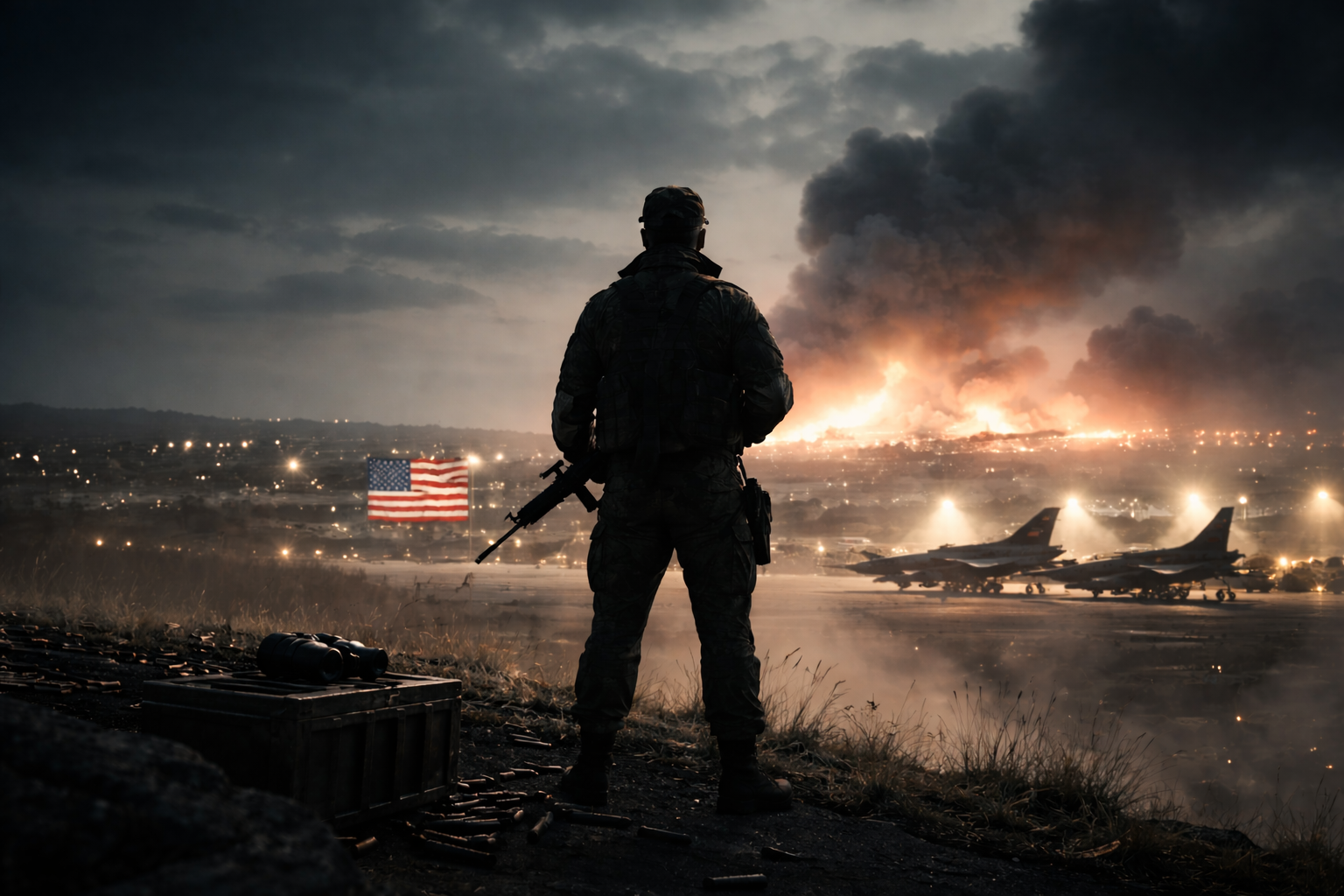
U.S.-Israel strikes on Iranian targets, with Iran warning that retaliation would extend to U.S. bases hosted by regional partners.
Early reporting suggests the strikes may have killed senior Iranian officials, a move that raises the pressure for Tehran to respond in a way that restores deterrence without triggering an open-ended war it cannot fully control.
The story turns on whether Iran’s retaliation causes U.S. casualties at a scale that forces Washington into a sustained campaign.
Key Points
Israel said it launched a preemptive attack on Iran, and reporting indicated the United States took part in strikes on Iranian targets.
Iran launched retaliatory attacks that reporting described as aimed at Israel and multiple U.S. military installations across the region.
Reuters reported that Iran’s defense minister, Amir Nasirzadeh, and IRGC commander, Mohammad Pakpour, were believed to have been killed, though full official confirmation and detail remained limited in early coverage.
In Iran, recent student protests and broader unrest form a volatile backdrop; war pressure can either suppress dissent through crackdowns or reignite street anger if the state looks weakened.
The near-term military question is whether Israel and the United States broaden target sets from air defenses and missile infrastructure toward deeper command-and-control and regime-linked nodes.
The near-term political question is whether regional governments hosting U.S. forces can stay publicly aligned while absorbing domestic backlash and security risk.
Iran and Israel have spent years in a shadow conflict: covert operations, proxy warfare, cyber attacks, and occasional direct strikes.
What makes this moment different is the scale of open military action and the reported targeting of top leadership, which can change the logic of retaliation.
The United States matters in two ways. First, U.S. capabilities can expand the intensity and geographic reach of strikes. Second, U.S. personnel and bases in the region create a set of targets Iran can hit to impose costs without having to defeat Israel militarily.
Inside Iran, state stability is not a footnote. Recent unrest and the government’s enforcement posture shape how the leadership weighs escalation. In a high-threat environment, the regime often prioritizes internal control and information management.
The pressure boundary: deterrence versus uncontrolled escalation
Iran’s leadership has a credibility problem after a high-profile strike. If Tehran appears unable to respond, deterrence erodes and future strikes become easier for its adversaries to justify. But if Tehran responds with attacks that kill large numbers of Americans or trigger mass Israeli casualties, it risks inviting a bigger U.S.-Israel campaign.
This is the basic trap: Iran must respond, but the “right-sized” response is hard to calibrate when emotions, public signaling, and battlefield uncertainty are all peaking.
Signposts to watch include official statements that define objectives (“punish,” “degrade,” “topple”) and whether the next waves of strikes shift from military nodes toward state leadership and prestige targets.
Competing models: limited punishment, regional widening, or regime-targeting logic
There are three plausible operational models.
Model one is limited punishment. Iran fires missiles or drones, activates selected proxies, and aims for symbolic damage while avoiding catastrophic U.S. fatalities. The goal is to claim retaliation while preserving off-ramps.
Model two is regional widening. Iran leans harder into attacks on the U.S. presence and allied infrastructure across multiple countries, raising the costs for partners and complicating U.S. logistics. The goal is to create political pressure on host governments and dilute U.S. operational freedom.
Model three is regime-targeting logic by Israel and the United States. If the reported leadership deaths are accurate and follow-on strikes persist, the campaign could move from capability degradation to sustained pressure on command systems and political control nodes. That changes incentives inside Iran, including elite cohesion and the level of repression used at home.
Watch for whether the strike tempo continues beyond the first day and whether official messaging frames the operation as a multi-stage effort rather than a single event.
The core constraint: Iran’s retaliation has a hard ceiling if it wants to avoid full-scale U.S. entry
Iran can impose pain, but it cannot match U.S. air and intelligence power in an open-ended contest. Its strongest tools are asymmetric: missiles, drones, cyber disruption, and proxy networks.
That creates a ceiling: Tehran may want to hit U.S. bases to demonstrate reach, but it must manage the risk of killing Americans in large numbers. Once that threshold is crossed, the political space for restraint in Washington shrinks rapidly.
The key signals here are casualty reports, explicit red lines set by U.S. officials, and changes in U.S. force posture that suggest preparations for sustained operations.
The hinge lever: domestic control inside Iran can decide how bold the regime gets abroad
There is a simple mechanism that often gets underweighted: internal legitimacy affects external risk-taking.
If the leadership believes it can lock down dissent—through arrests, censorship, and security deployments—it may take more aggressive external action because it feels insulated from domestic backlash.
If the leadership believes unrest could flare—especially in major cities and universities—it may prioritize internal control over external escalation, because an extended war can expose state weakness, economic strain, and elite fractures.
Look for signs of communications restrictions, public security deployments, and whether state media framing shifts from external unity messaging to internal “traitor” narratives aimed at preempting protest.
The measurable test: whether strikes shift from launchers and radars to deeper command-and-control nodes
In most air campaigns, the early military logic targets air defenses and missile infrastructure to reduce the defender’s ability to respond and to open airspace for repeated strikes.
If Israel and the United States begin hitting deeper command-and-control, elite security units, or symbols closely tied to regime continuity, it signals a shift from tactical degradation to strategic coercion. That is the point where the conflict can become self-sustaining, because both sides start treating restraint as weakness.
The practical signpost is target selection: whether follow-on strikes focus on military hardware or increasingly on the architecture of regime control.
What Most Coverage Misses
The hinge is that U.S. bases are not just targets; they are the escalation throttle.
Because Iran can strike the U.S. footprint across the region, it can “turn the dial” on pain without needing to win a direct contest with Israel. But that same dial is wired to a tripwire: once U.S. casualties rise beyond a politically tolerable threshold, the incentives in Washington shift toward sustained operations, and the off-ramp narrows fast.
Two signposts can confirm this dynamic soon: first, whether Iran concentrates attacks on symbolic disruptions rather than lethal outcomes; second, whether the United States publicly frames its next steps around protecting forces versus achieving regime-level objectives.
What Happens Next
In the next 24–72 hours, expect a contest over tempo. Israel and the United States will seek to keep Iranian defenses suppressed and reduce missile capacity, because that lowers risk to their forces and expands freedom to strike. Iran will seek visible retaliation to restore deterrence, because leadership survival depends on not looking helpless.
Over the coming weeks, the conflict’s long-term direction depends on whether the war stays “capability-focused” or becomes “regime-focused,” because the latter pushes both sides into higher-stakes choices with fewer exit routes.
Decisions to watch include any emergency diplomatic moves at the United Nations, public statements defining war aims, and signals from regional host governments about continued support for U.S. operations.
Real-World Impact
A regional strike cycle tends to hit ordinary life first through uncertainty: families stocking fuel and cash, travel disruptions, and school closures where security risk rises.
Markets and logistics react quickly. Even without sustained conflict, rumors and alerts can reshape shipping insurance, flight paths, and corporate risk decisions within hours.
For governments hosting U.S. forces, everyday security posture tightens: restricted movement around bases, elevated alerts, and broader surveillance measures that can spill into domestic politics.
The fork in the road: a controlled punishment cycle or a widening regional war
This crisis is not only about who struck whom. It is about whether both sides can accept a limited exchange without treating restraint as defeat.
If Iran keeps retaliation below the U.S. fatality threshold and the strike campaign does not shift toward regime continuity targets, a tense pause remains possible. If either side crosses those boundaries, escalation becomes harder to stop, because the political cost of backing down rises.
Watch for casualty numbers, target selection, and explicit war-aim language from leaders. This moment may be remembered as the point when the Israel–Iran shadow war either snapped into open conflict—or narrowly avoided it.
