Iran’s Allies Can’t Guarantee Protection From the U.S.—Here’s What They Can Do
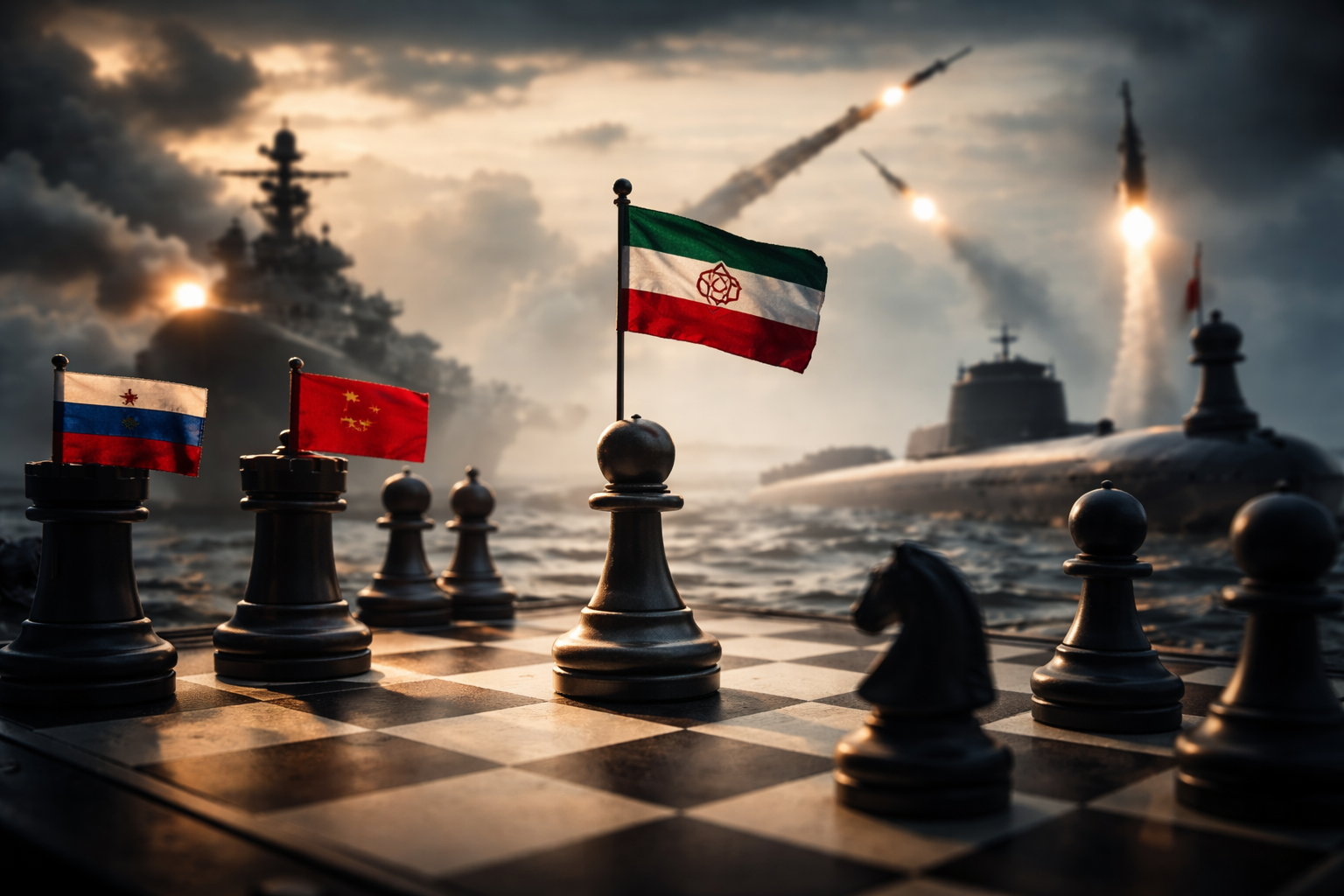
Iran’s Alliance Gap: Why Support Doesn’t Equal a Shield Against U.S. Power
Iran’s Defense Problem: Partners, Proxies, and the Limits of Protection Against America
Iran has partners that can help it survive pressure from the United States, but few are likely to fight the U.S. directly on Iran’s behalf. In late February 2026, that gap matters because Tehran’s “protection” isn’t really about a cavalry riding in. It's about Iran's ability to increase the costs of coercion, sustain its economy under sanctions, and maintain regime stability long enough to withstand Washington's political pressure.
Iran’s closest state relationships—especially with Russia and China—offer weapons, diplomatic cover, and sanction-avoidance channels. But they also come with a hard boundary: neither Moscow nor Beijing appears eager to accept direct military risk against U.S. forces for Iran.
The story turns on whether deterrence holds without a formal defense guarantee.
Key Points
State partners (Russia, China, and a smaller set of sympathetic states) and a network of armed non-state partners across the region comprise Iran's "allies".
Russia and China can materially help Iran by supplying systems, intelligence cooperation, trade routes, and diplomatic shielding, but that is not the same as a mutual-defense promise.
Recent reporting points to deepening Iran-Russia and Iran-China military procurement talks, which can strengthen Iran’s deterrence posture without triggering direct intervention.
In a U.S.–Iran crisis, Iran’s most reliable “protection” is often indirect: regional retaliation options, asymmetric disruption, and escalation management—not allied airpower.
The biggest near-term risk is miscalculation: a chain of limited strikes and retaliations can outrun political intent, especially around shipping lanes and U.S. bases.
What to watch is not rhetoric, but operational indicators: arms deliveries, joint exercises, emergency diplomacy, and changes in regional force posture.
An “ally” can mean very different things in geopolitics.
NATO-style alliances are explicit: an attack on one is treated as an attack on all, with pre-planned military integration. Iran does not have that kind of umbrella with a great power.
Instead, Iran’s external support system looks more like a portfolio. It includes big states with overlapping interests against U.S. pressure, plus regional partners and proxies that extend Iran’s reach and create multiple fronts of risk for adversaries.
This structure is not accidental. Iran has spent decades building deterrence without expecting conventional rescue. It aims to make the cost of attacking Iran, or trying to collapse its economy, feel unpredictable and region-wide.
Where Iran’s power comes from is the same place its protection breaks
Iran’s model is built for endurance under pressure, not for winning a conventional war. It relies on missiles, drones, maritime disruption potential, and relationships with armed partners in the region.
That gives Iran options to retaliate and impose costs. But it also means Iran’s “protection” is mostly self-generated. Tehran is unlikely to defend itself in the same manner as treaty allies do.
The constraint is simple: other states can benefit from Iran resisting the U.S. without wanting to inherit Iran’s wars.
Russia’s “support” is real leverage, but it has a hard risk ceiling
Russia is one of Iran’s most consequential state partners because it can provide advanced military technology, training, and intelligence cooperation. The relationship has visibly deepened recently, including through strategic agreements and reported procurement activity.
But Russia’s incentive structure matters. Moscow can profit from arms sales and strategic distraction for the U.S. while keeping escalation controlled. What it is far less likely to do is enter a confrontation with U.S. forces over Iran.
A useful way to think about the issue is the difference between helping Iran harden its defenses and committing Russian forces to defend Iranian territory. The former is plausible; the latter is a very high bar.
China’s partnership is a pressure valve, not a rescue plan
China’s relationship with Iran is strongest in economics and long-term strategic alignment against unilateral sanctions pressure. It prefers stability and predictable energy flows, and it tends to emphasize diplomacy when tensions spike.
Military cooperation can happen at the margins—especially through technology, dual-use channels, and selective arms deals—while Beijing avoids being considered underwriting Iranian escalation. Recent reporting about possible missile procurement discussions underscores the pattern: capability support without a defense pledge.
China’s constraint is reputational and economic. It has more to lose than Iran from a regional war that disrupts trade and energy markets.
The “Axis” that scares Washington is often non-state, and that changes the rules
Iran’s most dependable partners in a crisis are often not capitals but networks: armed groups and political-military movements with aligned interests. These relationships can generate real effects—on shipping, on border security, and on the safety of U.S. forces in the region.
But this form of protection is also volatile. Non-state partners do not always calibrate escalation the way states do. They can provoke responses that Iran did not choose, then pull Iran into a wider confrontation.
The hinge is whether Iran can signal control over its network while still maintaining deterrence.
The measurable signal is not speeches—it’s logistics, deployments, and restraint patterns
If Iran’s allies were truly preparing to “protect” Iran in a U.S. confrontation, you would expect visible markers: integrated air defense deployments, shared command structures, formal defense commitments, and rapid force movement into the region.
What you are more likely to see instead are subtler signals: expedited deliveries of air defense and anti-ship capabilities, joint exercises, intelligence coordination, and intensified diplomacy urging restraint. Recent reporting about procurement activity fits this “support without ownership” profile.
A second signal is financial: changes in how Iran sells oil, how payments clear, and how aggressively sanctions are enforced.
What Most Coverage Misses
The hinge is that Iran’s allies don’t need to fight the United States to change the battlefield—they only need to help Iran make U.S. options slower, riskier, and more politically costly.
That mechanism works through layered capabilities and timelines. Better air defense and anti-ship options can complicate strike planning and naval operations. Economic channels can soften sanctions shocks long enough to avoid internal instability. Diplomatic cover can delay or dilute multilateral pressure. None of this “wins” a war, but it can raise the threshold for U.S. action and stretch any crisis past the window where Washington can sustain it.
Two signposts would confirm this hinge soon. The first signpost is the verifiable follow-through on advanced systems transfers and training pipelines. Second, coordinated crisis diplomacy that pairs calls for restraint with quiet material support.
What Happens Next
In the short term, the key question is whether deterrence holds through signals and restraint or whether a tit-for-tat cycle begins around U.S. bases, regional shipping routes, or air defense incidents. That matters because once forces are forward-deployed, accidents and misread intentions become more likely.
Over the longer term, the issue is structural: Iran is trying to lock in a “sanctions-proof” economy and a “strike-resistant” military posture. Its partners can help with both, but they will still try to cap their exposure. The consequence is a persistent gray zone: high capability growth, high friction, but limited likelihood of allied direct intervention.
Decisions to watch include any formalization of defense commitments, major weapons deliveries that shift the maritime or air-defense balance, and any U.S. policy signals that narrow Tehran’s off-ramps.
Real-World Impact
A regional flare-up can raise shipping insurance and disrupt supply chains even without a full war, which can show up as higher prices for fuel and goods.
Companies operating in the Gulf region can see tighter compliance, payment delays, and higher security costs as sanctions enforcement and risk controls tighten.
Military families and contractors tied to regional bases can see rapid operational tempo changes, travel restrictions, and heightened alerts during crisis windows.
Diaspora communities often face increased scrutiny, online harassment, and anxiety spikes driven by headline volatility and uncertainty.
The Forward Risk Is a Trap of “Limited” Moves That Don’t Stay Limited
Iran's protection strategy primarily aims to deter, yet these deterrence tools can also escalate situations.
Iran’s partners can help it build resilience and impose costs, but they are unlikely to step in as direct defenders against the United States. That means the burden of calibration stays on Tehran and Washington, in a region where a single incident can force leaders into choices they did not plan for.
The signposts to watch are operational movements, verified arms deliveries, and whether diplomatic channels stay active during moments of pressure.
History will likely remember this period less for one decisive battle and more for how major powers learned—or failed—to manage escalation under constraints.
