Iran’s Inner Circle Is Being Systematically Eliminated — And This Strike Changes the War
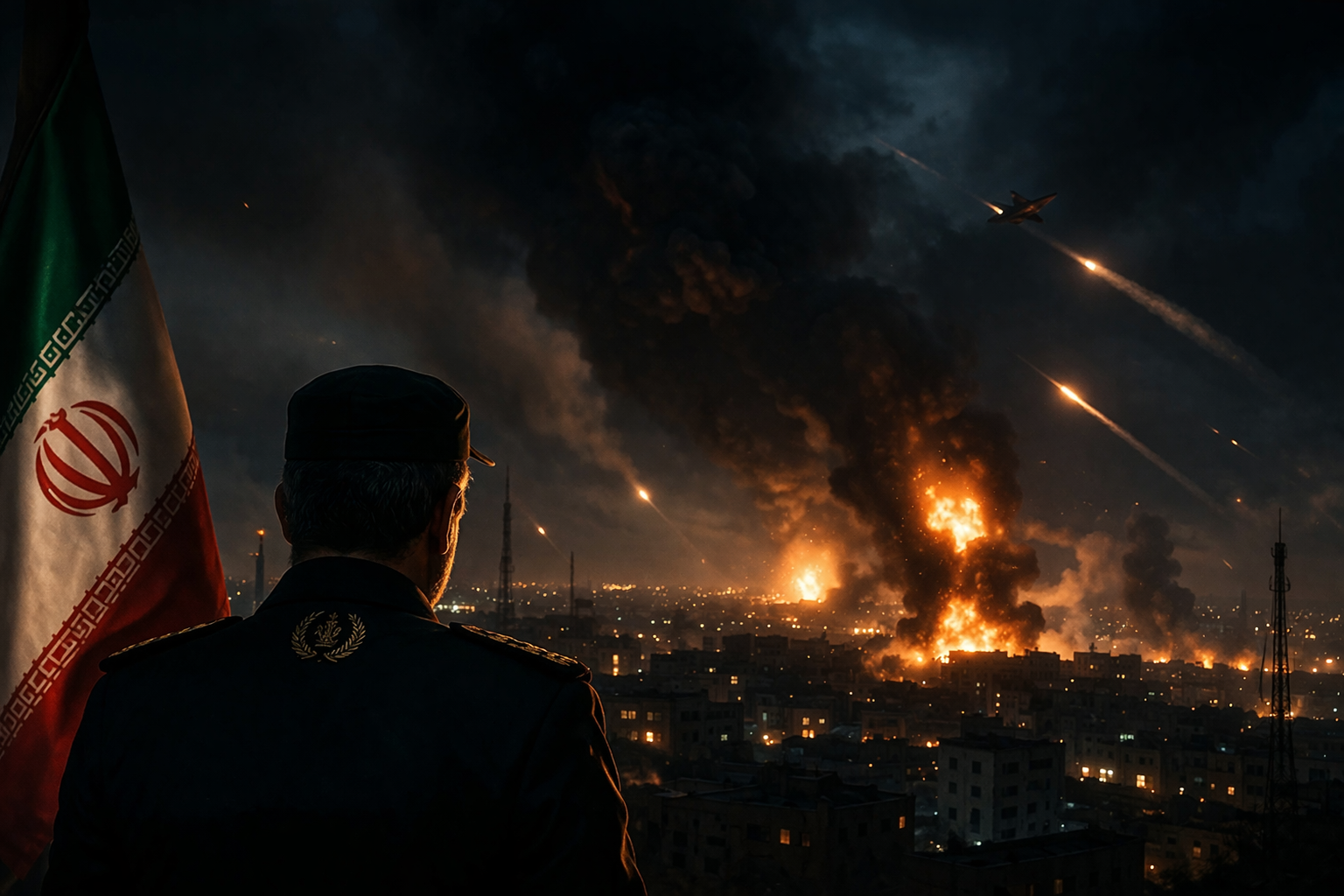
The Killing of Iran’s Spy Chief Signals a More Dangerous Phase of War
A coordinated U.S.–Israeli strike has killed IRGC intelligence chief Majid Khademi—a move that signals not just escalation but a deliberate campaign to dismantle Iran’s command structure from the top down.
The killing of Iran’s top intelligence figure is not just another escalation—it reveals the real strategy underneath this conflict.
This is no longer a war of targets — ’s a war of people
When Maj. Gen. Majid Khademi, the intelligence chief of Iran’s Islamic Revolutionary Guard Corps (IRGC), was killed in a U.S.–Israeli strike, it didn’t just remove a senior official.
It confirmed something far more consequential:
This war has moved into a deliberate leadership decapitation phase.
Khademi wasn’t a symbolic figure. He ran one of the most powerful intelligence networks in the Middle East—overseeing surveillance, counter-espionage, and internal control mechanisms that underpin the Iranian state.
His death is not an isolated event. It is part of a pattern.
The pattern is the story
Since late February, the strikes have not simply targeted military infrastructure—they have systematically removed Iran’s senior command layer.
The country’s supreme leader was killed in early strikes
Senior defence and intelligence officials have followed
Now the IRGC’s intelligence chief is gone
This incident is not random escalation. It is structured dismantling.
Recent reporting confirms Khademi is one of multiple high-ranking figures eliminated in coordinated attacks during the ongoing conflict.
Each removal creates a vacuum. Each vacuum creates instability. And instability, in a system like Iran’s, is dangerous.
What this actually does to Iran
On paper, killing senior figures weakens command and control.
In reality, it does three things at once:
1. It disrupts intelligence coordination
Khademi oversaw internal security and counterintelligence—effectively the regime’s ability to see threats before they materialize.
Removing him degrades that capability in real time.
2. It fractures trust inside the regime
Paranoia rises when leaders face repeated targeting.
Who leaked information? Who is compromised? Who is next?
That internal suspicion is strategically valuable—and deeply destabilizing.
3. It accelerates retaliation pressure
Iran’s Revolutionary Guards have already vowed a “major retaliatory strike” following his death.
This is where the logic flips.
The more leadership is removed, the stronger the internal pressure becomes to respond — not cautiously, but visibly.
What media misses
What media misses is not escalation for its own sake.
It is a coherent strategy with a clear objective:
Not just to damage Iran but to make it harder for Iran to function as a coordinated state under pressure.
Most coverage treats each strike as an isolated event.
This overlooks the fundamental issue.
The strikes are targeting the system that allows Iran to respond effectively, not just the tools it uses to fight.
The approach is closer to systemic dismantling than conventional warfare.
And that distinction changes everything.
Why this is far more dangerous than it looks
There is a paradox at the heart of this strategy.
The more successful it is, the more dangerous the conflict becomes.
Because:
A weakened leadership structure is less predictable
Fragmented command increases the risk of miscalculation
Retaliation may come from multiple actors, not a single chain of command
At the same time, the war is already intensifying.
Strikes have expanded beyond military targets to include airports, infrastructure, and economic assets, while Iran has launched retaliatory missile attacks across the region.
This is no longer contained escalation.
It is widening.
The real strategic message
The killing of Khademi sends a signal that goes beyond Iran.
It tells every actor in the region:
Leadership is now a legitimate battlefield.
That changes deterrence.
It changes behavior.
And it raises the stakes for everyone involved.
What happens next
Three paths now sit directly ahead:
Most likely
Continued targeted strikes on leadership figures, combined with controlled Iranian retaliation—keeping the conflict intense but contained.
Most dangerous
A large-scale Iranian response is designed to restore deterrence— potentially triggering a broader regional war.
Most underestimated
Internal fragmentation inside Iran’s command structure, leading to uncoordinated or asymmetric responses from different factions.
That third path is the hardest to predict— and often the most volatile.
The bottom line
This wasn’t just the killing of an intelligence chief.
It was the continuation of a strategy aimed at something deeper:
The strategy aimed to break the system that holds Iran together under pressure.
But there’s a brutal trade-off at the center of it.
The more the system fractures, the less predictable—and potentially more explosive—the response becomes.
And that is how wars stop being controlled.
