The 4-Hour War Doctrine: Inside Trump’s Iran Ultimatum and the Future of Instant Conflict
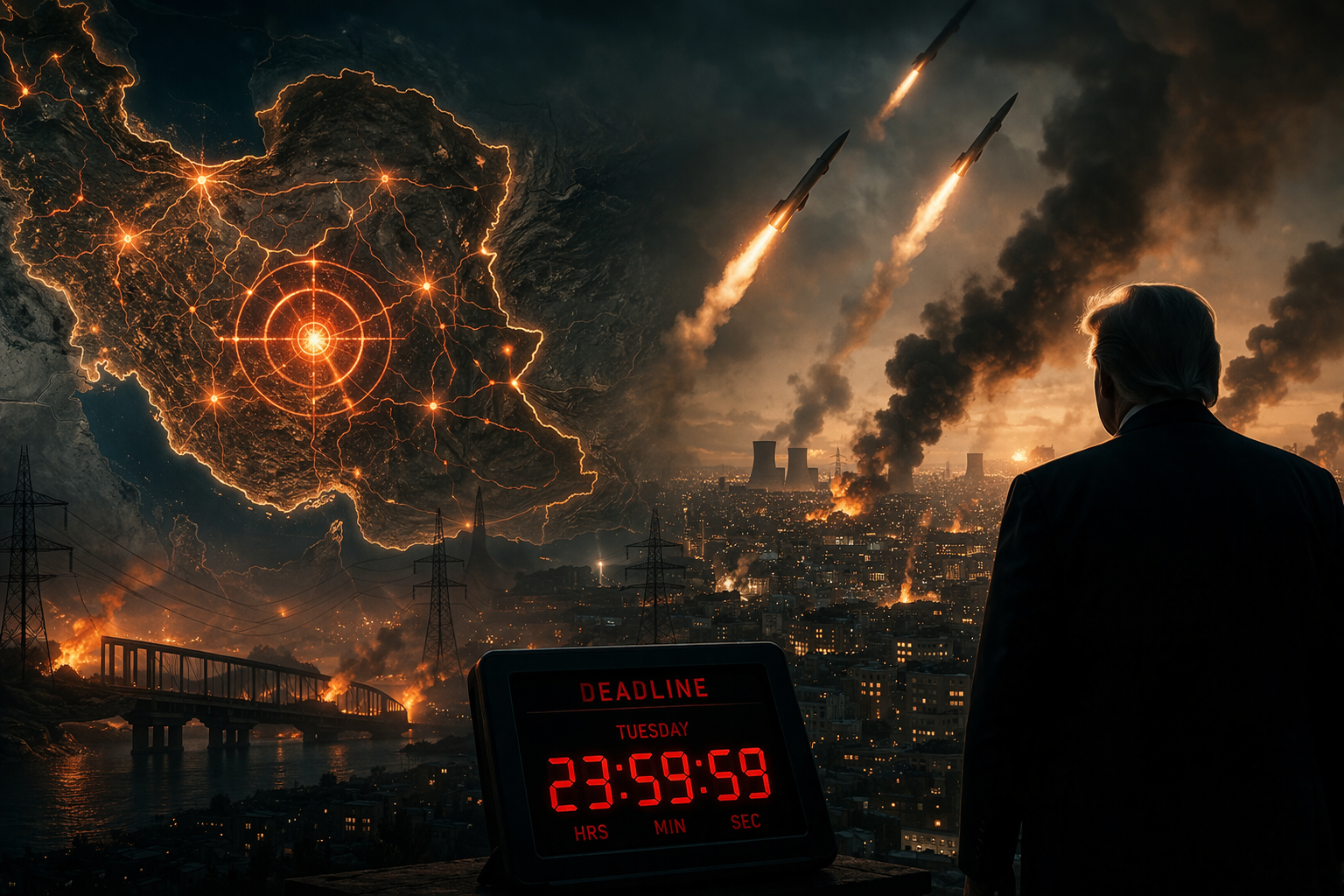
Trump Iran 4 Hour War Plan Explained: What It Means and What Happens Next
Four Hours to Collapse a Nation: The Strategy Behind Trump’s Iran Threat
The Deadline Before Impact: Why This US–Iran Crisis Feels Like the Edge
From Warning to War Blueprint: What Trump’s Iran Plan Reveals About Modern Conflict
A threat to dismantle a country’s infrastructure in hours is not just escalation—it is a glimpse into how war is now designed, communicated, and potentially unleashed.
The shift from rhetoric to operational detail signals a dangerous transformation in global conflict.
Beneath the shock language is a doctrine of speed, pressure, and system collapse.
The moment rhetoric turned into something else
There is a difference between threatening war and describing how it will unfold.
That line has now been crossed.
The United States has issued a hard deadline to Iran. Not a vague warning. Not a diplomatic signal. A fixed point in time — Tuesday — after which large-scale strikes may begin.
But what makes this moment different is not the deadline.
It is the language around it.
The idea that a country could be functionally dismantled—its bridges destroyed, its power grid collapsed—in a matter of hours.
That is not how war used to be described.
And that is the real story.
What is actually happening right now
The current crisis sits at the intersection of war, negotiation, and economic pressure.
At its core is a single demand:
Iran must comply with US conditions — including reopening the Strait of Hormuz and accepting constraints on its strategic posture — or face a major escalation.
Iran has not accepted those terms.
Instead, it has pushed back, rejecting temporary cease-fire structures and demanding broader guarantees—including sanctions relief and a more permanent settlement.
Behind the scenes:
Mediation channels are active
Military operations are ongoing
Both sides are preparing for the possibility that diplomacy fails
At the same time, the conflict has already produced significant casualties and regional instability, with strikes, counter-strikes, and economic disruption spreading across the Middle East.
This is not a theoretical crisis.
It is an active one.
The shift from war as campaign to war as event
The most important change is conceptual.
Traditionally, war has been understood as something that unfolds:
phases
campaigns
weeks or months of escalation
What is now being described is something different.
A war as an event.
A compressed, high-intensity strike designed to:
disable infrastructure
disrupt coordination
create immediate paralysis
The “four-hour” framing is not just rhetoric.
It reflects a deeper belief:
If you can collapse systems fast enough, you don’t need a prolonged war.
This is not about defeating an army.
It is about disabling a society.
The doctrine underneath the threat
Strip away the language, and a clear doctrine emerges.
It has three pillars:
1. Speed
Act faster than the opponent can respond.
2. Infrastructure targeting
Hit the systems that enable a country to function — not just its military.
3. Psychological inevitability
Make resistance feel pointless before it begins.
This is coercion, not just conflict.
The message is not:
“We will fight you.”
It is:
“We can end your ability to function before you can react.”
That is a fundamentally different type of pressure.
Why the deadline matters more than the plan
Deadlines in geopolitics are rarely about timing.
They are about forcing decisions.
By attaching a specific moment to the threat, the United States is:
compressing Iran’s decision-making window
increasing internal pressure within Iranian leadership
signalling seriousness to global audiences
This creates a psychological environment where delay becomes dangerous.
Every hour that passes is framed as movement toward an irreversible outcome.
That is intentional.
The infrastructure question—and why it matters
One of the most controversial aspects of this threat is the explicit focus on infrastructure.
Power grids. Bridges. Energy systems.
These are not just military targets.
They are the backbone of civilian life.
Targeting them has two immediate effects:
1. Rapid systemic disruption
Electricity loss alone can shut down the following:
hospitals
communications
logistics networks
financial systems
2. Civilian impact
Infrastructure strikes inevitably affect civilian populations at scale.
This is why the approach raises serious legal and ethical concerns — and why it is being watched closely at an international level.
But from a purely strategic perspective, the logic is clear:
If you disable the system, you disable the state.
Why this is riskier than it looks
There is a hidden assumption behind the “4-hour war” idea.
That collapse leads to compliance.
But history suggests something more complicated.
When systems fail:
populations do not always submit
leadership does not always concede
retaliation often becomes more likely, not less
Iran has already signaled that any major strike would trigger wider and more devastating retaliation.
And retaliation would not necessarily be symmetrical.
It could include:
attacks on shipping routes
disruption of global energy flows
regional escalation through proxy actors
The initial strike may be fast.
The consequences would not be dire.
The global stakes: why this is bigger than Iran
This is not just a US–Iran issue.
It has global implications in three key areas:
Energy
The Strait of Hormuz is one of the most critical oil chokepoints in the world. Disruption here affects global prices immediately.
Precedent
If infrastructure-focused “instant war” becomes normalized, it changes how future conflicts are fought.
Escalation chains
Regional conflicts can expand rapidly once multiple actors are involved.
This is a system-level risk, not just a bilateral one.
What media misses
The focus on whether a country can literally be destroyed in four hours misses the deeper shift.
The real story is this:
A new model of war is being described openly.
One where:
speed replaces duration
systems replace territory
collapse replaces conquest
This is not just about Iran.
It is about how powerful states now think about conflict.
And once that thinking becomes normal, it does not stay contained.
It spreads.
What happens next
There are three realistic paths forward.
1. Last-minute agreement
Pressure works. A deal is reached. Both sides step back.
2. Controlled strike
A limited version of the threat is executed to force further negotiation.
3. Escalation spiral
Retaliation triggers further retaliation. The conflict expands.
Each of these paths exists simultaneously right now.
The difference between them is not capability.
It is decision-making under pressure.
The deeper pattern: the acceleration of conflict
This moment fits into a broader trend.
Conflict is becoming
faster
more technologically driven
more focused on systems rather than territory
The goal is no longer just victory.
It is immediate leverage.
To force outcomes before the opponent can adapt.
That makes crises sharper.
Shorter.
And far harder to control.
What's next?
The most dangerous part of this situation is not the threat itself.
It is the idea behind it.
The belief that a country can be collapsed quickly enough to force compliance.
Because once that belief takes hold, every crisis becomes a race against time.
Every decision becomes more compressed.
And every mistake becomes harder to reverse.
That is how conflicts stop being managed.
Not when the first strike happens.
But when the clock starts.
