Trump’s “One Night” Threat: Why This Moment Could Decide the Iran War
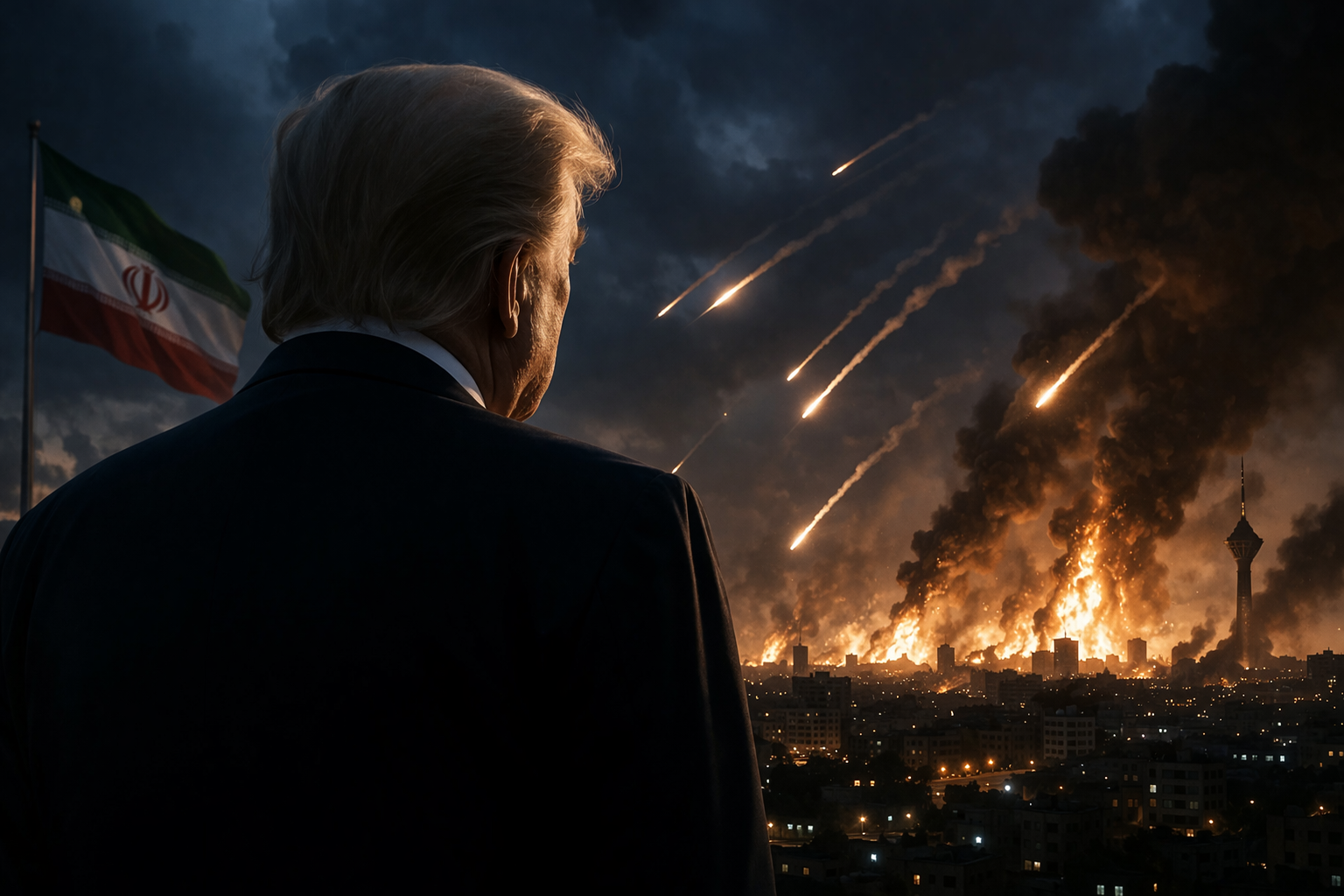
Deadlines. Escalation. Retaliation risk.
The 24-Hour Window That Could Trigger a Wider War
“Taken Out in One Night”: The Real Meaning Behind Trump’s Iran Warning
Deadline Diplomacy or War Signal? Inside Trump’s Escalation Threat
With a hard deadline, rising strikes, and collapsing diplomacy, the conflict is entering its most dangerous phase—where rhetoric, capability, and reality begin to collide.
A ceasefire rejected, strikes intensifying, and a deadline looming—this is where escalation becomes irreversible
The threat sounds absolute. The reality is far more complex—and far more dangerous
The moment everything tightens
There are threats in war that are meant to deter.
And then there are threats that signal something closer to a decision.
When Donald Trump said Iran could be “taken out in one night,” he wasn’t just projecting strength. He was compressing time.
A deadline. A capability. And a narrowing set of outcomes.
With strikes already intensifying and further escalation expected within hours, this is no longer a slow-burn conflict. It is a crisis entering its most compressed, volatile phase—where miscalculation becomes more likely than control.
What just changed
The core shift is simple:
A hard deadline has been set
The largest wave of strikes so far is underway
Diplomatic pathways are collapsing
Trump has warned that if Iran does not agree to terms by Tuesday night, major infrastructure—power grids, bridges, and core systems—could be targeted at scale.
At the same time, U.S. officials have signaled that current operations are already ramping up to their most intense level yet.
Iran, for its part, has rejected ceasefire proposals and warned of “devastating and widespread” retaliation if strikes escalate further.
This is the key point:
Both sides are no longer negotiating from stability.
They are negotiating under active escalation.
The illusion of “one night”
On the surface, the statement sounds absolute: total destruction, overnight.
But that framing hides something critical.
Yes—the United States has the military capability to:
cripple infrastructure
destroy command structures
degrade military capacity rapidly
But “taking out” a country is not the same as ending a war.
Because war is not just infrastructure. It is:
political systems
ideology
population response
asymmetric retaliation
We’ve already seen this pattern.
Despite thousands of strikes and major damage to Iranian military assets, the regime has not collapsed.
Instead, Iran has shifted into:
regional retaliation
economic disruption (especially oil flows)
strategic pressure through the Strait of Hormuz
The war hasn’t ended. It has adapted.
What’s really driving this escalation
This is not just about military pressure.
It’s about forcing a decision.
Trump’s strategy appears built around a simple logic:
Apply overwhelming pressure in a short window
Force Iran into a deal before it can stabilise
That’s why the timeline matters so much.
A long war favors Iran’s strengths:
endurance
asymmetric warfare
regional disruption
economic leverage
A short, intense shock campaign favours the U.S.
So the “one night” language is not just rhetoric.
It’s a signal of intent:
End this quickly—or escalate hard enough that the balance shifts decisively.
Why this moment is uniquely dangerous
This is the phase where wars often become uncontrollable.
Three factors are now aligning:
1. Time pressure
Deadlines reduce flexibility. Decisions get forced.
2. Public escalation
Statements like this raise expectations—and reduce the ability to quietly step back.
3. Reciprocal threats
Iran has already signaled it will respond heavily if pushed further.
That creates a classic escalation loop:
strike → retaliation → counter-strike → expansion
And once that loop accelerates, it becomes extremely difficult to contain.
What media misses
The biggest misunderstanding is this:
People hear “one night” and think decisive victory.
What it actually signals is impatience with the current trajectory.
The war hasn’t delivered fast results.
The regime hasn’t collapsed.
The pressure hasn’t forced compliance.
So the strategy is shifting from pressure over time
to maximum shock in minimal time.
That is not a sign of control.
It is a sign that the current approach isn’t working fast enough.
And historically, those moments are where conflicts become far more unpredictable.
What happens next
There are three realistic paths from here:
1. Forced deal (least likely, fastest resolution)
Iran concedes under pressure before the deadline.
2. Major strike wave (most likely short-term)
Infrastructure attacks escalate sharply within the next 24–48 hours.
3. Wider regional escalation (most dangerous)
Iran retaliates across the region:
Gulf infrastructure
shipping routes
allied bases
At that point, the war stops being bilateral.
It becomes regional.
The real stakes
This is not just about Iran.
It’s about whether overwhelming force can still produce fast political outcomes in modern war.
Because if it can’t—if even this level of pressure fails to force a decisive shift—then the entire logic of the strategy begins to break down.
And when strategy breaks down in war, escalation usually follows.
The bottom line
“Taken out in one night” sounds like an ending.
In reality, it may be the beginning of a far more dangerous phase.
Because the closer a war gets to a forced conclusion,
the more likely it is to spin out of control.
And right now, everything is pointing in that direction.
