US Army Sergeant Pleads Guilty to Selling Military Secrets to China: What the Jian Zhao Case Reveals
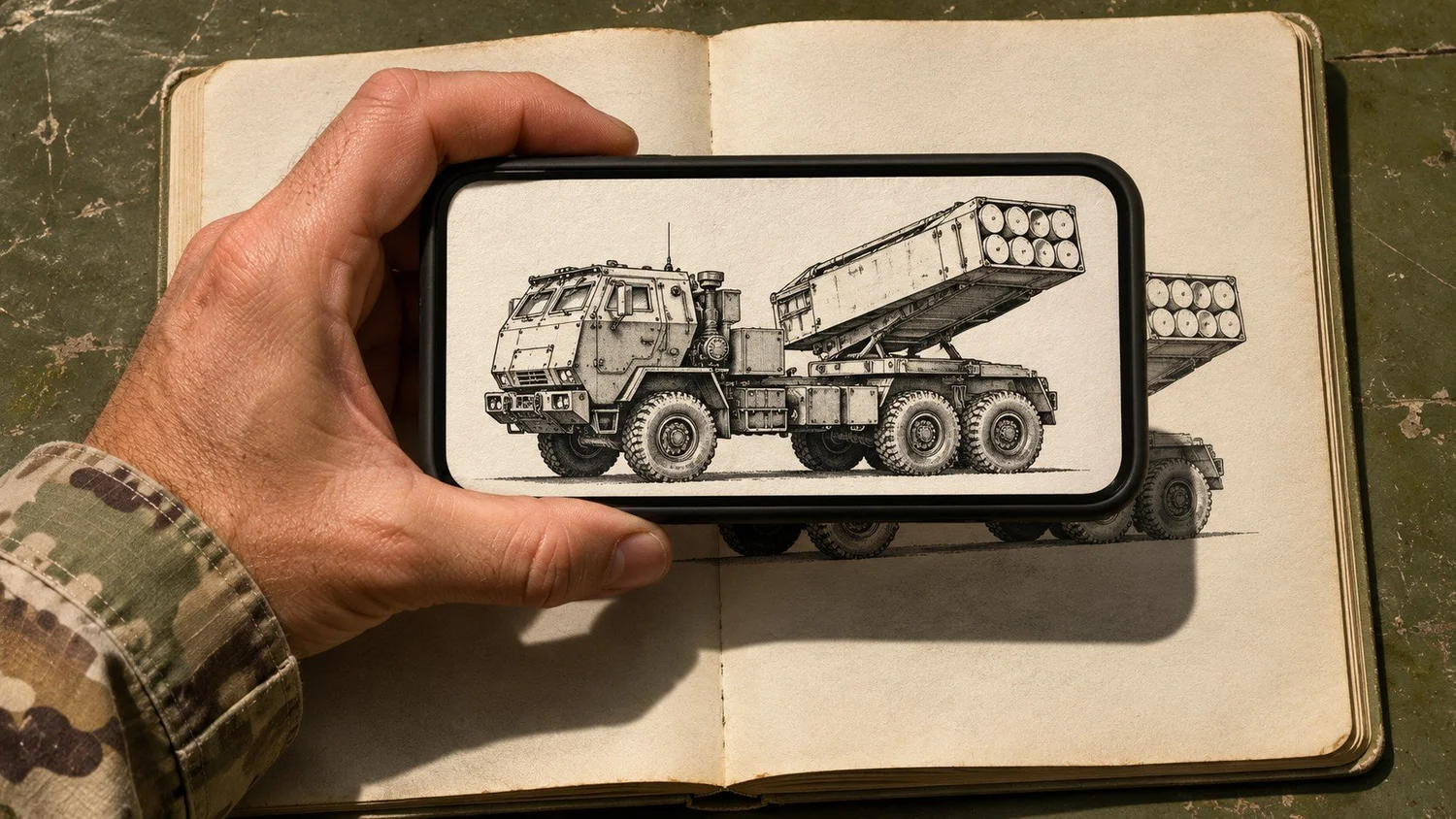
For more than three years, an Army supply sergeant at one of America's largest military bases used his personal phone to photograph documents he was meant to protect. Some of them described the High Mobility Artillery Rocket System (HIMARS), the launcher that has become one of the most talked-about weapons of the war in Ukraine. Others covered US military readiness for a possible conflict with China. Buyers in China paid him for them.
On Monday 23 November, in federal court in Portland, Oregon, Sergeant Jian Zhao admitted it. The 37-year-old, an active-duty soldier stationed at Joint Base Lewis-McChord (JBLM) in Washington state, pleaded guilty to one count of conspiracy to gather, transmit or lose national defence information, a charge under the Espionage Act. He faces up to ten years in prison.
The case is small in the sums involved and large in what it suggests: a soldier with access, a recruiter who knew where to look, and buyers overseas who were willing to pay for whatever he could obtain.
What Zhao Admitted
According to the Justice Department and reporting by Stars and Stripes, Fox News and KPTV, Zhao, a battery supply sergeant with the 17th Field Artillery Brigade who enlisted in 2017, conspired with others between about November 2021 and March 2025. Prosecutors say he:
- photographed restricted military records with his personal mobile phone, covering Army exercises, communications networks and missile systems;
- shared excerpts from technical manuals for HIMARS;
- provided sensitive information about US military readiness for a possible armed conflict with China;
- offered military computers and government hard drives for sale, and removed government property and storage devices without authorisation.
Prosecutors described the material as sensitive, secret or top secret. Stars and Stripes reports that Zhao received about $15,000 in total for his role. When federal agents arrested him at his home in Lacey, Washington, on 6 March 2025, they recovered about $30,000 in cash, electronic devices and several Army hard drives.
Zhao appeared with a Mandarin interpreter and waived his right to a grand jury indictment. Under the plea agreement, he agreed to forfeit $17,500 as proceeds of the offence, to give up his interest in the seized cash, not to contest a dishonourable discharge, and to accept a lifelong duty to protect classified and defence information.
How the Scheme Worked
The case centres on a former soldier, Ruoyu Duan, 41, of Hillsboro, Oregon. According to court records reported by Stars and Stripes, Duan introduced a JBLM officer to a source in Hong Kong and recruited Zhao, then acted as a middleman, connecting the soldiers to buyers in China and facilitating their transactions. Duan pleaded guilty in September to one count of conspiracy to gather and transmit national defence information, admitting to passing information on systems including the Bradley, Stryker and HIMARS. He is due to be sentenced on 10 December.
Zhao is the second of three co-defendants to plead guilty, Stars and Stripes reports. The third, a JBLM officer arrested at the same time in March 2025, was charged with bribery and theft-related offences and has not been convicted. Taylor Tailored is not naming that defendant while the case continues.
When the three were arrested in March 2025, the Washington Post reported that Zhao was alleged to have handed over around 20 government hard drives, some marked "secret", along with documents on missile-launcher technology and US military exercises in the Indo-Pacific. Those details come from the original charges; Monday's plea is to a single conspiracy count.
What the Officials Said
Scott E. Bradford, the US Attorney for the District of Oregon, said members of the military were entrusted with protecting some of the nation's most sensitive information and capabilities. "The defendant violated that trust by exploiting his access to military information and equipment for personal profit while knowingly providing materials to individuals linked to China," he said. He added that protecting national security depended on holding accountable those who compromise their oath.
Brigadier General Sean Stinchon, commander of Army Counterintelligence Command, called the plea "a deliberate betrayal of the oath every Soldier takes to defend our nation".
Sentencing is scheduled for March 2027. Prosecutors have said they will seek a sentence at the low end of the guideline range, according to Stars and Stripes.
Not the First Case at JBLM
Joint Base Lewis-McChord, near Tacoma, is one of the US military's largest installations and a major hub for forces focused on the Indo-Pacific. It has now produced several China-related espionage prosecutions in quick succession.
In June 2025, Joseph Daniel Schmidt, a former Army sergeant whose last post was JBLM, pleaded guilty in Seattle to attempting to deliver national defence information and retaining national defence information. According to the Justice Department, after leaving the military he contacted the Chinese consulate in Turkey and later Chinese security services offering information, and travelled to Hong Kong in 2020.
The Zhao case differs in one important respect. Schmidt approached China after he left the Army. Zhao was an active-duty soldier who sold access while still serving, and he was brought in by a recruiter rather than reaching out himself.
Why It Matters: Analysis
This section is Taylor Tailored analysis.
The money in this case is striking for how little it was. On the figures reported, a serving sergeant risked his career, his liberty and a decade in prison for roughly the price of a used car. That pattern is familiar to counterintelligence officials. Many modern espionage cases are less about ideology or elaborate tradecraft than about money, opportunity and a broker willing to connect the two.
The HIMARS material matters because of where the system is used. It has been supplied to Ukraine and Taiwan and is central to US planning for any conflict in the Pacific. Excerpts from technical manuals can reveal maintenance routines, operating limits and vulnerabilities, which are useful to an adversary planning to counter the system. Information on readiness for a conflict with China is, if anything, more sensitive.
It is also a case about insider risk at a supply level. Battery supply sergeants handle equipment, storage media and paperwork rather than war plans. The case shows that people in logistics roles can still give an adversary a great deal, especially when controls on removable media and personal phones are weak.
Finally, attribution needs care. The Justice Department describes the buyers as individuals in China and "linked to China", and one official statement referred to the Chinese government. Reporting so far has not publicly identified which Chinese agency, if any, was the end customer, and readers should treat claims about the ultimate buyer with caution until the court record says more.
What Happens Next
- 10 December 2026: sentencing of Ruoyu Duan.
- March 2027: sentencing of Jian Zhao, who faces up to ten years in prison and a $250,000 fine.
- The third defendant: the remaining JBLM officer's case continues.
- The Army: Zhao has agreed not to contest a dishonourable discharge, which would end his military career.
A Small Payment for a Serious Breach
Zhao's guilty plea closes one part of a case that began with a former soldier looking for insiders and ended with HIMARS manuals and hard drives heading overseas. The sums were modest and the defendant was not a senior officer. That is exactly why the case worries military security officials: the material that matters most is not always held by the people at the top.
For a related case, read our report on two Chinese military veterans arrested as alleged spy routes reached US bases.
Sources
- Stars and Stripes: Army sergeant pleads guilty to selling military secrets to China (24 November 2026)
- KPTV: Washington-based US soldier pleads guilty to selling classified military info to China (24 November 2026)
- Fox News: Army sergeant pleads guilty to cashing in on US military secrets in China-linked plot (24 November 2026)
- JNS: US Army sergeant pleads guilty in scheme to sell military info to Chinese buyers (24 November 2026)
- Stars and Stripes: Former soldier pleads guilty in China spying case (17 September 2026)
- US Department of Justice: Active-duty and former US Army soldiers arrested (March 2025)
- Washington Post (via Spokesman-Review): US soldiers arrested in scheme to send classified information (7 March 2025)
- US Department of Justice: Former JBLM soldier pleads guilty to attempting to share military secrets with China (18 June 2025)
- The National Pulse: US Army sergeant pleads guilty to selling secrets to China (24 November 2026)
- Express Tribune (Anadolu): US Army sergeant pleads guilty to selling defence secrets to China (24 November 2026)
