

Jill Biden’s Ex-Husband Charged With Murder—and the Case Is About to Get Much Bigger Than the Biden Connection
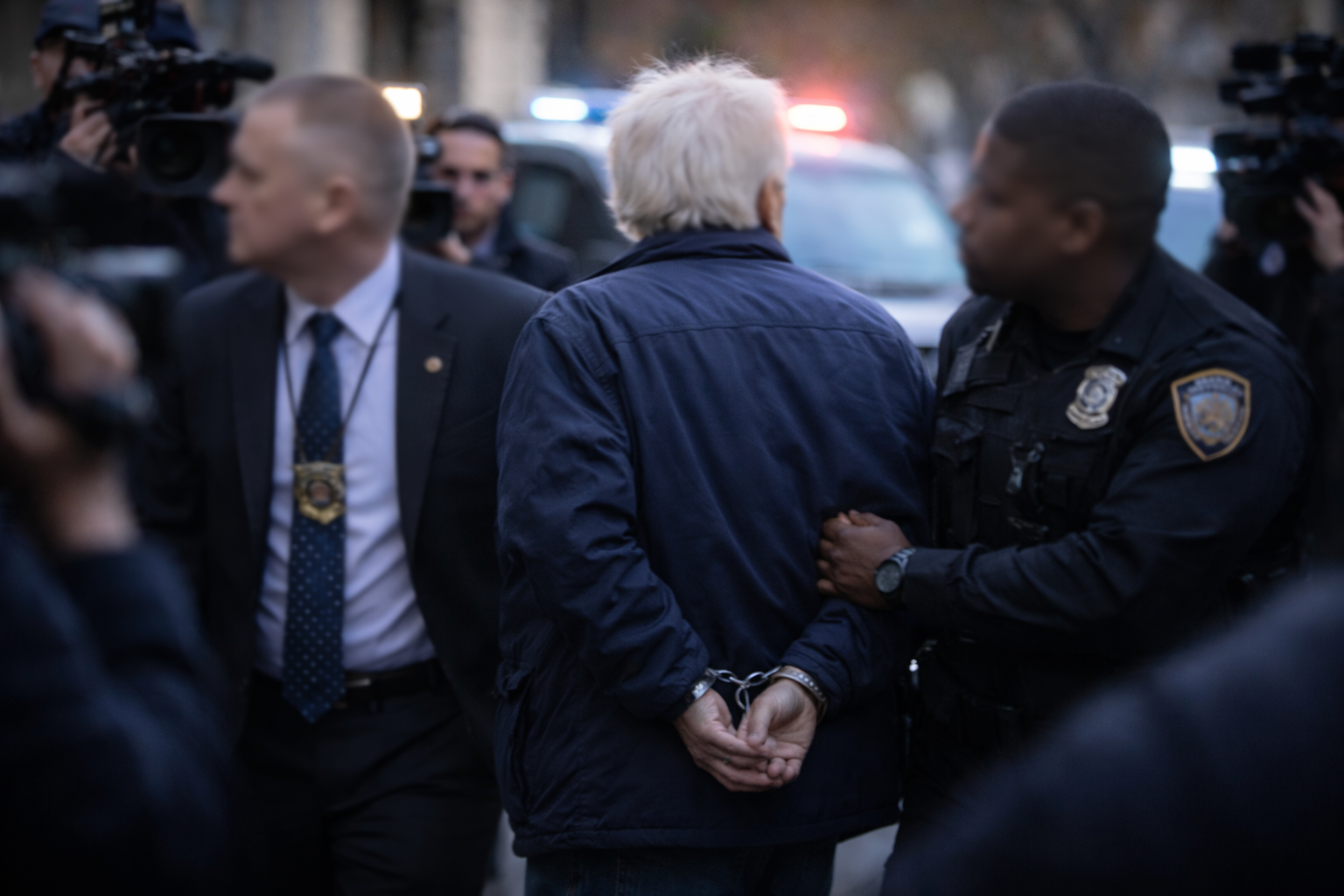
Jill Biden Ex-Husband Charged With Murder: What’s Next
Delaware authorities have charged William Stevenson, the first husband of Jill Biden, with first-degree murder in the death of his current wife, Linda Stevenson.
The headline writes itself because of the name attached. But the legal story is moving on a different track: what prosecutors can prove, what the medical findings show, and how a high-attention case behaves once it enters the slow machinery of criminal procedure.
There’s an uncomfortable gap between what people think they know from a domestic-dispute call and what the state can actually establish in court—especially while key forensic details remain undisclosed.
The story turns on whether the evidence that led to the indictment matches the public narrative—and whether the autopsy findings lock the timeline into a provable case.
Key Points
Following a Delaware grand jury indictment, authorities arrested and charged William Stevenson, 77, with first-degree murder in the death of Linda Stevenson, 64.
Police were initially called to the couple’s home on December 28, 2025, for a reported domestic dispute, where Linda Stevenson was found unresponsive and later pronounced dead.
Stevenson is being held on $500,000 cash bail after being taken into custody on February 2, 2026, according to reporting based on official updates.
Authorities have not publicly released the cause and manner of death, which keeps the most important “how” question legally unresolved in the public record for now.
Jill Biden and William Stevenson were married from 1970 to 1975; the Biden link explains the media intensity, but it does not change the prosecution’s burden.
The next phase will hinge on charging documents, forensic findings, and pre-trial rulings—not on the visibility of the names involved.
Background
William Stevenson is a Delaware businessman known publicly in part because he was Jill Biden’s first husband; they divorced in 1975, before she married Joe Biden.
According to official and widely reported accounts, police responded late on December 28, 2025, to a call described as a domestic dispute at the couple’s Delaware home. Officers found Linda Stevenson unresponsive in the home and attempted lifesaving measures, and she was pronounced dead.
After a weeks-long investigation, a grand jury indicted Stevenson, and he was arrested on February 2, 2026. He is being held on $500,000 cash bail.
Analysis
What the Charge Actually Signals—and What It Doesn’t
A first-degree murder charge is a statement of prosecutorial intent: it tells you the state believes it can prove the elements required under the statute beyond a reasonable doubt. It doesn't say what the best evidence is or how well the facts will fit the charge at trial.
The “weeks-long investigation” and the grand jury step matter because they suggest the state wasn’t relying purely on the initial call narrative. Grand juries typically receive a carefully curated record; the ultimate test is whether this record can withstand an adversarial challenge once defense counsel begins scrutinizing every detail.
Scenarios to watch:
If prosecutors release clearer medical findings, the public understanding snaps into alignment with the legal theory.
If medical findings remain contested or ambiguous, the case becomes less about headlines and more about expert credibility and timelines.
The Forensic Bottleneck: The Missing “How” Is the Whole Case
Right now, the public-facing information is heavy on what happened first (a call, a response, a person found unresponsive) and light on what happened physically (what, specifically, caused death). That’s not a media quirk—it’s the shape of a case waiting on forensic certainty.
When the cause and manner of death are not publicly detailed, it creates two simultaneous realities: a social narrative that rushes to judgment and a courtroom reality where “how” must be proved with admissible evidence and withstand cross-examination.
Scenarios to watch:
Clear, consistent forensic findings reduce room for alternative explanations and tighten the charging theory.
Any forensic ambiguity widens the defense’s strategic options (including attacking intent, mechanism, or timeline).
Pre-Trial Gravity: Bail, Venue, and the “High-Attention” Problem
The $500,000 cash bail figure is significant because it signals a court posture that treats the matter as serious and potentially high-risk. It also raises a practical issue: the longer a defendant remains detained pre-trial, the more pressure builds on both sides—prosecution to move efficiently and defense to fight aggressively.
Then there’s attention. Cases with national spillover can collide with basic trial management: jury selection, publicity boundaries, and whether the court must work harder to protect a fair process.
Scenarios to watch:
Rapid filing of pre-trial motions that shape what evidence the jury will be allowed to hear.
The court may prioritize careful jury handling due to saturation coverage, which could lead to a slower, procedural grind.
What Most Coverage Misses
The hinge is this: the Biden connection is a media accelerant, but the case’s direction will be decided by forensic clarity and pre-trial rulings that the public may not see for weeks.
The mechanism is straightforward. Public attention increases noise and emotional certainty, while the legal system moves by documentation: autopsy conclusions, investigative timelines, what was presented to the grand jury, and what survives motions practice. If those documents strongly support the charging theory, the case consolidates. If they leave gaps, the case doesn’t necessarily collapse—but it becomes a long fight over specifics, not vibes.
What would confirm these findings in the next days and weeks is not another viral headline, but (1) clearer disclosure around the medical cause and manner of death, and (2) the emergence of substantive pre-trial filings that reveal what the state is leaning on.
What Happens Next
In the short term (next 24–72 hours), the immediate “next” is procedural: court appearances, counsel activity, and the early contours of motion strategy. The public may learn little, because the most decisive facts often sit inside reports and filings that surface slowly.
Over the next weeks, the stakes become clearer for three groups:
The court is responsible for maintaining the integrity of the legal process in a case that garners significant national attention.
The prosecution must translate the investigation into courtroom-proof evidence because indictments are not verdicts.
The defense will probe every gap between a domestic-dispute origin story and the precise mechanism of death.
The main consequence is simple: everything hinges on provability, because murder cases are won or lost on whether the jury believes the state’s account is the only reasonable account supported by admissible evidence.
Real-World Impact
A local criminal case becomes national content, and three predictable things follow:
First, a workplace manager in Delaware quietly rewrites their HR playbook on domestic-incident reporting, because high-profile cases make organizations fear being considered “the place that missed warning signs.”
Second, a public defender’s office and court staff absorb extra administrative load—more calls, more attention, more pressure—because visibility makes routine steps feel politically charged.
Third, ordinary neighbors in a quiet subdivision experience the swift erosion of privacy as the street transforms into a backdrop for cameras, exposing their daily routines.
The Moment When the Story Stops Being About Names
This case will keep getting framed around proximity to power, because that’s how attention works. But the decisive story is about institutions: how a grand jury indictment turns into a trial narrative, and how forensic conclusions either anchor or destabilize that narrative.
The path diverges clearly. If the forensic record is clean and consistent, the case tightens and the endgame becomes legal resolution. If the forensic record is contested, the case expands—into experts, timelines, and pre-trial battles that will outlast the initial wave of headlines.
Watch for concrete signposts: formal filings that preview the state’s theory, any clarified autopsy findings, and any court steps taken to manage publicity. This is one of those moments that reveals how the justice system actually works when the public thinks it already knows the ending.
