Bill and Hillary Clinton Ordered to Testify in Epstein Probe as Congress Turns Up the Pressure
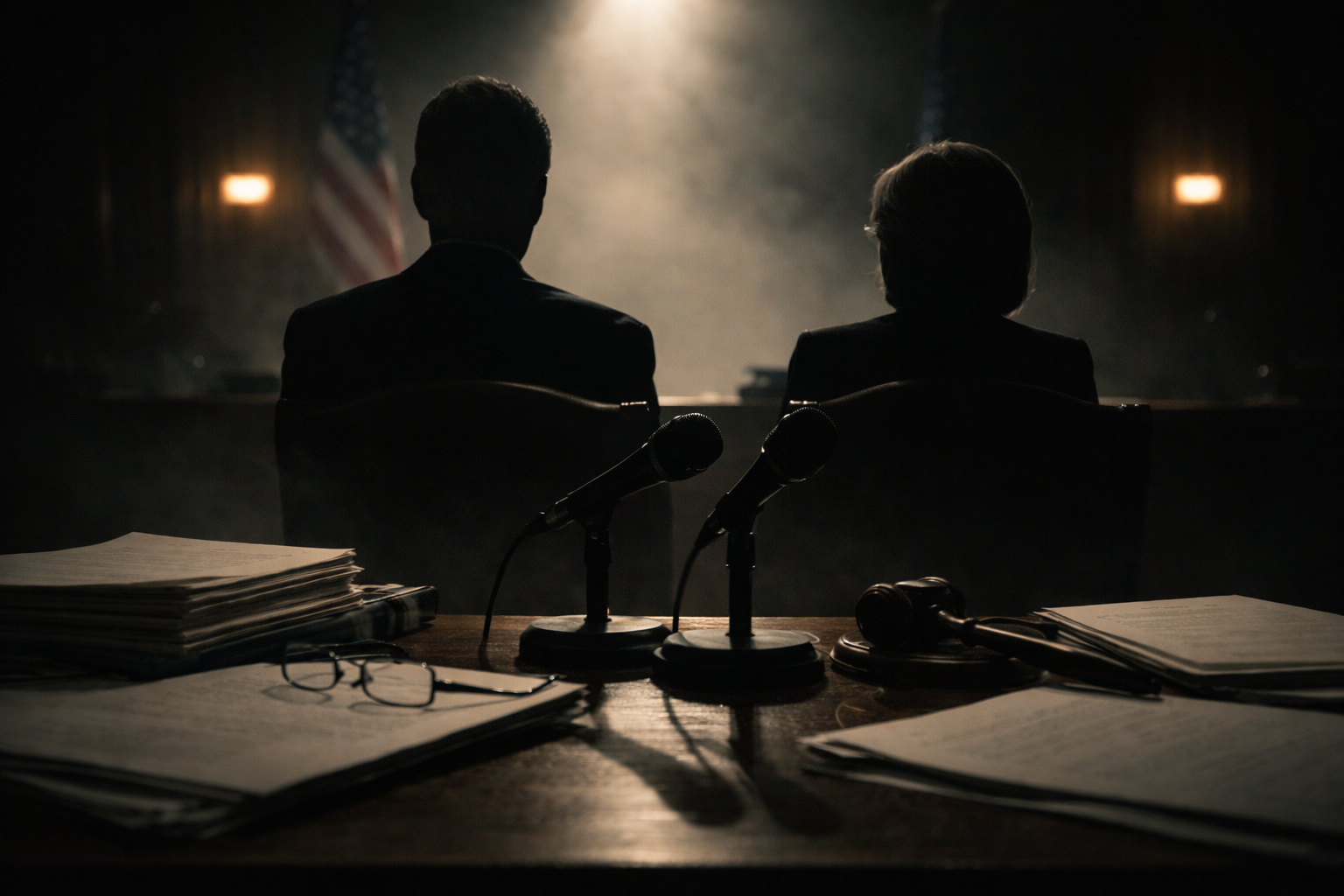
House Oversight set Clinton depositions for late February. The bigger story is process, leverage, and what comes next.
Why the Epstein Investigation Is Now Zeroing In on the Clintons
Dates are now set for former President Bill Clinton and former Secretary of State Hillary Clinton to sit for depositions in a House Oversight Committee investigation tied to Jeffrey Epstein and Ghislaine Maxwell. The committee says Hillary Clinton is scheduled for February 26 and Bill Clinton for February 27.
That sounds like a simple scheduling update. It isn’t. Once depositions are calendared, the story becomes less about gossip around famous names and more about institutional power: Congress testing the limits of its investigatory authority, high-profile witnesses trying to shape the format and optics, and a committee signaling that it’s willing to escalate toward contempt to force compliance.
One detail matters more than the headline: the depositions are meant to be transcribed and filmed, which raises the stakes on what gets asked, what becomes usable in follow-on proceedings, and how quickly the investigation can widen.
The story turns on whether this becomes a fact-finding exercise—or a precedent-setting confrontation over congressional leverage and witness control.
Key Points
Deposition dates are set: Hillary Clinton is scheduled to testify February 26, 2026, and Bill Clinton February 27, 2026, in the House Oversight Committee’s Epstein-related investigation.
The committee has framed the agreement as a capitulation under threat of contempt, after months of resistance and dispute over subpoena validity and terms.
The depositions are expected to be transcribed and filmed, a format that can increase pressure on witnesses and elevate the political and legal consequences of what is said.
Neither Clinton has been accused of wrongdoing in this context, but the committee’s focus raises reputational stakes and can generate spillover investigations.
There has been procedural friction over whether testimony should occur as depositions versus in a more public setting, which could shape the investigation’s trajectory.
The near-term question is scope: what the committee is actually trying to establish (contacts, travel, knowledge, institutional failures), and what documentation it intends to compare against testimony.
Background
The House Committee on Oversight and Government Reform has been running an investigation connected to the criminal conduct of Jeffrey Epstein and his associate Ghislaine Maxwell. The committee’s public posture has emphasized accountability and transparency, and it has pursued testimony from a range of high-profile figures, including the Clintons.
A deposition is a formal question-and-answer session taken under agreed rules. In the congressional context, the witness can be questioned by members and staff, the session is recorded in writing (transcribed), and sometimes video is also captured. It differs from a public hearing in one key way: depositions are typically controlled environments, with fewer incentives for performative exchanges but more opportunity for sustained questioning.
The Clintons’ position has been that the committee’s subpoenas and demands were improper or overreaching. The committee’s position has been that compliance is mandatory and that refusal could trigger contempt of Congress, a rarely used but high-pressure escalation tool.
Now, with dates set for late February, the dispute has moved from “Will they appear?” to “What happens when they do?”
Analysis
The Committee’s Real Objective Isn’t the Calendar—It’s Leverage
When a committee announces dates like this, it’s signaling it believes it holds the stronger hand. The implicit message isn’t just “they’re coming in.” It’s “we can compel compliance.”
That matters because congressional investigations often operate like a funnel. They start broad (who knew what, when, and why systems failed) and narrow into a few target claims. Depositions are where committees try to lock in testimony that can later be compared against documents, prior statements, travel records, calendars, flight logs, communications, and archived files. Even without criminal referrals, inconsistent answers can become the engine for continuing inquiries.
If the committee can credibly show it forced these depositions under threat of contempt, it strengthens its posture for future witnesses who might otherwise try to negotiate looser terms.
Format Is Destiny: Filmed, Transcribed Depositions Change Behavior
A filmed, transcribed deposition is not the same as a quiet interview. It changes incentives for everyone in the room.
For the committee, filming can deter evasiveness and make it easier to package excerpts for public consumption later, including in hearings, reports, or political messaging. For witnesses, filming raises the risk of a single awkward exchange becoming the story. That tends to drive a more defensive style of testimony: narrower answers, more careful language, and more frequent reliance on counsel.
The practical consequence is that substance can get squeezed by optics. If the deposition becomes performative, it may generate attention while producing fewer verifiable facts. If it stays procedural and document-driven, it can be more consequential—especially if the committee has a large record base and is looking for contradictions.
The Clintons’ Incentive: Control the Narrative Without Expanding the Blast Radius
For high-profile witnesses, the danger is rarely one single question. It’s the chain reaction.
Once sworn testimony occurs, it becomes a reference point. Future witnesses can be asked about it. Documents can be subpoenaed to test it. Staff investigators can use it to justify expanded demands. And politically, adversaries can keep the story alive by drip-feeding procedural developments.
The Clintons’ incentive is to narrow scope: keep questions bounded, avoid speculative traps, and limit the number of “new hooks” created by testimony—fresh names, dates, or claims that generate additional subpoenas. That doesn’t mean stonewalling. It means minimizing expandable material.
This is also why disputes about deposition format matter. A public hearing amplifies reputational risk. A deposition can be more controlled—but only if both sides adhere to strict rules and avoid turning it into a made-for-TV event.
What Could Actually Come Out of Two Days of Depositions
There are a few plausible scenarios, and the difference between them comes down to preparation and documentation.
One scenario is largely procedural: the depositions happen, both sides claim victory, and the committee moves on with little new information. You’ll know this is happening if post-deposition statements focus on “cooperation,” “process,” and “transparency,” with few specifics.
A second scenario is document-driven escalation: testimony is immediately contrasted with existing records, producing follow-on requests, new witness targets, or a broader inquiry into institutional decisions and failures. You’ll see this if the committee quickly issues additional subpoenas or schedules more depositions in the same orbit.
A third scenario is format warfare: the story becomes dominated by arguments over what should be public, what should be released, and who is “hiding.” That’s less informative but more viral. You’ll see this if the next headlines are about deposition conditions rather than substance.
What Most Coverage Misses
The hinge is this: once a committee successfully uses contempt pressure to set filmed depositions, the story stops being about two witnesses and becomes about a repeatable enforcement template.
The mechanism is straightforward. If a committee proves it can credibly threaten contempt to force high-profile compliance, it shifts the bargaining position for every subsequent witness. That can accelerate investigations, reduce negotiation leverage, and expand the committee’s ability to demand testimony in specific formats—especially filmed sessions that carry reputational heat.
Two signposts will confirm whether this template is the real goal. First: whether the committee announces additional compelled depositions shortly after the Clintons appear. Second: whether it releases deposition clips or a structured summary quickly, using the Clintons’ sessions as a public demonstration of “no one is above oversight.”
What Happens Next
In the next several weeks, the key variable is not just what is said on February 26–27. It’s what the committee does with the outcome.
In the short term (24–72 hours after each deposition), expect messaging about cooperation, scope, and next steps. If the committee believes it has gained traction, it will likely signal expansion—because momentum is currency in investigations.
In the longer term (months), the most consequential effect could be institutional rather than personal: a strengthened congressional posture on compelled testimony, filmed depositions, and contempt threats as leverage. That matters because it can reshape how future investigations operate across administrations and political cycles—because once a tool is normalized, both parties tend to keep it.
The main consequence line is simple: this matters because process determines power—who can force testimony, on what terms, and with what public consequences.
Real-World Impact
A compliance officer at a large institution watches this and tightens record retention guidance, because filmed depositions raise the reputational and regulatory cost of sloppy documentation.
A political staffer learns the wrong lesson and leans harder into spectacle, because video creates viral moments—even when facts are thin.
A survivor advocacy group pushes for transparency and documentation release because public institutions repeatedly failed to stop an abuser earlier, and the process is often where accountability dies quietly.
A working professional who isn’t remotely famous still feels the echo: when institutions normalize coercive process tools, the line between oversight and performance can blur fast—and trust becomes collateral damage.
The Late-February Pressure Test
Late February is now a deadline with consequences. If the depositions are careful, document-led, and focused on institutional failures, they could illuminate how power protected itself—or how systems broke down. If they devolve into optics warfare, they’ll generate heat without much light.
Either way, the fork in the road is clear: Congress can use this moment to build a factual record that survives scrutiny, or it can treat the process as the product.
Watch for two concrete signals: how quickly the committee schedules the next wave of depositions and whether it produces a structured record (transcripts, summaries, or clips) that suggests an investigation moving from names to mechanisms.
The historical significance is not that the Clintons have dates on a calendar—it’s that the rules of compelled accountability are being stress-tested in public.
