

Middle East War Explodes as Houthis Hit Four Saudi Cities and Iran Threatens Gulf Tankers — Is This How World War Three Starts?
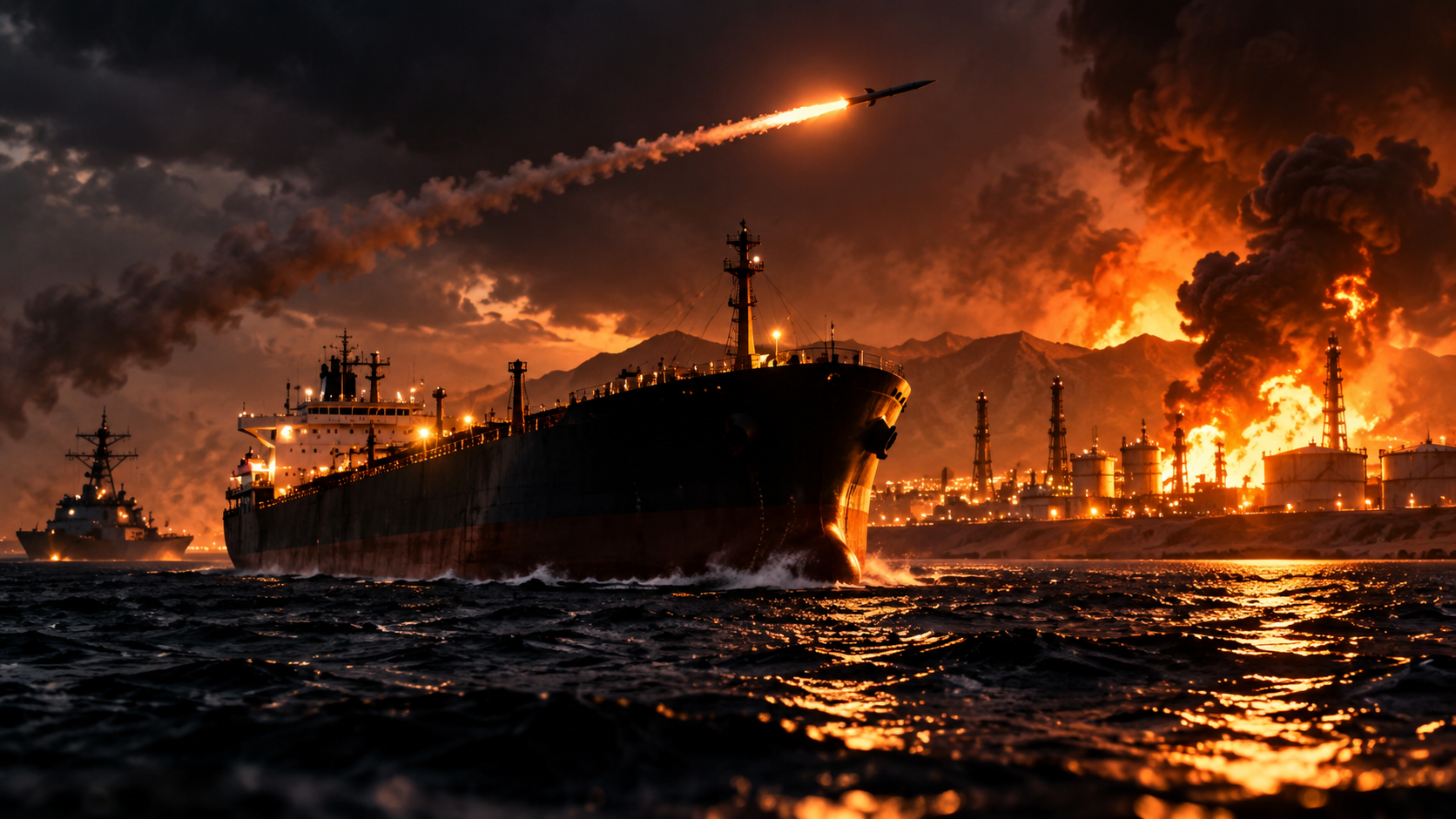
Could This Become World War Three? Middle East War Expands From Saudi Cities to Global Shipping
Why the World War Three Question Is No Longer Absurd
The Middle East war has broken through another dangerous boundary. Iran-backed Houthi forces have attacked four cities inside Saudi Arabia with missiles and drones, fires have erupted at energy installations, more than 70 people have been wounded, and Tehran is simultaneously threatening tighter control over tanker movements around one of the most important oil corridors on Earth.
This is no longer a conflict whose biggest dangers can be contained inside Iran, Israel, Yemen or the waters around the Strait of Hormuz. Saudi territory is again being struck, American and Iranian forces are directly attacking one another, and pressure is building around both major maritime gateways linking Gulf energy exports to the wider world. The question is no longer whether the war is expanding. It clearly is.
Four Saudi Cities Are Now Part of the Battlefield
The latest Houthi operation hit Abha, Khamis Mushait, Najran and Jazan in southern Saudi Arabia. Saudi officials said at least 73 civilians were wounded, including women and children, while fires were reported at energy facilities and utility sites.
The Houthis said drones and ballistic missiles were used against targets including Saudi energy infrastructure and a military airbase. Jazan is especially important because it contains a major refinery capable of processing about 400,000 barrels of crude a day, while Saudi Arabia has increasingly relied on western export routes as shipping through the Strait of Hormuz has been disrupted.
Saudi Foreign Minister Prince Faisal bin Farhan said diplomacy remained possible but made clear that Riyadh would defend itself and its interests. Egypt and Qatar were among regional governments publicly condemning the attacks, with Qatar also highlighting continuing threats against commercial shipping and freedom of navigation.
That creates an ugly strategic choice for Riyadh. A restrained response may reduce the chance of another major Saudi-Houthi war, but repeated attacks on cities and oil infrastructure make restraint politically and militarily more difficult. A large retaliation, however, risks reopening the Yemen front at precisely the moment the wider region is already saturated with conflict.
Iran Is Turning Energy Into a Battlefield
The Saudi strikes are only one piece of a much larger confrontation. Iran has announced plans for a new maritime exclusion zone around the Gulf and has threatened vessels connected to Kuwait and Bahrain, extending the contest over freedom of navigation beyond the battles already unfolding around Hormuz.
The maritime crisis was already severe before this latest escalation. The International Maritime Organization said in late August that thousands of seafarers remained exposed to heightened danger, with as many as 400 ships and roughly 6,000 crew unable to depart the Persian Gulf safely since the conflict began. Its confirmed-incident list recorded 72 incidents and 21 seafarer deaths by September 2.
That makes the economic weapon almost as significant as the missiles themselves. Before the war, roughly one-fifth of world oil supplies passed through the Strait of Hormuz. Disruption there has forced producers to lean harder on alternative outlets, particularly Saudi Arabia's route west towards the Red Sea.
Now the Houthis are applying pressure near the opposite side of that escape route.
Bab el-Mandeb connects the Gulf of Aden to the Red Sea and ultimately the Suez Canal. Houthi pressure on Saudi shipping around that corridor therefore creates a deeply uncomfortable possibility: disruption at Hormuz in the east while another armed force threatens the alternative energy route in the west.
America and Iran Are Already Fighting Directly
Another reason this escalation matters is that the United States and Iran are no longer separated merely by proxies and warnings.
US Central Command said Iranian forces launched ballistic missiles towards two US Navy warships on September 5. According to CENTCOM, an American aircraft carrier and guided-missile destroyer avoided the attacks and no US personnel were harmed. American forces then struck three Iranian crude-oil carriers, permanently disabling or destroying them.
That is a critical distinction.
Regional wars involving proxies can remain violent for years without necessarily becoming global wars. Direct military exchanges between state forces create a different escalation ladder because every subsequent strike raises questions about retaliation, deterrence and credibility.
A missile that misses today does not guarantee that the next one misses tomorrow. A strike against an empty or evacuated tanker is one thing. A successful strike killing American sailors, destroying a major US naval vessel or causing mass casualties at a Gulf base could create enormous pressure in Washington for a much larger response.
This is how escalation can become nonlinear. The most dangerous moment is not necessarily the biggest attack already carried out. It can be the single event that suddenly changes what one government believes it must do next.
Oil Is Sending Its Own Warning
Markets have already begun pricing the widening danger.
Brent crude settled at $97.92 a barrel on September 8, its highest close since July 23, while US West Texas Intermediate reached $93.03. The rise followed the Houthi strikes on Saudi energy facilities and mounting concern that disruption could spread beyond Hormuz into the Red Sea export system.
The numbers matter because the economic consequences can travel far beyond the countries firing missiles.
A prolonged squeeze on Middle Eastern crude exports can feed into petrol and diesel prices, transport costs, manufacturing, food production and inflation. The physical oil market is already showing signs of tightness, even while greater production elsewhere and weaker demand have helped keep benchmark Brent below $100.
That means this war has a global transmission mechanism even without another country firing a shot.
The battlefield is regional. The economic shockwave is not.
Could This Really Be the Start of World War Three?
Not yet.
There is an important difference between an expanding regional war and a world war. The current conflict is extraordinarily dangerous, but the available evidence does not show the world's major military powers dividing into opposing coalitions and entering sustained direct warfare against one another.
The United States is directly engaged against Iran. Saudi Arabia is again confronting the Houthis. Iran-aligned forces operate across several theatres. Israel remains central to the larger confrontation. Commercial shipping and neighbouring Gulf states are increasingly exposed.
That is already enough to make this one of the world's most dangerous military crises.
But calling it World War Three today would go beyond the evidence.
The more useful question is whether the machinery capable of producing a much larger war is appearing. On that measure, the answer is more worrying.
There are more fronts. There are more missiles. There are more armed actors. American and Iranian forces are directly exchanging attacks. Saudi Arabia is under renewed fire. International shipping is being struck or constrained. Two of the planet's most important maritime chokepoints are now connected to the same conflict.
Every additional actor also creates another opportunity for miscalculation.
What Would Turn This Into Something Much Bigger?
The first major warning would be substantial American casualties caused directly by Iran. Washington has already demonstrated that attacks on its naval forces will produce retaliation, meaning a successful Iranian strike could accelerate the cycle considerably.
The second would be a sustained Iranian campaign against Saudi Arabia, the UAE, Bahrain, Kuwait or other Gulf states rather than sporadic attacks or proxy operations. That would increase pressure on American partners to seek direct military protection and could multiply the number of active state belligerents.
The third would be the destruction or long-term paralysis of major Gulf energy infrastructure. That would transform a regional military crisis into an immediate global economic emergency.
The fourth — and the most important threshold for any genuine world-war scenario — would be direct military intervention by other great powers against US or allied forces. Without that, even a huge and destructive Middle Eastern conflict remains fundamentally different from a global war between competing power blocs.
There is no basis at present to declare that threshold crossed.
Two Chokepoints Could Decide What Happens Next
The geography makes the present moment unusually dangerous.
Hormuz is the narrow gateway between the Persian Gulf and the Arabian Sea. Bab el-Mandeb is the gateway between the Gulf of Aden and the Red Sea. Pressure on one can be managed through alternative routes. Serious simultaneous pressure on both becomes far harder to absorb.
The Houthis understand that leverage. Their renewed campaign against Saudi shipping and infrastructure comes as Riyadh has needed its Red Sea outlets precisely because the Hormuz route has become unreliable.
That gives the attacks a significance far beyond the physical damage inflicted in four Saudi cities.
They threaten the workaround.
The Most Dangerous Part Is the Loss of Firebreaks
For years, Middle Eastern escalation was repeatedly contained through imperfect firebreaks. Iran could pressure opponents through allied groups. Israel could strike hostile forces without necessarily triggering an open regional war. Saudi Arabia and the Houthis could move between combat and uneasy truce. Washington and Tehran could confront one another while usually avoiding sustained direct warfare.
Those barriers are weakening.
Iran and the United States are exchanging direct attacks. The Houthis are again hitting Saudi territory. Yemen's front lines are heating up. International shipping has suffered dozens of confirmed incidents. Energy installations are being attacked while access through crucial maritime corridors is constrained.
That does not mean World War Three has begun.
It means there are fewer layers left between today's regional war and a much more dangerous one.
The critical question now is therefore not whether another dramatic headline appears tomorrow. It is whether Saudi Arabia, Iran, the Houthis and the United States can still retaliate without repeatedly forcing the next actor higher up the escalation ladder.
If that ability disappears, historians may eventually look back at attacks such as those on Abha, Jazan, Najran and Khamis Mushait not because they started a world war, but because they showed how quickly the mechanisms designed to prevent a much larger war were coming apart.
