

“Moscow Will Burn”: Zelenskyy Signals A Dangerous New Phase Of The War
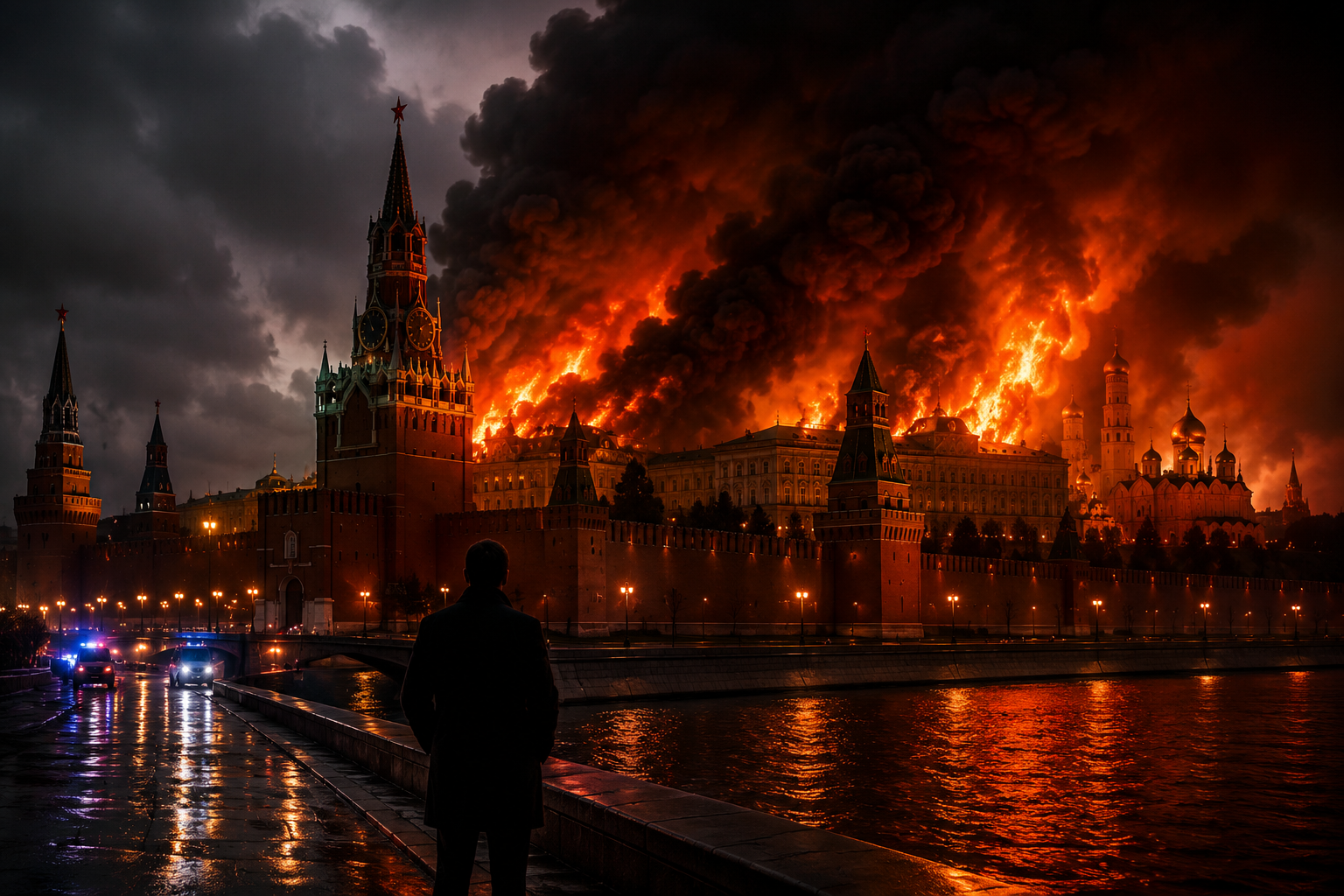
The Kremlin Just Heard The Warning It Never Wanted To Hear
If Ukraine Burns, Moscow Burns Too: Zelenskyy Issues His Most Explosive Warning Yet
Volodymyr Zelenskyy has issued one of the strongest warnings of the war so far, declaring that if Russian strikes on Ukraine continue, “Moscow will burn.” The remark came after a series of Ukrainian drone operations targeted critical infrastructure around the Russian capital and followed another deadly round of Russian attacks inside Ukraine.
On the surface, it sounds like another dramatic wartime statement. Yet the significance is not really the words themselves. The significance is that the statement reflects a growing reality: Ukraine is increasingly demonstrating that it can reach deep into Russian territory and strike assets that were once considered relatively secure.
Moscow Is No Longer As Distant As It Once Was
For much of the conflict, ordinary Russians could watch events unfold hundreds of miles away. The fighting was brutal, but for many people inside Russia, it remained something happening elsewhere.
That distance has narrowed considerably. Recent Ukrainian strikes have reportedly hit major oil infrastructure serving Moscow, disrupted flights, triggered fires and forced authorities to respond to one of the largest drone attacks the capital has faced since the war began.
The psychological effect of that development may ultimately prove as important as the physical damage itself.
Wars are often shaped not only by military victories but by perceptions of vulnerability. When citizens begin seeing airports disrupted, infrastructure burning and air defences under pressure, the conflict feels less theoretical and more immediate.
The Hidden Battle Is Economic
The refinery strikes are not random targets.
Ukraine has increasingly focused on energy infrastructure, fuel production and logistics networks that help sustain Russia’s military effort. The strategy appears designed to attack the financial and industrial foundations that support the war rather than merely focusing on frontline positions.
The refinery targeted this week is one of the most significant fuel facilities connected to the Moscow region. Even temporary disruptions can create operational complications, increase costs and force Russia to devote additional resources to protecting infrastructure rather than projecting power elsewhere.
This is why the phrase “Moscow will burn” carries weight beyond its headline value. It represents a warning that Ukraine intends to keep raising the cost of continuing the conflict.
A Dangerous Escalation Dynamic
The challenge for both sides is that escalation rarely moves in a straight line.
Russia has continued launching large-scale missile and drone attacks against Ukrainian cities. Ukraine has responded by increasing the range and sophistication of strikes inside Russia. Each side argues that its actions are a response to the other.
That creates a cycle where every new attack becomes justification for another.
The immediate military impact of any individual strike may be limited. The longer-term risk is that both sides become locked into an escalation ladder where increasingly sensitive targets become acceptable.
The war then stops being about territorial control alone and starts becoming a contest over endurance, economic resilience and public tolerance.
The Bigger Question Facing Putin
The deeper pressure point may not be military.
It may be political.
Russia has spent years projecting an image of strength, stability and control. Large-scale strikes reaching Moscow challenge that image. Even when air defences intercept the majority of incoming drones, the fact that attacks continue reaching the capital creates questions that cannot easily be ignored.
The Kremlin still possesses overwhelming military power compared with Ukraine. That has not changed.
What may be changing is the perception that Russia can wage war indefinitely while remaining insulated from many of the consequences at home.
Every successful strike against critical infrastructure pushes that perception further.
Why This Moment Matters
The most important part of Zelenskyy’s warning is not whether Moscow literally burns.
The important part is what the statement reveals about how Ukraine now views the conflict. Kyiv increasingly appears determined to demonstrate that Russia cannot continue attacking Ukrainian cities without facing growing pressure inside its own borders.
Whether that strategy eventually pushes both sides toward negotiations or simply produces another round of escalation remains uncertain.
What is becoming harder to ignore is that the war is evolving. The old assumption that destruction happens in Ukraine while Russia remains largely untouched is becoming more difficult to sustain. As drone technology improves and long-range strike capabilities expand, the battlefield is no longer defined by traditional front lines.
That is why Zelenskyy’s warning matters.
Not because of the quote itself.
Because it reflects a conflict that is steadily erasing the distance between attacker and target.
