

Russia May Have Found Ukraine’s Economic Pressure Point: The Next Global Food Shock
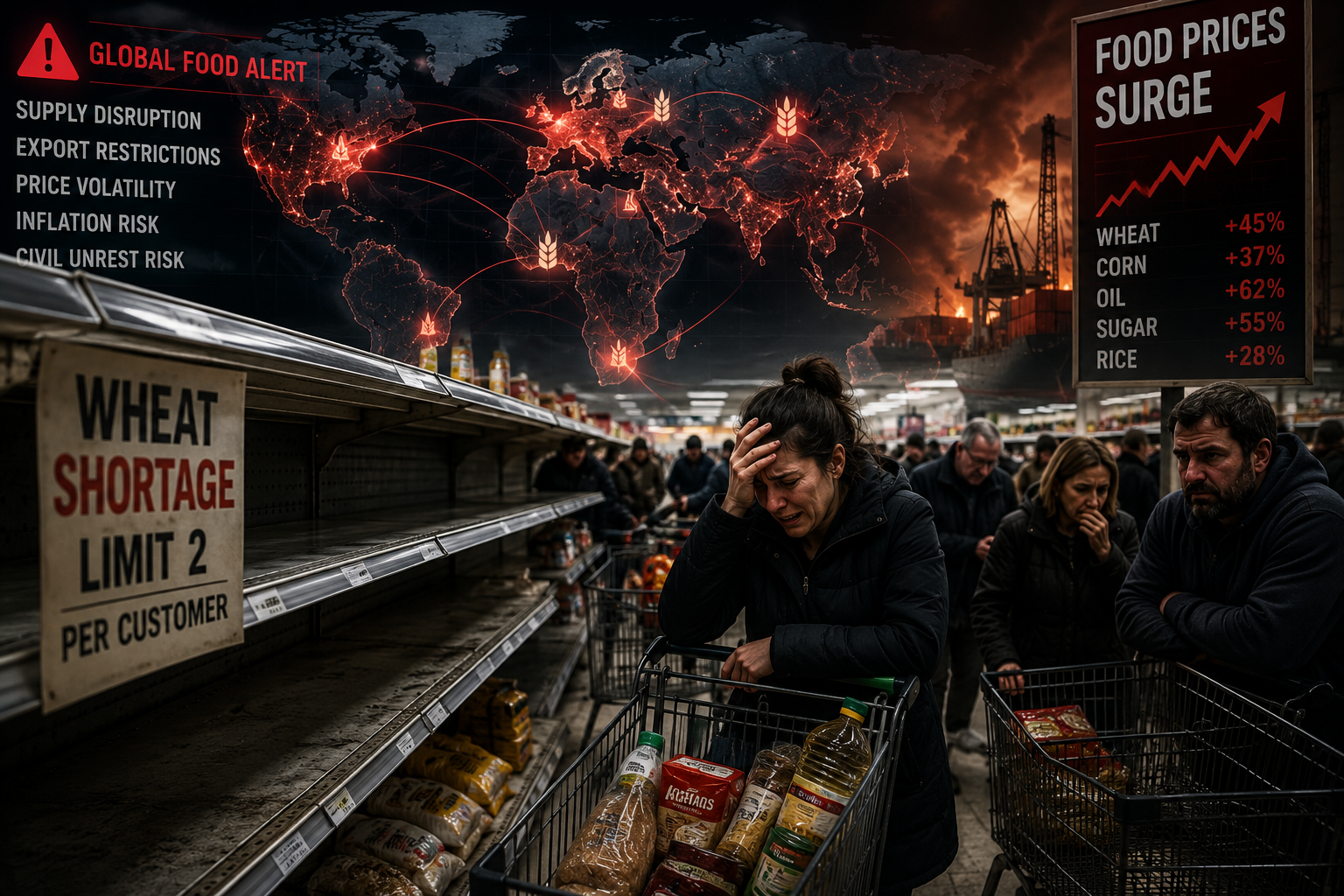
Why A Third Of Ukraine’s Grain Exports Could Suddenly Disappear
A War Far From Most Homes Could Soon Affect Every Kitchen
The Warning That Markets Cannot IgnoreUkraine has issued one of its starkest economic warnings in months. Officials and industry leaders now believe intensifying Russian attacks on ports, vessels, railways and supporting infrastructure could reduce Ukrainian grain exports by as much as one-third during critical export periods. The numbers involved are enormous, but the deeper significance is even larger.
For many people, grain exports sound like a niche agricultural issue. In reality, grain sits near the base of the global economic pyramid. It feeds populations directly, supports livestock industries, influences food inflation, and generates billions in export revenue. When a major exporter faces disruption, the consequences rarely stay local.
Why Ukraine Matters More Than Most People Realise
Ukraine remains one of the world's most important agricultural producers. In recent years it has supplied significant portions of global wheat and corn exports while also serving as a major exporter of sunflower products and animal feed ingredients. Its agricultural sector is not simply another industry. It is one of the pillars supporting the country's economy during wartime.
Before the full-scale war, the overwhelming majority of Ukrainian agricultural exports moved through Black Sea ports. Although alternative routes have been developed, none offer the same scale, efficiency or cost structure. Every disruption to those routes immediately raises questions about how much grain can leave the country and how quickly it can reach global markets.
The result is a simple but powerful reality. Ukraine does not merely export grain. It exports stability into global food markets.
The Hidden Economic Strategy Behind The Attacks
The obvious interpretation is military.
The deeper interpretation is economic.
According to Ukrainian officials, key port facilities in the Odesa region have been operating under relentless pressure. Terminal operators describe repeated interruptions, infrastructure damage and growing operational challenges. If exports fall from roughly six million tonnes per month toward four million tonnes, the consequences extend far beyond shipping schedules.
Agricultural exports generate foreign currency, support rural economies and provide income for thousands of farmers. If grain becomes trapped inside the country, inventories rise, domestic prices fall and farmer profitability declines. That creates pressure not only on current exports but on future production decisions as well.
In other words, damaging export infrastructure does not just affect today's harvest. It can influence tomorrow's harvest too.
Why Food Prices Could Become The Next Battleground
The immediate reaction from many readers will be simple.
Will food prices rise?
The answer is more complex than a straightforward yes or no.
Global grain supplies are currently more resilient than they were during the initial shock of 2022. Markets have had time to adjust and alternative supply sources exist. However, commodity markets are forward-looking. They price future risk long before shortages appear in supermarkets.
If traders begin to believe Ukrainian exports will remain constrained for months rather than weeks, futures markets may start embedding higher risk premiums. Shipping insurers may demand more compensation. Freight costs may rise. Importing countries may seek additional supply elsewhere.
Each individual increase may appear small.
Together they can create meaningful inflationary pressure.
The Countries Most Exposed
The countries most likely to feel pressure are not necessarily those closest to Ukraine.
Many nations across North Africa, the Middle East and parts of Asia remain heavily dependent on imported grain. These regions are often highly sensitive to food inflation because food accounts for a larger proportion of household spending than in wealthier Western economies.
History shows that food insecurity can become a political issue remarkably quickly. Rising bread prices have influenced protests, government stability and social unrest in numerous countries over the past several decades.
That is why grain matters.
It is never just about agriculture.
It is about economics, politics and social stability simultaneously.
The War Is Increasingly About Economic Endurance
An important pattern is becoming visible across the broader conflict.
Ukraine has intensified strikes against parts of Russia's energy infrastructure while Russia continues targeting Ukrainian export capacity and logistics networks. Increasingly, both sides appear focused on weakening the economic foundations that sustain a long war.
Oil revenues, grain revenues, transport corridors, shipping routes and industrial infrastructure are becoming strategic assets every bit as important as military positions. The contest is no longer solely about territory.
It is about endurance.
Whichever side can better protect its economic lifelines gains a powerful advantage over time.
The Bigger Question Nobody Can Yet Answer
The immediate warning concerns grain exports.
The larger question concerns resilience.
Can Ukraine continue moving agricultural products at sufficient scale despite sustained attacks? Can alternative routes absorb enough volume? Can international shipping operators maintain confidence in Black Sea operations? And how much disruption can global food markets absorb before prices begin responding more aggressively?
Those questions remain unanswered.
What is clear is that this story is much bigger than a few damaged port facilities. Ukraine's grain exports sit at the intersection of food security, inflation, geopolitics and wartime economics. If export volumes really do fall by a third, the effects will not stop at Ukraine's borders. They will move through supply chains, commodity markets and national economies around the world. That is why the real battle is not over grain itself. It is over who controls the economic arteries that keep entire societies functioning.
