

Niger’s Main Airport Comes Under Attack As Explosions And Gunfire Rock The Capital
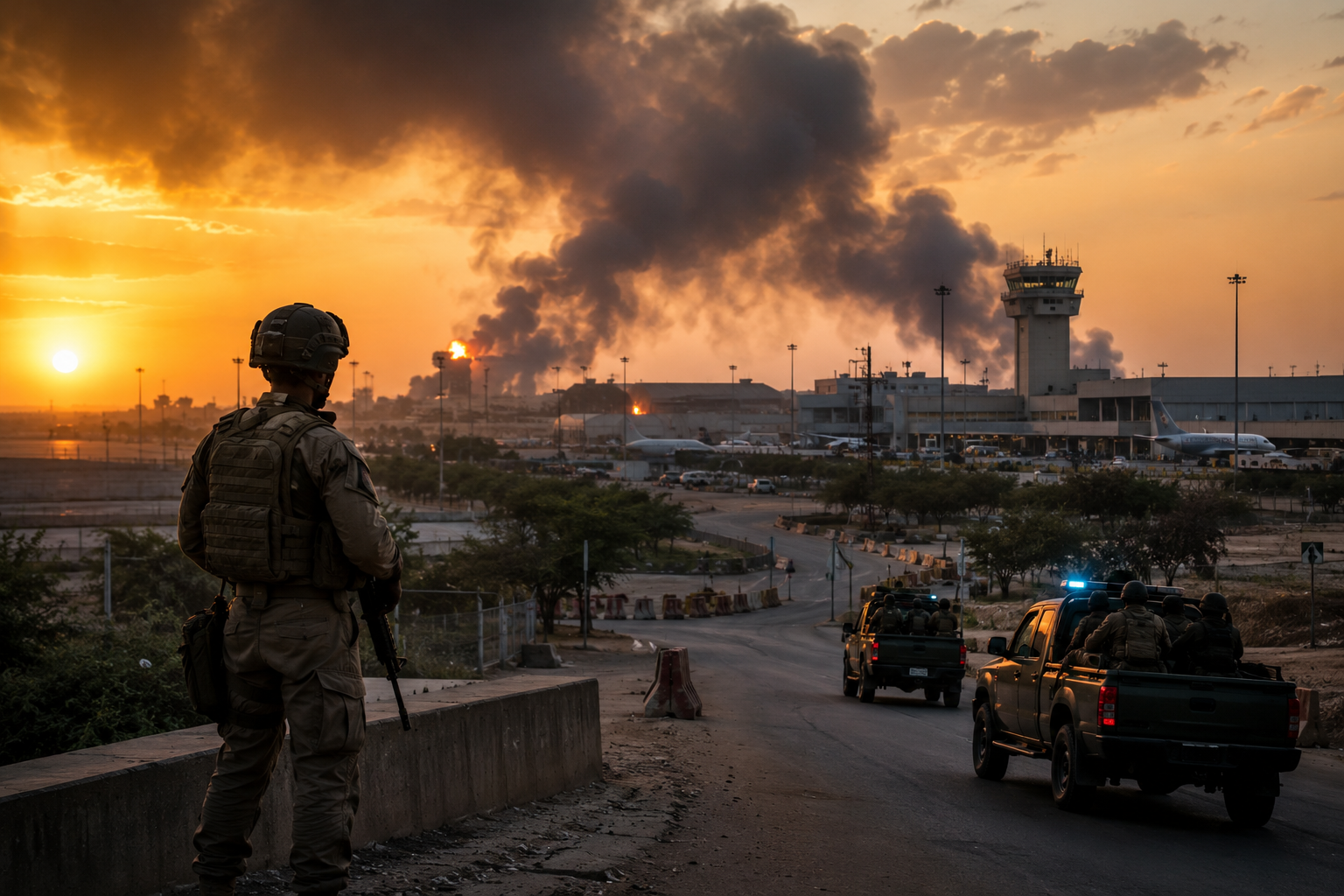
Sustained Gunfire Erupts At Strategic Niger Airport In Fresh Security Crisis
What Has Been Confirmed So Far
Explosions and sustained gunfire were reported early Thursday morning at Diori Hamani International Airport in Niamey, the capital of Niger. Witnesses described hearing blasts followed by sporadic gunfire lasting for well over an hour as security forces moved to secure the area.
Security personnel reportedly responded after armed attackers breached airport defences. Access routes around the airport were quickly restricted while soldiers conducted searches and established additional security measures. At the time of writing, authorities have not publicly identified the attackers.
Why This Airport Matters
This was not an attack on an ordinary civilian airport.
Diori Hamani International Airport is one of the most strategically important sites in Niger. Alongside commercial aviation operations, the location hosts military facilities and serves as a key regional security hub for the military governments of Niger, Burkina Faso and Mali.
That means any successful attack carries significance far beyond disruption to flights. It sends a message that heavily protected national infrastructure remains vulnerable even after major security investments.
The Shadow Of January
The latest incident comes only months after another major attack on the same airport.
In January, armed militants launched a significant assault on facilities at the airport and adjacent military infrastructure. Islamic State affiliates later claimed responsibility for that operation, which involved gunfire, explosions and attacks against military assets.
Following that attack, security measures around the airport were reportedly strengthened. The fact that another assault has now occurred raises difficult questions about whether militant groups are adapting faster than regional governments can respond.
The Bigger Sahel Problem
The deeper story is not simply about one airport.
Niger sits at the heart of the Sahel, a region that has become one of the world's most active conflict zones. Armed groups linked to both Islamic State and al-Qaeda have expanded operations across Niger, Mali and Burkina Faso over recent years.
Since Niger's 2023 military coup, the country has undergone a major geopolitical realignment. Western military forces have departed while new security arrangements have emerged with regional partners and Russia. Despite these changes, militant attacks have continued across large parts of the country.
The challenge facing authorities is that airports, military bases and government facilities carry enormous symbolic value. Even limited attacks can generate international headlines and undermine confidence in state control.
What Remains Unknown
Several critical questions remain unanswered.
Authorities have not yet confirmed the identity of the attackers. There is also no official assessment of casualties, damage to infrastructure or whether any aircraft or military assets were affected.
The known timeline currently suggests security forces responded quickly, but the full extent of the breach remains unclear. As often happens in developing security incidents, the earliest reports provide only part of the picture.
That uncertainty matters because the scale of the attack will determine whether this is remembered as a contained security incident or another major escalation in the region's long-running conflict.
The Real Pressure Point
The most important aspect of this story may not be what happened today.
It may be what the attack reveals about the future trajectory of security across the Sahel.
Airports are among the most heavily protected facilities in any country. When attackers repeatedly target strategic transport and military infrastructure, they are attempting to demonstrate reach, capability and persistence. Even unsuccessful attacks can have political consequences if they create the perception that governments are struggling to secure critical assets.
For Niger's military leadership, the immediate challenge is restoring confidence and demonstrating control. For the wider region, the deeper question is whether attacks on major strategic targets are becoming the new normal. The answer to that question could shape security, investment and regional stability for years to come.
