

Most Common New Year’s Resolutions for 2026, Ranked: What People Keep Promising, and Why It Still Matters
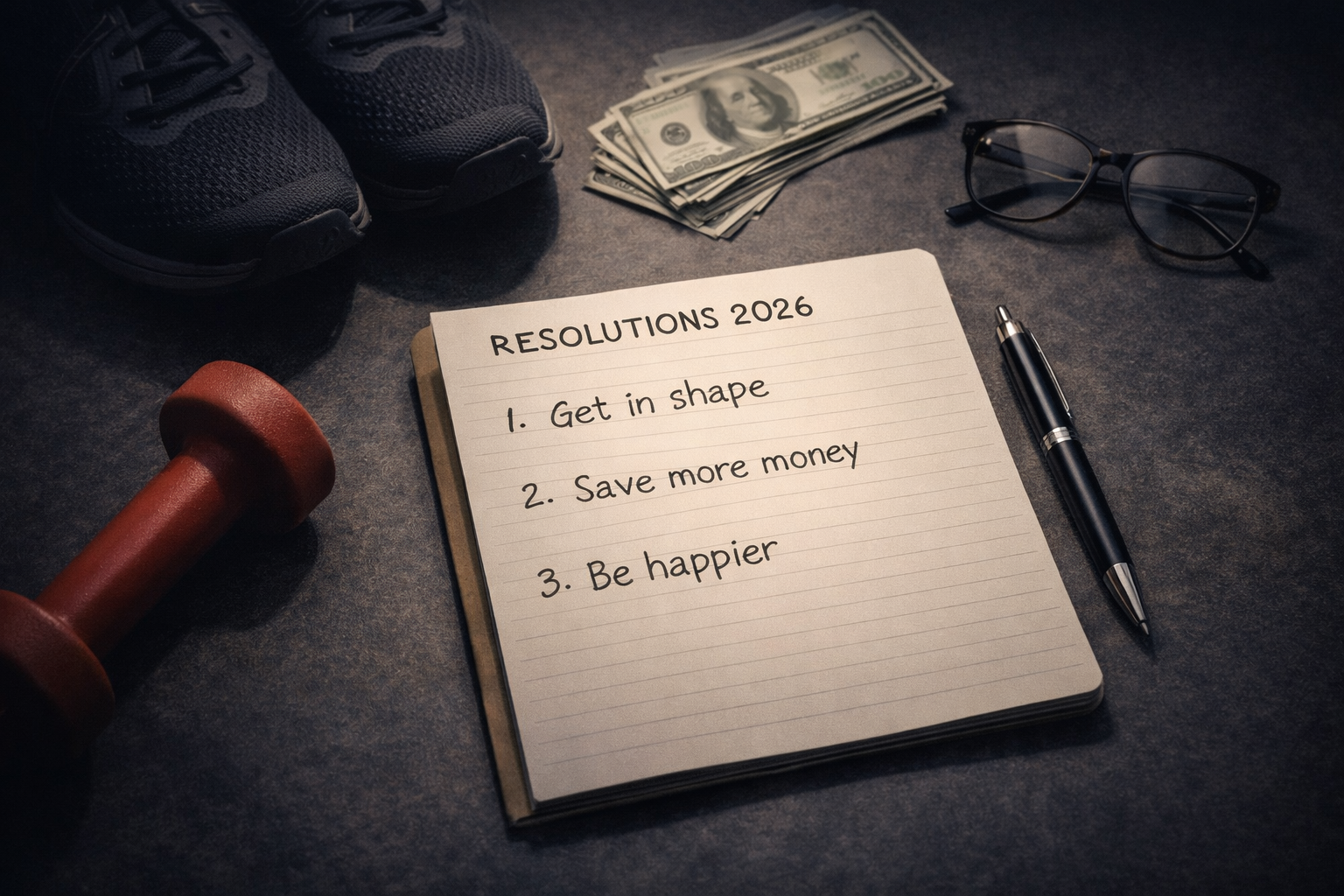
As of December 28, 2025, New Year’s resolutions are returning in their usual shape: health first, money close behind, and a quieter third theme that is becoming harder to ignore—happiness. The list barely changes year to year, but the reasons underneath it do.
The most common New Year’s resolutions are not random self-help clichés. They are a snapshot of what feels most unstable in daily life. Bodies feel out of rhythm. Budgets feel tighter. Attention feels more fragmented. Resolutions cluster where people crave control.
This piece ranks the most common New Year’s resolutions for 2026, explains what sits behind them, and shows how “fresh start” goals can either become a short January performance—or a realistic redesign of everyday life.
The story turns on whether resolutions in 2026 remain a ritual of self-pressure—or become a practical way to reduce friction and regain steadiness.
Key Points
The most common New Year’s resolutions for 2026, ranked 1–10:
1) Exercise more,
2) Eat healthier
3) Save more money
4) Lose weight,
5) Improve physical health in general,
6) Be happier and improve mental health,
7) Spend more time with family and friends
8) Learn something new.
9) Read more,
10) Drink less alcohol.
Health goals dominate because they are visible, measurable, and culturally rewarded—but they also fail fast when time and energy are already scarce.
Money goals stay near the top because they promise relief from stress, not just higher numbers; budgeting is often a coping strategy as much as a plan.
“Be happy” rising near the top is a tell: many people are not chasing optimization, they are chasing relief from constant mental load.
Technology can help consistency through reminders and tracking, but it can also turn goals into subscription traps and streak-based guilt.
The best predictor of success is not motivation on January 1. It is whether the goal is translated into a small, repeatable behavior tied to a stable daily cue.
Background
Modern resolutions are powered by a calendar illusion that still works. A new year creates a clean psychological boundary: before and after. People use that boundary to reset identity, even if circumstances are unchanged.
Resolutions also spread socially. January is saturated with “reset” messaging—fitness, food, spending, sobriety, productivity. That messaging narrows the menu of “acceptable” goals. It is easier to declare a resolution that fits the season than one that challenges deeper patterns.
The final driver is measurement. “Exercise more” has an obvious scoreboard. “Be less avoidant” does not. Many people choose goals that sound concrete because they are easier to explain, track, and share. The problem is that the easiest-to-measure goals often sit downstream of the hardest-to-fix constraints: time, stress, sleep, and environment.
Analysis
Political and Geopolitical Dimensions
Resolutions look private, but they sit inside public systems. A person can resolve to eat healthier while living in a food environment built around speed and convenience. A person can resolve to save money while rent, insurance, and debt costs eat the margin. These are not excuses. They are the context that shapes what goals feel urgent and what success looks like.
In 2026, the recurring priorities reflect a wider mood: a desire for stability after a year of noise. When daily life feels unpredictable, the body and the budget become the two most immediate targets for control. That is why exercise and money remain perennial winners.
Economic and Market Impact
The most common New Year’s resolutions create a predictable January economy. Memberships, apps, coaching, meal plans, and “new year” bundles surge, then fade. This cycle can help when it lowers friction for a first step. It can also harm when it turns hope into recurring spending.
Money resolutions are especially exposed to this trap. People resolve to save, then get offered tools that require paid subscriptions to do basic tracking. The intention is good, but the market can quietly convert discipline into another monthly bill.
There is a second economic layer: many resolutions are attempts to reduce stress. Saving money is not only about wealth. It is about breathing room. That is why budgeting and saving stay high even when people know, realistically, that they have limited flexibility.
Social and Cultural Fallout
Resolutions are also a performance. Some goals are socially legible. Exercise and weight loss are easy to signal. They attract praise. That social reward can boost commitment, but it also adds pressure. When a resolution becomes a public identity statement, a small slip can feel like a public failure.
At the same time, 2026 shows a subtle shift in the emotional tone of resolutions. “Be happy” and “improve mental health” are moving closer to the center of the list. That suggests many people are less interested in self-optimization and more interested in recovering basic steadiness: better sleep, calmer mornings, fewer compulsions, less doom-scrolling, and more time with people who feel safe.
This is the most important change to notice. It is not the goal list changing. It is what people mean by “better”.
Technological and Security Implications
Technology now plays a crucial role in the success or failure of resolutions. Wearables, habit trackers, budgeting apps, and AI-style coaching can reduce decision fatigue and make the next action obvious. The right tool can turn a vague aspiration into a repeatable routine.
But there are trade-offs. Many tools rely on streaks, push alerts, and comparison. These mechanics can backfire. A broken streak can trigger an all-or-nothing spiral: “I failed, so the month is ruined.” Some apps also collect sensitive data about health, location, spending, and routines. January is when people are most likely to over-share because motivation is high and privacy feels abstract.
In 2026, the quiet risk extends beyond just wasted money. It is handing over personal data in exchange for short-lived optimism.
What Most Coverage Misses
The overlooked truth about the most common New Year’s resolutions is that they are often substitutes for something deeper. “Exercise more” can be a proxy for confidence. “Eat healthier” can be a proxy for control. “Save money” can be a proxy for safety. “Be happy” can be a proxy for relief.
This matters because proxies fail when treated like the real goal. If the real need is safety, an aggressive budget that creates deprivation will not last. If the real need is relief, an intense gym plan that adds stress will collapse. The goal must match the need.
The most realistic resolution for 2026 is not a dramatic reinvention. It is reducing friction in one narrow lane: a better breakfast default, a protected walk, an automated savings rule, a screen boundary, a bedtime routine that actually survives a normal weekday.
Why This Matters
The resolution season influences more than individual behavior. It shapes household routines, workplace wellness messaging, and consumer spending patterns. The people most affected are those already operating at the edge of time and money: shift workers, parents, carers, and anyone juggling multiple jobs or unstable schedules.
In the short term, resolutions can increase self-scrutiny and spending. In the long term, they can either build self-trust or erode it. Repeating the same failed resolution year after year teaches a person that change is impossible. Choosing a smaller, better-designed version teaches the opposite.
The key events to watch next are behavioural, not rhetorical: how quickly January enthusiasm turns into “reset your reset” messaging; whether fitness attendance and budgeting activity hold through late January; and whether mental-health goals translate into actual behaviors like sleep consistency, reduced alcohol, less late-night scrolling, and regular social contact.
Real-World Impact
A nurse in London resolves to eat healthier, but the real obstacle is a schedule that makes meal prep feel impossible. The resolution works only when it becomes a default system: two reliable packed meals per week, a basic grocery template, and a plan for night shifts that does not rely on willpower.
A junior analyst in Chicago resolves to save more money, but fixed costs dominate. The resolution becomes less about cutting small luxuries and more about building a buffer: automating a small transfer on payday, renegotiating one bill, and putting a cap on one category that consistently leaks.
A parent in Sydney resolves to be happier, but the days are filled with logistics. The resolution sticks only when happiness is converted into specific actions: a protected twenty-minute walk, one social plan that is actually kept, and a boundary around evening screen time.
A small business owner in Manchester resolves to exercise more, but the week is unpredictable. The resolution survives only when it becomes the smallest possible version that is always doable: ten minutes after coffee, a short routine that requires no travel, and a rule that “something counts” even on busy days.
What’s Next?
The most common New Year’s resolutions for 2026 will not surprise anyone. That is the point. They reveal persistent pressure points: health, money, and mental load.
The fork in the road is whether people keep treating resolutions like a January identity performance, or redesign them as small systems that survive a normal Wednesday. The trade-off is pride versus reliability. Big promises feel satisfying. Small routines quietly change outcomes.
The signals that will show which way 2026 is breaking are simple: whether goals are converted into repeatable behaviors within the first two weeks, whether people plan for slips instead of pretending they will not happen, and whether “be happier” becomes a real change in daily rhythm rather than a slogan.
