Pentagon Puts 1,500 Troops on Standby for Possible Minnesota Deployment — Here’s the Escalation Ladder
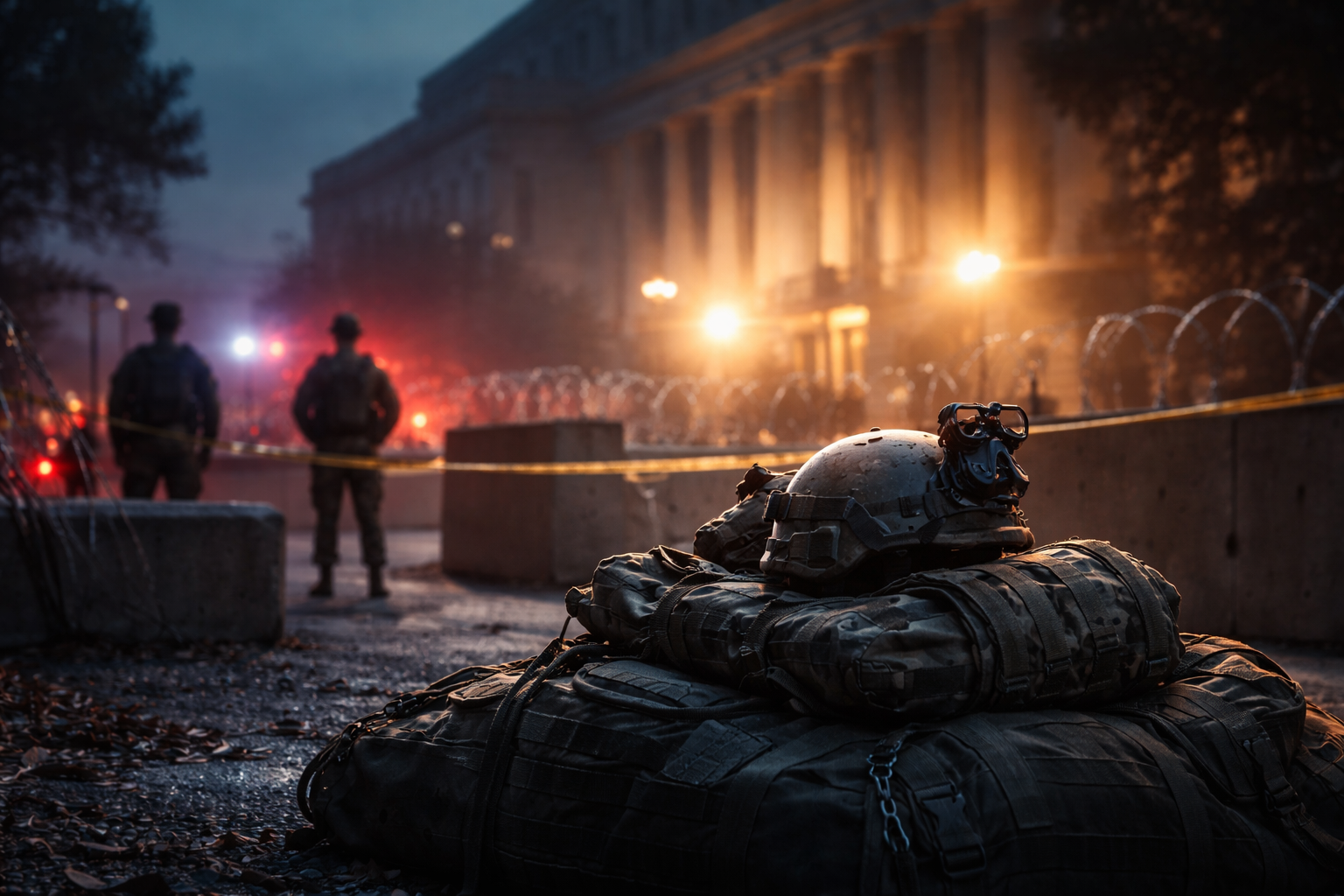
Pentagon readies 1,500 Alaska troops for possible Minnesota deployment as protests escalate. The real story is the legal ladder before the Insurrection Act.
The Pentagon has placed about 1,500 active-duty soldiers in Alaska on a “prepare-to-deploy” footing for a potential mission to Minnesota, as unrest grows around immigration enforcement protests in and around Minneapolis. The order does not mean troops are moving yet — it’s the military equivalent of laying kit out on the bed and checking the batteries — but it widens the menu of federal response options in a way that can change behaviour on the ground.
The immediate backdrop is a sharp deterioration in street conditions following clashes involving federal immigration agents, and a White House threat to use the Insurrection Act if violence continues. But the more important story — the one that decides whether this becomes politics theatre or a domestic security event — is the legal and operational ladder short of the Insurrection Act, and the specific trigger that moves the situation from “planning” to “deployment”.
The story turns on whether Minnesota can keep federal officers and sites secure without the federal government deciding it must do it for them.
Key Points
“Prepare-to-deploy” means units are alerted, staffed, and logistically readied; it is not a deployment order.
The standby force is reported as elements of the Army’s 11th Airborne Division in Alaska, built for harsh conditions — relevant because winter constraints shape tactics and risk.
The administration has publicly floated the Insurrection Act, but there are several steps below it that can still put troops on streets (with tighter limits on what they can do).
The most plausible near-term mission, if any, is federal property/personnel protection and support roles — not general policing.
National Guard choices matter as much as active-duty choices: state activation, Title 32 status, or federalisation all change the rules of engagement and politics.
The practical “flip” from politics to security is not a press statement — it’s a formal federal determination that ordinary law enforcement can’t reliably protect federal personnel/sites or execute federal operations in the area.
Background
In the last week, Minnesota has become a focal point for the federal government’s intensified immigration enforcement posture. Reporting indicates a surge in federal immigration agents in the Minneapolis–St Paul area and escalating confrontations between protesters and federal personnel. The Pentagon’s alert posture sits alongside — and is politically intertwined with — a White House threat to invoke the Insurrection Act, a rarely used law that allows the President to deploy military forces domestically in extreme circumstances.
Two things can be true at once:
The military routinely plans for contingencies and puts units on standby.
Public threats to escalate can pull a situation towards escalation, because each side starts planning around the other side’s worst-case move.
To understand where this goes, you have to separate three layers:
What troops are legally allowed to do
What missions are operationally useful
What decision thresholds politicians actually respond to
Analysis
Standby: what “prepare-to-deploy” really signals
A standby order is a planning and readiness move. It typically means:
personnel accountability (who is available and deployable),
equipment checks and load plans,
transport coordination,
mission rehearsal at the level of “if we go, what’s our first 24 hours?”
It is also a signalling device. It tells every actor — local officials, protesters, federal agencies — that the Pentagon can move quickly if instructed. That alone can shift incentives: people start gaming what they think the next step will be.
The ladder before the Insurrection Act: what can happen without “martial law vibes”
Most public coverage treats it as a binary: either no troops, or Insurrection Act. The reality is a stepped ladder, and several rungs still bring uniforms into the picture.
Rung 1 — Standby / planning (no movement)
Pentagon prepares options; nothing changes on streets except expectations.
Rung 2 — Federal property & personnel protection (limited mission)
Active-duty troops can be used in narrow roles aimed at protecting federal buildings, facilities, and personnel.
Typical tasks: perimeter security, access control, escorting, hardening federal sites, logistics, comms, transport.
Key constraint: troops generally do not conduct civilian law enforcement (search, seizure, arrest) under longstanding limits like the Posse Comitatus framework unless a statutory exception is invoked.
Rung 3 — “Support to civilian agencies” (useful, quiet, and easily misunderstood)
The military can support federal agencies with capabilities civilians don’t easily replicate at speed: planning cells, communications, aviation lift, medical support, surveillance and logistics.
This can be politically explosive because it looks like “militarisation” even when the legal role is technically support-only.
Rung 4 — National Guard: state control or federal control changes the whole chessboard
State Active Duty: Governor controls Guard; broad state public order missions.
Title 32: Governor controls Guard but with federal funding; still not “federal troops” in the same way.
Federalised Guard (Title 10): President takes control; political temperature spikes and legal boundaries tighten unless an exception applies.
Rung 5 — Insurrection Act
This is the big statutory off-ramp from the usual restrictions, allowing federal forces (including active-duty and/or federalised Guard) to take on far more direct roles in restoring order — and it is precisely why it’s treated as extraordinary.
The crucial point: you can get visible troops on the ground at Rung 2–4 — and the public will often experience it as escalation even if the legal authority and mission scope are narrower than the Insurrection Act.
The operational reality: why “protect federal stuff” is the most likely first mission
If the White House wants a step that is:
legally easier than invoking the Insurrection Act,
operationally defensible,
and symbolically forceful,
then protection of federal personnel and facilities is the natural first destination.
Why? Because it aligns with a concrete security claim: federal agents and federal property are being targeted, and the federal government is responsible for their safety. It also avoids (at least on paper) the hardest legal and political problem: asking troops to do policing.
That doesn’t make it low-risk. Mixing soldiers, protests, and disputed legitimacy is exactly how incidents happen — especially in winter conditions where mobility, visibility, and crowd dynamics are harder to manage.
What Most Coverage Misses
The hinge is not “does the President say ‘Insurrection Act’?” — it’s whether federal authorities can justify a protective mission by documenting that ordinary policing can’t reliably secure federal operations.
Mechanism: once the federal government frames the situation as inability to protect federal personnel/sites, the legal and bureaucratic path to a limited troop mission becomes much smoother — and the politics of backing down become harder for both sides. Local leaders then face a compressed choice: demonstrate control and cooperation fast, or lose the argument that federal escalation is unnecessary.
Signposts to watch in the next hours/days:
A specific request channel: DHS/DOJ formally asking DoD for assistance with defined tasks (not general “restore order” language).
Mission language tightening: public statements shifting from “considering options” to “protecting federal personnel/facilities” or “ensuring federal operations can proceed”.
Guard posture changes: Minnesota Guard moving from “mobilised” to actually deployed in public-order roles — signalling that the state is trying to close the capability gap before Washington does.
What Happens Next
In the next 24–72 hours, the likely sequence is administrative and visible rather than dramatic:
federal agencies increase their footprint;
state and city leaders try to show they can keep streets and federal sites stable;
the Pentagon keeps the standby posture until either conditions cool or a mission request lands.
In the weeks ahead, two longer-tail consequences matter:
Litigation and injunctions can become a parallel battlefield, shaping what federal agents can do and what role supporting forces can play.
Precedent: whichever rung the federal government uses now becomes easier to use later, because the playbook and political muscle memory are established.
The “because” line: this matters because once a troop mission is justified as protecting federal operations, the bar for expanding that mission can fall quickly if violence persists — and the friction between federal authority and state legitimacy becomes the central driver.
Real-World Impact
A small business owner near a federal building sees footfall crater as security perimeters widen and roads close earlier.
A hospital system quietly preps for weekend surge protocols because crowd-control injuries follow predictable patterns when tensions rise.
Employers shift to remote work for city-centre staff because transport disruptions become the new normal, even if protests are localised.
Ordinary residents reroute daily life around “hot zones”, creating a sense of occupation regardless of the legal fine print.
The Trigger That Changes Everything
The single trigger that flips this from politics to security is a formal federal decision that ordinary law enforcement can’t keep federal personnel/sites safe enough for federal operations to continue.
In practice, that decision usually crystallises after one of three concrete conditions appears:
sustained, repeatable attacks on federal officers or facilities (not one-off disorder);
credible intelligence of planned serious harm tied to federal operations;
or a visible failure of local/state forces to prevent interference with federal actions — whether due to incapacity, miscoordination, or refusal.
Once that determination is made, “standby” stops being planning. It becomes a clock.
