Putin Frees Critically Ill US Marine After Trump Team’s High-Stakes Intervention
Inside the Diplomatic Push That Brought Robert Gilman Home
Putin’s Surprise Goodwill Gesture Frees Ailing American Veteran
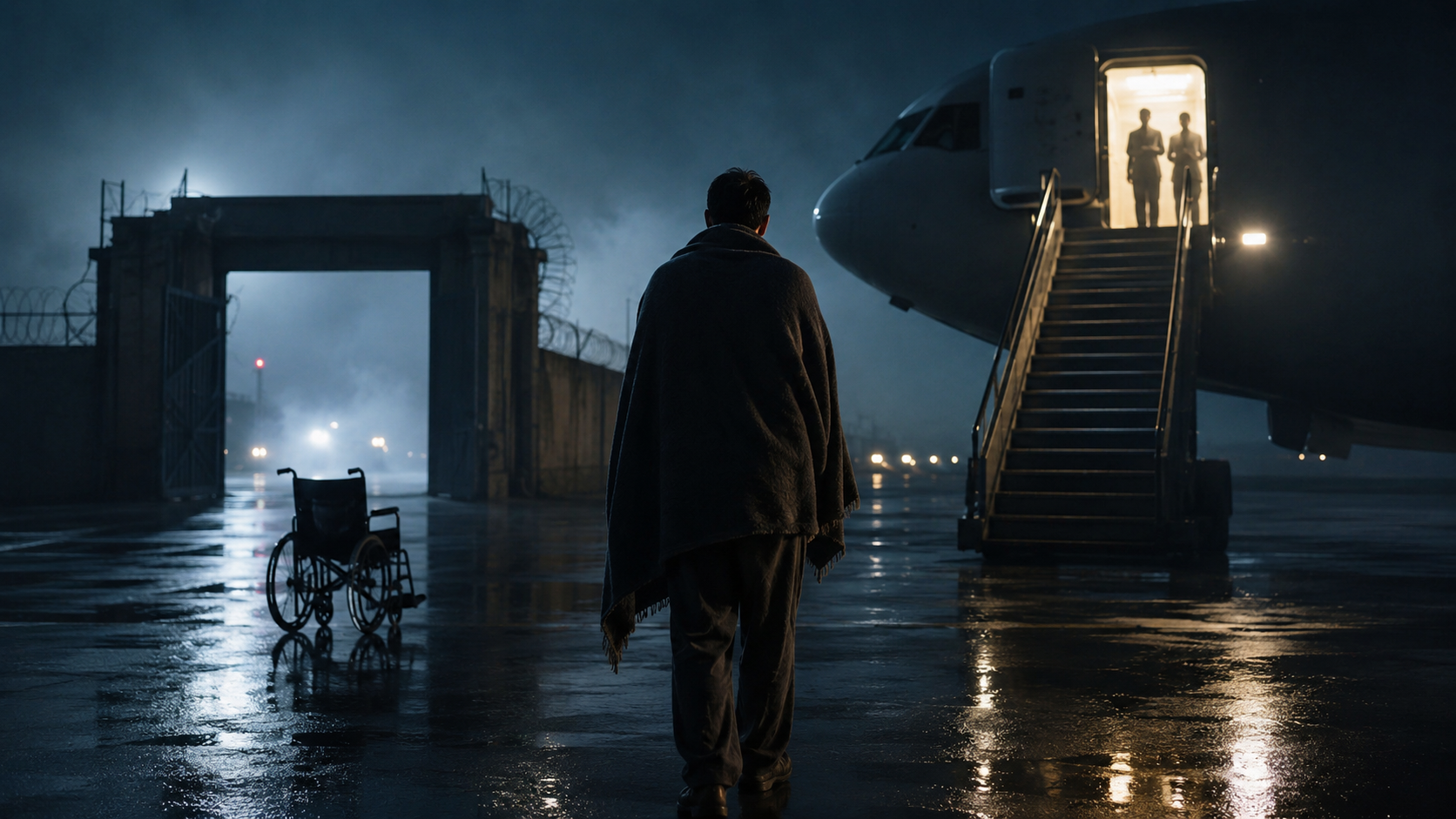
Vladimir Putin has pardoned critically ill former US Marine Robert Gilman, ending more than four years of Russian detention after an intense diplomatic intervention by the Trump administration. The 32-year-old was placed aboard a US State Department aircraft on Tuesday, 11 August, accompanied by his mother and a team of four doctors.
The release was granted on humanitarian grounds and did not require America to return a Russian prisoner. That makes the outcome both a personal breakthrough for Gilman’s family and a potentially significant goodwill gesture between two governments divided by war, sanctions and wider geopolitical confrontation.
Gilman Was Walking and Talking
Gilman’s condition had recently become so serious that his family and representatives feared he could die in Russian custody. He had reportedly entered a catatonic-like condition assessed as a dissociative stupor and was transferred from a prison hospital to the psychiatric ward of a civilian emergency hospital in Voronezh.
He was described before his release as largely unresponsive and dependent on a tube for food and fluids. His mother had reportedly been prevented from visiting him despite obtaining a judicial order granting access, while American consular officials and his Russian lawyer were also said to have faced restrictions.
The first assessment after his release was considerably more encouraging. A US official who spoke to Gilman said he was walking and talking and appeared to be in relatively good condition considering what had happened.
Doctors were assigned to monitor him during the flight to Washington Dulles International Airport. From there, he was expected to travel to a rehabilitation centre in San Antonio, Texas, for further examination and treatment.
The sharp contrast between reports of an unresponsive prisoner and a man able to communicate after his release leaves important medical questions unanswered. The precise cause of his collapse, his current diagnosis and the prospect of a complete recovery have not yet been established publicly.
Four Years Inside Russia
Gilman served in the US Marine Corps between August 2019 and August 2020. Russian authorities arrested him in Voronezh in January 2022 while he was travelling by train, shortly before Russia launched its full-scale invasion of Ukraine.
He was accused of kicking a police officer while intoxicated. Gilman’s family disputes that account, saying he had become ill and accidentally struck the officer, who was not injured and reportedly declined to pursue the accusation.
A Russian court initially sentenced Gilman to four and a half years in prison. Russian accounts later said his sentence was increased to ten years following further allegations that he attacked prison employees.
His representatives deny those later accusations. They have alleged that Gilman was subjected to brutal conditions, mistreatment and injections of mind-altering substances while imprisoned, although the full circumstances have not been independently established and Russian authorities have not provided a detailed public response to those claims.
Gilman’s family had previously asked the State Department to designate him as wrongfully detained. That status was not granted, but American officials continued pressing Moscow for his return as concern about his health escalated.
Trump Officials Pressed Moscow
The diplomatic effort involved Secretary of State Marco Rubio, US envoy Steve Witkoff, deputy national security adviser Sebastian Gorka, Jared Kushner and other administration officials. Rubio had reportedly raised Gilman’s case directly with Russian Foreign Minister Sergei Lavrov during a July meeting in Manila.
A senior Russian official informed Trump administration representatives last week that Putin was prepared to sign a humanitarian pardon. Intensive discussions then continued over the weekend before Gilman was transferred into American custody.
The absence of a prisoner exchange is an important distinction. Previous releases involving Americans detained in Russia have often required complex swaps involving Russian prisoners, intelligence operatives or other politically valuable detainees held by Western governments.
This time, Moscow received no publicly disclosed prisoner in return. American officials characterised Putin’s decision as a goodwill gesture, with one account connecting it to the Russian president’s relationship with Donald Trump.
Gilman was expected to be greeted at Dulles by Witkoff and Gorka before continuing to Texas. His return offers the Trump administration a tangible diplomatic success: an American citizen was brought home alive without Washington making an obvious concession.
A Gesture With Wider Meaning
Putin’s pardon should not automatically be interpreted as evidence of a broader US-Russia breakthrough. Relations remain shaped by the war in Ukraine, sanctions, military confrontation and disputes involving other detained Americans.
The decision nevertheless shows that direct communication between senior officials can still produce a result when the two countries identify a narrow humanitarian objective. It may also demonstrate that Moscow wants to preserve a functioning channel to Trump’s administration despite disagreements elsewhere.
At least several other Americans are believed to remain imprisoned in Russia. Gilman’s release could increase pressure on Washington to secure further returns, while Moscow may calculate that selective humanitarian gestures provide diplomatic value without requiring major policy concessions.
For Gilman and his family, the immediate priority is considerably more personal. A former Marine who was recently feared to be near death is now back under American care, but the full consequences of four years in Russian custody—and the unexplained collapse that preceded his release—may take far longer to determine.
