Drone Strike Hits the Industrial Heart of Russia’s Petrochemical Empire
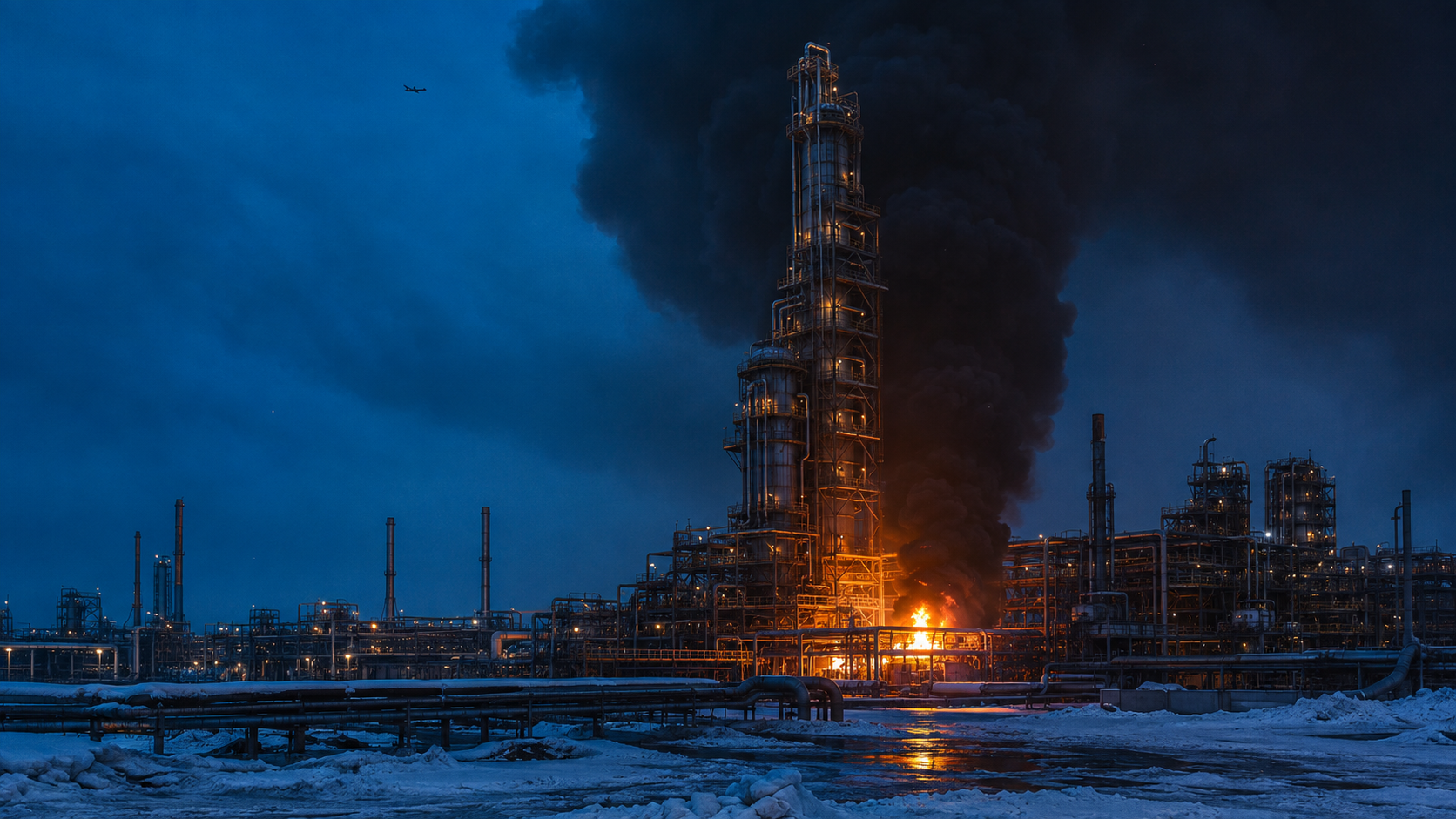
Ukraine’s Drones Knock Out Plant Producing 40% of Russia’s LPG
Putin’s Energy Defences Breached More Than 1,300 Miles From Ukraine
A drone attack has forced Russia’s largest liquefied petroleum gas plant to shut indefinitely, striking a facility responsible for an estimated 40 per cent of the country’s LPG production. The attack reached more than 1,300 miles inside Russia, exposing another crucial part of Moscow’s energy economy to Ukraine’s expanding long-range campaign.
The Sibur-owned ZapSibNeftekhim complex in Tobolsk was damaged on Monday, 10 August. The precise scale of the destruction has not been confirmed, but industry sources said operations had stopped while the consequences were assessed.
A Giant Plant Has Gone Offline
ZapSibNeftekhim produces around six million metric tonnes of LPG each year. Roughly half is consumed within Sibur’s integrated Tobolsk operation as feedstock for petrochemical manufacturing, tying the shutdown directly to the production of polyethylene, polypropylene and other industrial materials.
The complex has the capacity to produce approximately 2.5 million tonnes of base polymers annually. These materials feed into supply chains covering packaging, construction products, pipes, automotive components and a wide range of manufactured goods.
LPG should not be confused with liquefied natural gas. It usually consists of propane, butane or a mixture of both and can be sold as fuel or processed into higher-value chemicals and plastics.
The First Market Disruption Is Already Visible
No LPG volumes from the Tobolsk loading point were offered on the St Petersburg International Mercantile Exchange on Tuesday. Earlier in 2026, the site had regularly supplied around 4,000 metric tonnes of technical propane-butane mixture each day through the exchange.
That does not yet prove Russia faces an immediate nationwide shortage. Inventories, alternative plants and redirected supplies could absorb some of the disruption, while a large share of Tobolsk’s production would normally remain inside Sibur’s own industrial system.
The concentration of output at one location nevertheless creates a serious vulnerability. A prolonged closure would not merely remove LPG from the market; it could restrict the feedstock needed to keep connected petrochemical units operating efficiently.
Russia Has Not Revealed the Damage
Tyumen regional governor Alexander Moor confirmed that falling drones caused a fire at an industrial facility and said emergency services were working at the scene. He did not publicly identify the site, while Sibur has not issued a detailed account of the damage or offered a timetable for restarting operations.
Ukraine’s forces said their drones struck the ZapSibNeftekhim complex, with the central gas-fractionation operation identified as the target. Independent confirmation of precisely which equipment was hit remains limited.
The shutdown is therefore confirmed through market activity and industry information, but several crucial facts remain unknown. There is no public repair schedule, no comprehensive damage assessment and no confirmed estimate of how much polymer production could be lost.
Ukraine’s Drone Reach Is Becoming the Bigger Story
Tobolsk lies around 2,200 kilometres from the Ukrainian border. Reaching a major industrial site at that distance suggests Ukraine can threaten infrastructure far beyond the regions where Russian authorities have traditionally concentrated their air defences.
The raid also forms part of a broader campaign against refineries, fuel depots and petrochemical facilities. Ukraine argues that these sites generate revenue, fuel and industrial products that sustain Russia’s war effort, while Moscow describes the attacks as terrorism and has accused Kyiv of endangering civilians.
The strategic pressure comes from accumulation. Russia can repair individual units and reinforce individual plants, but defending a vast network spread across thousands of miles is expensive and difficult. Every additional site requiring radar, electronic warfare systems and interceptors draws protection away from somewhere else.
What Happens Next
The immediate test will be whether LPG offers return to the exchange and whether Sibur can keep its connected polymer units supplied. A brief shutdown could cause little more than a temporary market distortion, but damage to specialised fractionation equipment could take considerably longer to repair.
This attack matters because ZapSibNeftekhim is not a minor fuel depot near the Ukrainian frontier. It is a central pillar of Russia’s petrochemical system, deep inside territory once considered largely insulated from the war. Until Moscow reveals the damage and production resumes, the shutdown will stand as evidence that distance alone no longer protects Russia’s most valuable industrial assets.
