Trump Faces Fresh Court Showdown Over New Birthright-Citizenship Restrictions
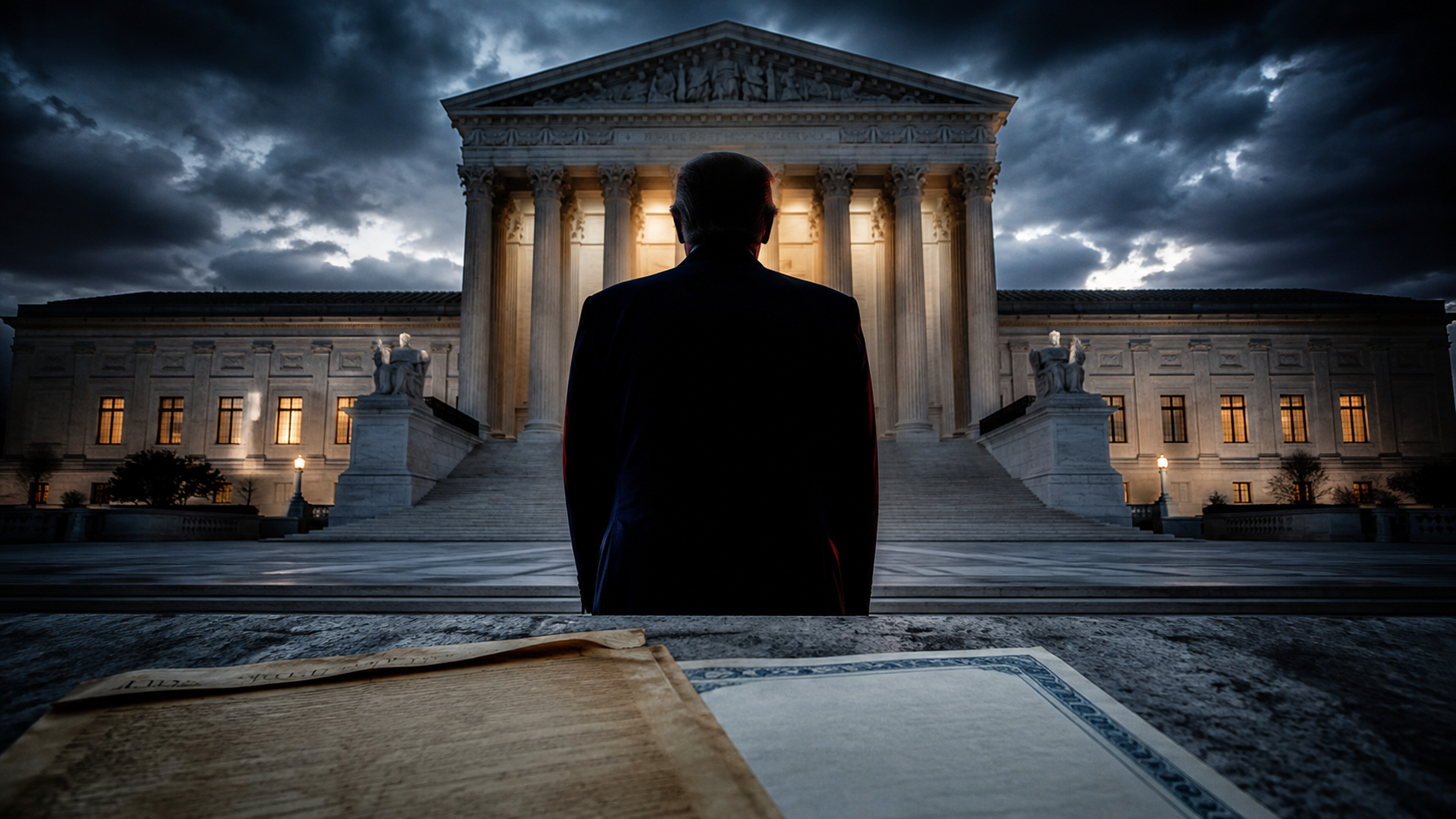
Trump’s Second Birthright-Citizenship Push Faces Immediate Legal Fire
Trump Faces Court Challenge Weeks After Citizenship Defeat
Donald Trump’s renewed attempt to restrict birthright citizenship has triggered an immediate return to federal court, barely six weeks after the Supreme Court struck down his broader policy. Civil-rights groups are asking a judge to confirm that children protected by their existing class action remain protected from the president’s latest order.
This is not an entirely new lawsuit. It is a new motion in Barbara v. Trump, the case that produced Trump’s decisive Supreme Court defeat on 30 June 2026. The distinction matters, but the consequence is the same: Trump’s second attempt to narrow citizenship is already heading into another constitutional confrontation.
Trump’s New Order Targets Narrower Groups
Trump signed two related executive orders on 6 August. One directs officials to intensify action against “birth tourism”, including refusing visas, revoking travel permission and potentially barring foreign nationals suspected of travelling to America primarily to give birth.
The more consequential order instructs federal agencies not to recognise the citizenship of certain US-born children when neither parent is already an American citizen. Its categories include children whose parents are designated “alien enemies”, some foreign-government employees and parents accused of using commercial transactions or fraud to obtain citizenship.
The order also reaches commercial surrogacy arrangements in which parents pay for a surrogate in the United States or an American territory to give birth. Agencies including the State Department, Justice Department, Department of Homeland Security and Social Security Administration have been ordered to issue implementation guidance within 30 days.
The administration argues that the new policy respects the Supreme Court’s ruling while identifying categories that fall outside its protection. Trump’s position is that citizenship should represent a genuine political bond, not a benefit obtained through immigration fraud, commercial schemes or connections to hostile foreign powers.
Civil-Rights Groups Return To Court
The American Civil Liberties Union, Legal Defense Fund, Asian Law Caucus, Democracy Defenders Fund and several state ACLU organisations have now asked the federal court in New Hampshire to clarify the protection granted to the nationwide class represented in Barbara v. Trump.
Their argument is direct: the Supreme Court already ruled that children born in America to parents who are unlawfully or temporarily present are subject to US jurisdiction and therefore become citizens at birth. The groups contend that the president cannot recreate restrictions rejected by the Court simply by dividing affected families into narrower categories.
The motion asks the lower court to make clear that the existing injunction and class protections continue to shield children threatened by the new order. It does not yet establish that every part of Trump’s policy is invalid, and the court has not ruled on the request.
The administration’s response to the motion will be crucial. It may argue that the new policy concerns different legal categories and factual circumstances from those considered by the Supreme Court, particularly where a parent possesses diplomatic immunity or is associated with an enemy force.
The Supreme Court Has Already Drawn A Powerful Line
The Fourteenth Amendment grants citizenship to people born in the United States and “subject to the jurisdiction thereof”. On 30 June, the Supreme Court held by six votes to three that this protection covers children whose parents are unlawfully or temporarily present in the country.
That ruling destroyed Trump’s original attempt to exclude children when their mothers lacked permanent legal status and their fathers were neither citizens nor permanent residents. The majority also relied on United States v. Wong Kim Ark, the landmark 1898 decision underpinning the modern understanding of birthright citizenship.
The Court recognised limited historical exceptions, including children born to accredited diplomats and members of hostile occupying forces. Trump’s new strategy attempts to expand the reasoning behind those exceptions to foreign-government employees, designated terrorists and people accused of commercially acquiring citizenship.
That expansion is where the next legal battle will concentrate. Some foreign officials possess immunity that may place their children outside ordinary US jurisdiction, but not every person employed by a foreign government has the same legal status. Treating every designated terrorist as equivalent to a soldier in an occupying foreign army may prove even harder to defend.
Birth Tourism And Citizenship Are Different Questions
Trump is on firmer legal ground when confronting visa fraud than when denying citizenship to a child after birth. The federal government already has broad authority to refuse entry, revoke visas and prosecute people who lie to immigration officials.
A parent’s alleged misconduct does not automatically determine the constitutional status of the child. The Supreme Court’s June ruling stressed that temporary presence in America does not by itself remove a person from US jurisdiction.
This creates the central tension in Trump’s approach. The administration may be able to tighten visa enforcement against organised birth-tourism businesses without gaining the power to refuse citizenship to children who are nevertheless born on American soil.
Trump’s supporters will argue that commercial citizenship schemes exploit a generous system and that the executive branch has a duty to stop immigration fraud. His opponents will argue that punishment should fall on adults who break immigration law, not on newborn children whose constitutional status does not depend on their parents’ intentions.
Trump Is Testing How Far The Court’s Ruling Reaches
The new confrontation follows Trump’s separate Supreme Court immigration victory over temporary protections, illustrating how uneven his second-term legal record has become. The Court has allowed the administration significant room in some immigration disputes while imposing a firm constitutional limit on birthright citizenship.
That makes this case more than another lawsuit against a controversial executive order. It will test whether a president can respond to a Supreme Court defeat by recasting the same policy around narrower groups, new definitions and different legal justifications.
The New Hampshire court could clarify that the existing protection covers children targeted by the new order, reject the groups’ request as premature or require fresh individual challenges once agencies begin enforcement. Separate lawsuits may also emerge as the administration publishes its guidance and identifies how the restrictions will work in practice.
Trump has narrowed the battlefield, but he has not escaped the central problem. The Supreme Court has already ruled that neither unlawful immigration status nor temporary presence defeats a child’s constitutional claim to citizenship. His administration must now prove that its new exceptions are genuinely different from the policy the justices rejected—not simply the same restriction wearing a tighter legal disguise.
