Putin Threatens Global Ship Seizures As Russia-Europe Shadow Fleet Clash Explodes
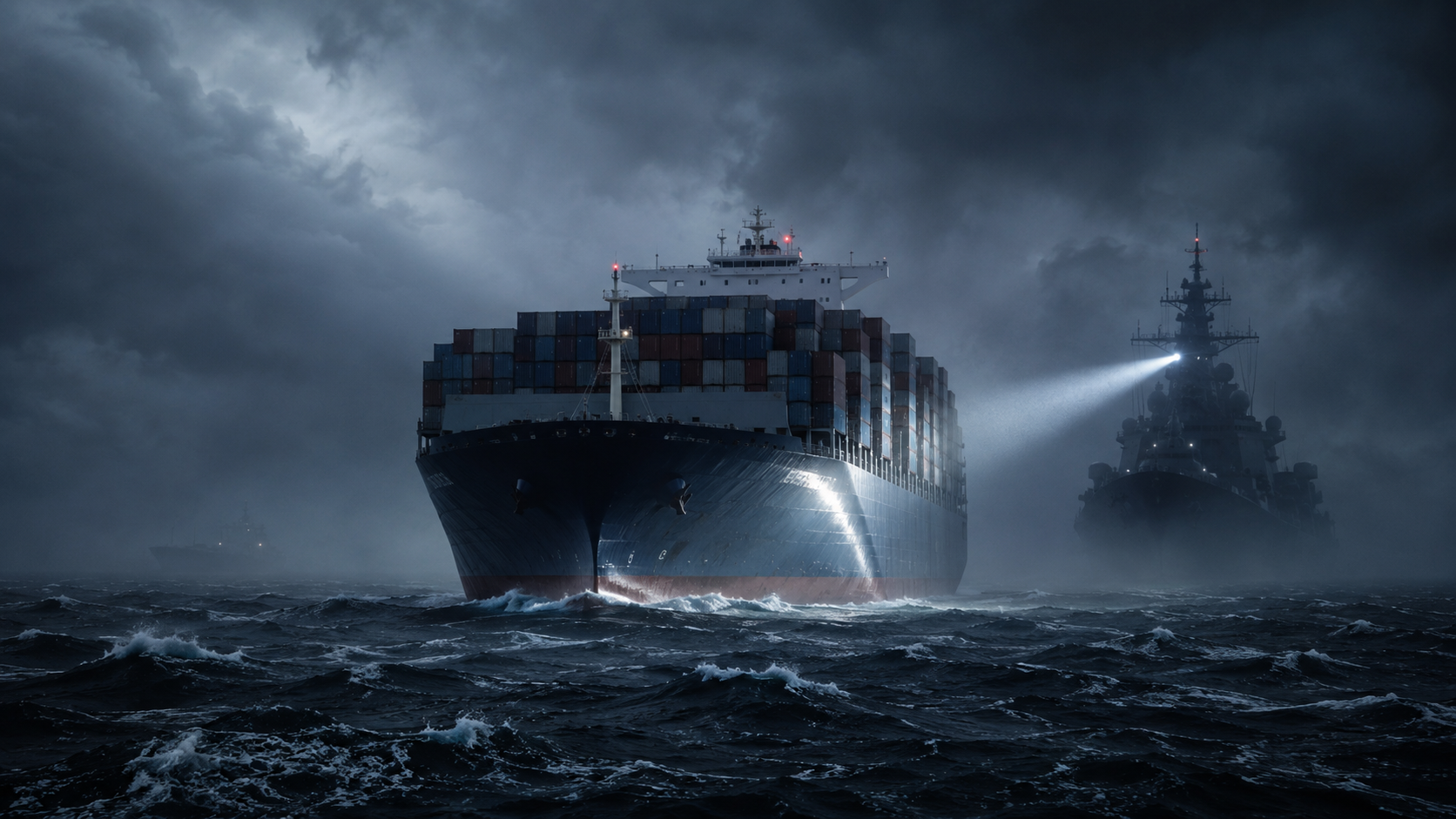
Russia Says It Is Ready to Detain Western Ships in Shadow Fleet Showdown
European Merchant Ships Face New Threat As Putin Vows Global Retaliation
Vladimir Putin has threatened to seize European merchant ships in retaliation for Western action against Russia’s so-called shadow fleet. His warning carries an especially dangerous twist: Moscow may not limit its response to European waters or to the places where Russian-linked vessels are intercepted.
Speaking during Pacific Fleet exercises in Russia’s Far East on Wednesday, Putin accused European governments of preparing what he called “piracy and robbery”. He said Russia would respond in kind if authorities began confiscating Russian ships or disposing of their cargo, acting wherever Moscow considered it “necessary and appropriate”.
Russia Says It Is Ready to Detain Western Ships
The threat was reinforced by Admiral Viktor Liina, commander of Russia’s Pacific Fleet. He told Putin that Russian forces had the capability to inspect and detain vessels associated with countries Moscow classifies as unfriendly.
Liina argued that Britain, France and other Western countries also move cargo through ships registered under third-country flags. Russia could therefore apply Europe’s own “shadow fleet” language to Western commercial shipping, he claimed.
That does not mean Russian forces have begun a campaign of ship seizures. No immediate operation was announced, and Moscow has not publicly defined which vessels might be targeted, what legal justification it would claim or how it would identify ships as genuinely European-owned.
The language nonetheless matters. It converts Russia’s previous warnings about sanctions enforcement into a direct threat against commercial vessels whose ownership, management or cargo may connect them to European countries.
Why Britain Is Directly Exposed
Britain is not a distant observer in this confrontation. On 14 June, Royal Marine Commandos and National Crime Agency officers boarded the 244-metre tanker Smyrtos approximately 25 miles south of the Isle of Wight.
British authorities said the sanctioned vessel was sailing without a valid nationality and transporting prohibited Russian oil. The six-hour operation involved helicopters, surveillance aircraft, the frigate HMS Sutherland and the minehunter HMS Ledbury.
The UK Government maintains that the interception complied with domestic and international law. It cited powers available when there are reasonable grounds to suspect that a vessel is stateless, alongside British sanctions and maritime-enforcement legislation.
Moscow views such actions very differently. Russia presents the shadow-fleet crackdown as an attempt to obstruct legitimate commerce and seize property under sanctions that it does not recognise.
This is the central collision: Britain and its allies see targeted maritime enforcement against ships suspected of hiding their nationality or evading sanctions, while Russia depicts the same actions as state-backed theft. Once armed forces are involved, that disagreement becomes far more dangerous than an argument over financial restrictions or port access.
The Shadow Fleet Funding Putin’s War
The shadow fleet is a loose global network of tankers used to transport Russian oil while reducing exposure to Western sanctions, the G7 price cap and conventional European maritime services. Many ships operate under flags of convenience, pass through opaque ownership structures or rely on insurance arrangements that are difficult for regulators to verify.
The UK says more than 700 vessels move around 40 per cent of Russian oil. It has sanctioned hundreds of ships and argues that the network provides Moscow with revenue used to sustain its war against Ukraine.
The European Union has also widened its pressure. Its twentieth sanctions package added 46 vessels to restrictions covering port access and maritime services, bringing the EU’s total number of designated ships to 632 at the time of adoption.
The bloc has since created a framework allowing national authorities to dispose safely of Russian oil cargoes that have been lawfully seized and confiscated. That development appears to be the immediate trigger for Putin’s accusation that Europe plans to sell property taken from Russia.
Yet designation is not the same as physical seizure. Freezing assets, denying port services and preventing insurers or financial institutions from working with a vessel are legally and operationally different from boarding it at sea and confiscating its cargo.
The Legal Battle Beneath the Threats
International maritime law generally protects freedom of navigation on the high seas. Warships do not possess an unrestricted right to stop foreign merchant vessels simply because their governments dislike the ship’s owner, destination or cargo.
There are recognised exceptions. Under Article 110 of the United Nations Convention on the Law of the Sea, a warship may exercise a right of visit in specified circumstances, including where there are reasonable grounds to suspect that a vessel is without nationality.
That distinction was crucial to Britain’s stated justification for boarding the Smyrtos. The Government said the tanker was sanctioned, carrying Russian oil and sailing without nationality after being suspected of using a false flag.
Russia has not explained what equivalent legal basis would permit its navy to detain European-linked merchant vessels in distant waters. A seizure carried out solely as retaliation against a ship’s national or commercial connections would be far harder to present as ordinary maritime enforcement.
Putin’s use of the word “piracy” is also political rather than a settled legal finding. Whether any particular European interception is lawful depends on the vessel’s flag status, location, cargo, applicable sanctions, domestic powers and the precise conduct of the state carrying out the operation.
Why the Threat Extends Far Beyond Europe
Putin delivered the warning aboard the missile cruiser Varyag near Sakhalin, thousands of miles from the English Channel and Baltic Sea. That setting gave his words a deliberate global reach.
Russia’s Pacific Fleet said it had analysed shipping routes, cargoes and vessel ownership across the Asia-Pacific region. The implied message was that retaliation could target commercial interests far from the original enforcement action.
This creates a serious problem for international shipping. A ship may be registered in one country, owned through a company in another, managed elsewhere, insured in a European financial centre and carrying goods belonging to several different businesses.
Determining whether a vessel “belongs” to an unfriendly country is therefore rarely simple. Russia could adopt a broad definition covering beneficial ownership, management, chartering, cargo or financial services, creating uncertainty for far more ships than those flying British, French or EU flags.
Even without an actual seizure, that uncertainty can raise insurance costs, force route changes and increase demand for naval monitoring. Commercial operators may have to judge whether their connection to a European company is enough to attract Russian attention.
A Dangerous Test of Resolve
Europe faces an uncomfortable choice. Retreating from enforcement after Putin’s warning could weaken sanctions and signal that naval intimidation works, particularly after governments spent years trying to restrict the oil revenue sustaining Russia’s war.
Escalating interceptions without clear legal grounds would carry its own risks. Every boarding creates the possibility of resistance, miscalculation, injury or confrontation between military vessels shadowing the same tanker.
The strongest European position is therefore not indiscriminate seizure but tightly evidenced enforcement: clear grounds, verifiable flag irregularities, lawful jurisdiction and careful coordination between governments. That makes it harder for Moscow to blur the line between targeted sanctions action and arbitrary interference with civilian shipping.
Putin has now made the cost of failure explicit. Russia is threatening to turn Europe’s shadow-fleet crackdown into a global system of retaliatory detention, with British and French commercial interests among the most obvious potential targets.
What Happens Next
European governments will watch for Russian naval deployments around commercial routes, particularly in the Baltic, Arctic and Asia-Pacific regions. Shipping companies will also need to assess whether ownership structures, flags of convenience or cargo arrangements could expose vessels to Russian scrutiny.
The immediate question is whether Putin’s language remains deterrent theatre or becomes operational policy. Any detention of a European-linked merchant ship under a deliberately expansive definition of retaliation would push the confrontation into a new and much more volatile phase.
This dispute is no longer confined to sanctions lists and oil-price rules. Europe is testing whether it can enforce economic pressure at sea, while Russia is warning that civilian shipping could pay the price wherever Moscow decides to answer back.
