Elon Musk Wants To “Buy Britain” — An ‘Elon UK’ Would Change Everything
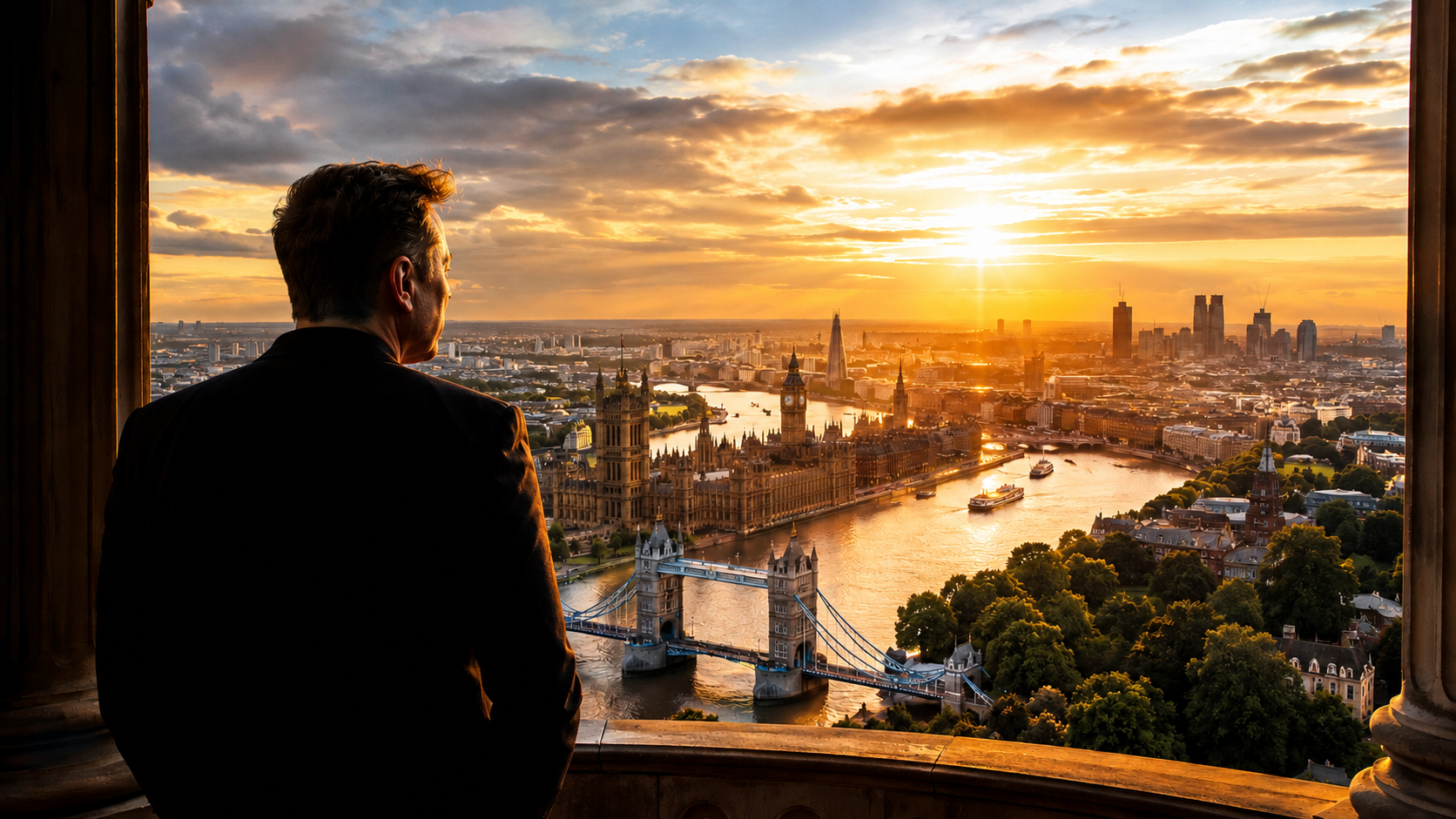
Free Speech, AI And A State-Sized Efficiency Drive: Inside Elon Musk’s Hypothetical Britain
What If Elon Musk Ran Britain Like One Of His Companies?
Elon Musk has responded to a joke about buying the United Kingdom with three characteristically provocative words: “How much is it?” It was not a formal offer, but coming from the man who once used the same phrase before eventually purchasing Twitter, the remark was guaranteed to attract attention.
The exchange began with a satirical article claiming that Musk had bought Britain to re-establish free speech. A country cannot be purchased like a company, of course, but the joke raises a fascinating question: what would the United Kingdom look like if Musk really possessed the authority to rebuild it according to his own instincts?
No, Elon Musk Is Not Actually Buying Britain
The first distinction is essential. Musk has not made a genuine bid for the United Kingdom, and no individual can legally acquire sovereignty over a democratic country.
Britain belongs neither to its government nor to a hypothetical seller. It is a constitutional state populated by citizens whose political authority is exercised through elections, Parliament, devolved institutions, courts and the Crown.
Even a purely financial purchase would be impossible. The latest preliminary national balance sheet estimates put the UK’s net worth at approximately £13.3 trillion in 2025. That is a statistical measure of national assets and liabilities rather than a theoretical asking price, but it illustrates the absurd scale involved.
Musk’s comment matters because of its political symbolism, not its commercial feasibility. He has spent years criticising Britain’s direction, and the joke compresses that growing interest into one irresistible question: if he could take control, what would he change?
What Musk Has Actually Said About Britain
Musk’s view of Britain has hardened considerably. In 2012, after visiting London and Oxford, he wrote that he really liked Britain. More recently, his interventions have focused on free speech, migration, demographic decline, political leadership and what he sees as expanding state control.
He has repeatedly described Britain as a “police state”, promoted campaigns promising to “save Britain” and argued that the country needs fundamental political change. He has also urged British entrepreneurs and business owners to support political alternatives capable of getting the economy “booming again”.
During a video appearance at a large London rally in September 2025, Musk called for the dissolution of Parliament, an early election and a change of government. His language about impending violence was strongly condemned by ministers and other political leaders, but his broader message was unmistakable: Musk believes Britain’s existing institutions are failing to respond quickly enough to a serious national decline.
He has criticised Britain’s treatment of online speech, questioned the enforcement of laws governing social-media posts and attacked what he considers politically selective policing. He has also expressed alarm over falling birth rates, uncontrolled migration and the erosion of a recognisable British national identity.
These statements do not amount to a detailed manifesto. They nevertheless provide enough evidence to construct a plausible hypothetical version of Britain governed according to Musk’s political and technological instincts.
Free Speech Would Become The First Battleground
An Elon-led Britain would almost certainly begin with an aggressive review of laws affecting expression. The Online Safety Act, communications offences, policing of social-media posts and the relationship between regulators and technology platforms would all face immediate scrutiny.
Musk would probably argue that the state should concentrate on direct threats, fraud, exploitation, terrorism and criminal incitement rather than offensive opinions. The central principle would be that legal speech should remain available, even when it is unpopular, insulting or politically inconvenient.
This would not necessarily produce an entirely unregulated internet. X still removes illegal material and operates platform rules. An Elon UK would more likely try to establish a much narrower boundary between speech that causes offence and conduct that constitutes a clearly defined crime.
Supporters would see this as a restoration of Britain’s liberal tradition. Critics would warn that weaker restrictions could expose more people to intimidation, harassment and false information. Musk’s likely answer would be that protecting adults from uncomfortable ideas is not a sufficient justification for creating a censorship infrastructure.
Whitehall Would Face A Corporate-Style Overhaul
The second great confrontation would involve the machinery of government. Musk has built his reputation by questioning assumptions, removing layers of management and demanding that organisations justify every process from first principles.
Applied to Britain, this would mean a comprehensive audit of government departments, regulators, public bodies, consultants, procurement contracts and administrative programmes. Every organisation would be asked what it delivers, how its success is measured and whether technology could perform the same task more cheaply.
Large projects would acquire visible deadlines and named leaders. Public dashboards might track spending, waiting lists, planning decisions, infrastructure milestones and departmental performance. Ministers and senior officials would have fewer opportunities to conceal failure behind long strategies and carefully managed announcements.
The attraction is obvious. Britain frequently appears capable of spending enormous sums while taking years to approve, procure or construct essential infrastructure. A Musk-style administration would treat excessive delay as a system failure rather than an unavoidable feature of government.
The risk is equally clear. Government is not a private company, and citizens cannot be treated like customers who are free to choose another provider. Some apparent inefficiencies exist because courts, consultations, safeguards and democratic scrutiny take time. Musk’s challenge would be to cut bureaucracy without cutting accountability.
Britain Would Make A Huge Bet On Technology
An Elon UK would attempt to turn Britain into the most technologically aggressive economy in Europe. Artificial intelligence, robotics, autonomous transport, advanced manufacturing, satellite communications and biotechnology would sit near the centre of national economic policy.
Planning rules for strategically important factories, laboratories, data centres and energy projects would probably be accelerated. Regulations designed for older technologies would be replaced with controlled testing environments in which companies could prove new systems safely without waiting years for approval.
Britain already possesses outstanding universities, financial markets, scientific institutions and engineering talent. Its recurring problem is converting invention into large domestic companies, industrial capacity and sustained productivity growth.
Musk would view that gap as intolerable. He would want British inventions built in British factories, powered by British energy and scaled using British investment rather than sold prematurely to larger overseas groups.
Government procurement could become an industrial tool. The NHS, defence establishment, transport networks and local authorities might be encouraged to act as early customers for British AI, robotics and energy technology, provided that suppliers met demanding performance tests.
Energy Abundance Would Replace Managed Scarcity
Musk’s companies depend on enormous quantities of reliable electricity. A country hoping to dominate artificial intelligence, manufacturing and electrified transport cannot do so with expensive power, slow grid connections and infrastructure that takes a decade to approve.
An Elon UK would therefore pursue energy abundance. The likely system would combine renewables, battery storage, upgraded transmission networks and a faster programme for dependable nuclear generation. Domestic resources capable of improving security during the transition would also face a more pragmatic assessment.
The objective would not simply be lower household bills. Cheap, plentiful electricity would be treated as the foundation for data centres, automated factories, electric transport, new housing and national resilience.
Musk would probably regard endless arguments between environmental purity and industrial growth as a false choice. His preferred answer would be to build cleaner technology at extraordinary scale until it becomes economically superior to the systems it replaces.
Planning Would Be Forced Into The Digital Age
Britain’s planning system would be another immediate target. Housing, railways, reservoirs, power lines, laboratories and factories are routinely delayed by complicated approval processes and overlapping objections.
A Musk-inspired government would digitise applications, introduce statutory decision deadlines and create automatic approval routes for developments meeting clearly published rules. Strategic infrastructure might be assessed through a single national process instead of navigating several layers of authority.
This could make Britain dramatically easier to build in. It could also generate fierce resistance from residents, environmental groups, councils and existing property owners.
Musk’s instinct would be to prioritise the people who need future homes, jobs and infrastructure over those who benefit from preventing change. The political question would be whether British voters would tolerate the disruption required to make that principle real.
Immigration Would Become More Selective
Musk is himself an immigrant who built companies using international talent. An Elon UK would therefore be unlikely to reject immigration altogether.
It would, however, probably distinguish much more sharply between controlled, high-value migration and a system perceived to have lost public consent. Engineers, scientists, entrepreneurs, doctors and exceptional students could receive faster routes into the country, while illegal entry and abuse of asylum or visa systems would face tougher enforcement.
This model would be presented as both pro-immigration and pro-border: open to people who can build Britain’s future, but unwilling to accept that controlling entry is somehow incompatible with economic modernity.
The government would also be pushed to confront Britain’s falling birth rate. Musk has repeatedly described low fertility as a threat to civilisation. Family-friendly housing, childcare, tax incentives and lower living costs could become part of a demographic strategy designed to make parenthood more achievable.
Merit Would Replace Identity Politics
Musk’s hostility towards diversity bureaucracy and ideological hiring programmes would probably reshape the public sector, universities and organisations receiving state contracts.
Recruitment and promotion would be expected to focus on ability, performance and measurable contribution. Public institutions would face pressure to demonstrate political neutrality and abandon programmes that treat individuals primarily as representatives of racial, religious or sexual groups.
Supporters would call this a return to equal treatment. Opponents would argue that ignoring group disparities does not make them disappear.
The deeper Musk argument would be that a country facing technological, economic and demographic challenges cannot afford to weaken standards or divide citizens into competing identities. A successful Elon UK would attempt to replace that model with a shared national project built around competence, contribution and progress.
The NHS Would Become A Technology Project
Musk has not published a detailed plan for the NHS, so any prediction must remain speculative. His record suggests, however, that he would view long waiting lists, outdated systems and administrative duplication as engineering problems rather than permanent features of healthcare.
Patients could receive a unified digital record under their control. AI-assisted diagnostics, automated booking, remote monitoring and robotic systems would be adopted rapidly where evidence showed that they improved outcomes.
The NHS would remain politically difficult to restructure because it combines clinical complexity with intense public attachment. Musk’s impatience could accelerate overdue modernisation, but it could also collide with staff, unions, privacy concerns and the reality that healthcare cannot be optimised solely through software.
Elon UK Would Be Faster, Richer And More Confrontational
The strongest case for an Elon-style Britain is not that one billionaire possesses every correct answer. It is that Musk refuses to accept decline simply because institutions have become accustomed to managing it.
His Britain would build more, automate more and demand more from the state. It would defend broader political speech, favour technological ambition, pursue abundant energy and make economic growth a national mission rather than a hopeful side effect.
It would also be turbulent. Musk’s management style creates exceptional speed partly by accepting conflict, failure and disruption that conventional politicians instinctively avoid. Applied to an entire country, that approach could produce extraordinary breakthroughs alongside serious mistakes.
Britain does not need an owner, and Musk cannot purchase it. Yet his joke works because it exposes a deeper frustration: too many people believe the country is being administered rather than led. An “Elon UK” would be imperfect, provocative and frequently chaotic—but it would never accept managed decline as the best Britain could do.
