Ukraine Says Eight-Month Offensive Has Liberated 26 Settlements
Ukraine’s 745km² Battlefield Gain Could Signal A Major Shift
Ukraine Says It Has Retaken 745km² From Russia — But The Map Tells A More Complicated Story
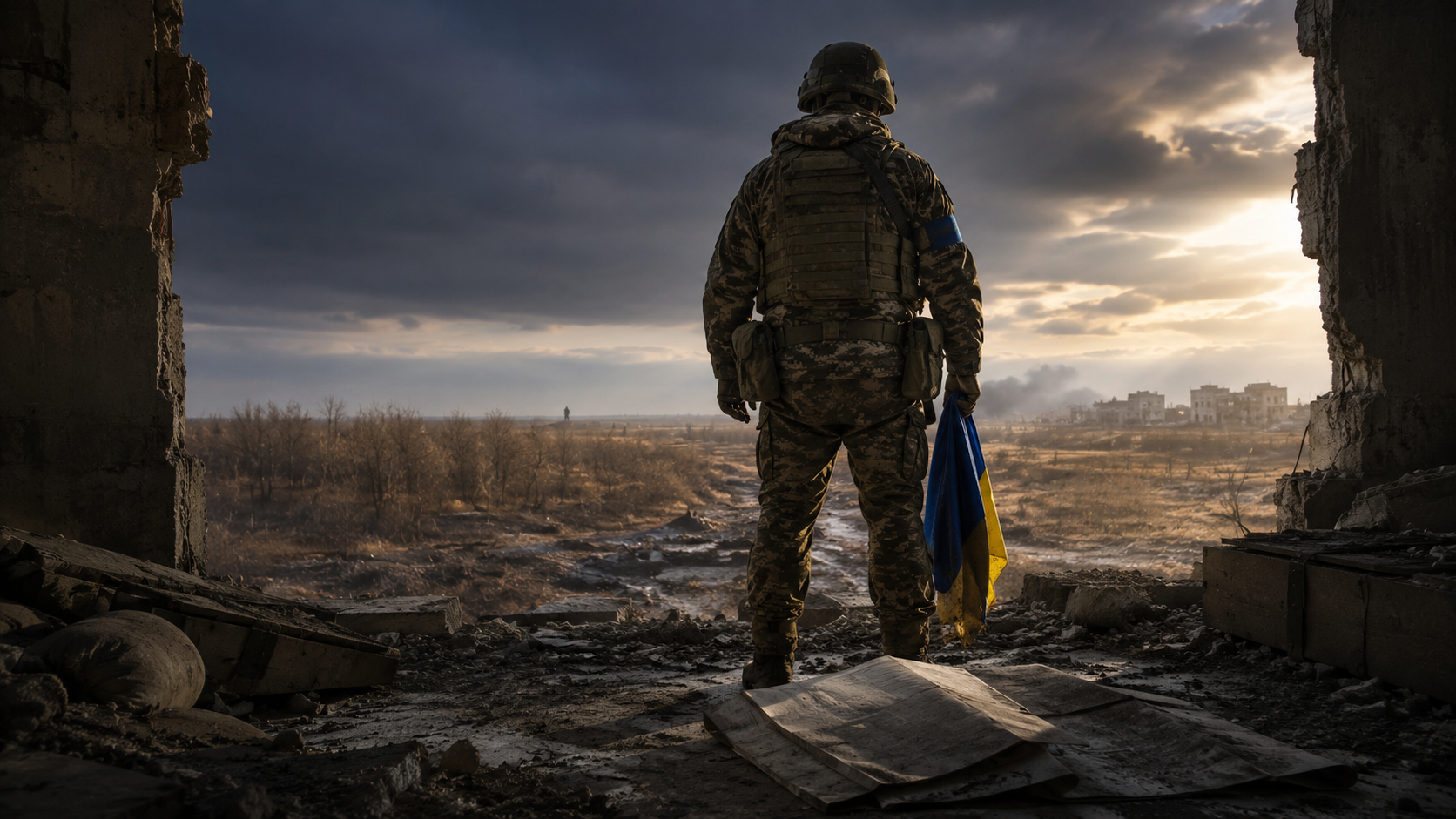
Ukraine says it has recaptured 745 square kilometres of occupied territory in one of its most significant battlefield announcements of 2026. President Volodymyr Zelenskyy said an eight-month offensive restored Ukrainian control over 26 settlements and struck a major blow against Russian forces.
If confirmed in full, the operation would demonstrate that Ukraine remains capable of planning and executing substantial territorial advances despite Russia’s larger military and continued pressure elsewhere. Yet independent battlefield mapping presents a more complicated picture, with parts of the claimed area still classified as contested or Russian-held.
An Eight-Month Offensive Across Three Regions
Zelenskyy said the operation ran from January to August along the Oleksandrivka axis. The affected area stretches for approximately 60 kilometres near the meeting point of the Dnipropetrovsk, Donetsk and Zaporizhzhia regions.
Ukraine’s Air Assault Forces led the campaign with support from other military units. Zelenskyy described the offensive as a precisely planned operation whose assigned objectives had been achieved.
The announced territorial gain covers approximately 288 square miles, an area close to half the size of Greater London. Unlike a sudden armoured breakthrough, however, the operation appears to have been a sustained campaign involving repeated local advances, clearance operations and attacks on Russian positions.
Ukraine previously said it had recovered more than 600 square kilometres during the first five months of 2026. The latest figure suggests those gains continued through the summer, although the pace and durability of Ukrainian control vary across the front.
Ukraine Claims Heavy Russian Losses
Zelenskyy claimed that at least 9,550 Russian personnel were killed during the operation and more than 6,600 wounded. He also said Ukrainian forces captured Russian troops who could be included in future prisoner exchanges.
Those casualty figures have not been independently verified. Both Ukraine and Russia routinely publish enemy-loss estimates that cannot be conclusively established during active fighting, while rarely providing immediate figures for their own losses.
Ukraine’s military released footage showing soldiers holding Ukrainian flags in settlements said to have been liberated. Such images provide evidence of a Ukrainian presence but do not necessarily prove stable control over every surrounding position, road or defensive line.
The greater military significance may lie in how the territory was recovered. If Ukraine forced Russian units from prepared positions without exposing itself to disproportionate losses, it would represent more than a symbolic change on the map.
The Map Does Not Yet Confirm The Entire Claim
Open-source battlefield mapping still places substantial parts of the claimed territory inside a grey zone where neither side exercises uncontested control. Some positions included within the Ukrainian announcement remain mapped as Russian-held.
This does not automatically mean Ukraine’s claim is false. Public mapping often trails battlefield events because evidence takes time to locate and verify, while Ukraine may deliberately withhold operational information to protect troops and prevent Russia from responding.
However, it means the 745km² figure should currently be treated as an official Ukrainian claim rather than a completely independently confirmed measurement. Holding the territory will matter more than briefly entering it or raising flags inside abandoned settlements.
Russia could attempt to counterattack, infiltrate thinly defended positions or use drones and artillery to make newly recovered villages difficult to occupy. Ukraine must therefore consolidate defensive lines, clear mines and maintain reliable supply routes if it wants the announced gains to endure.
Russia’s Advance Has Slowed — Not Stopped
The operation comes as Russia’s rate of territorial expansion has slowed across much of the approximately 1,200-kilometre front. Ukraine has increasingly combined local counterattacks with long-range strikes against Russian logistics, energy facilities, naval infrastructure and military production.
That strategy seeks to raise the cost of Russia’s war while disrupting the fuel, ammunition and transport systems needed to sustain ground operations. Ukraine does not need to launch one vast counteroffensive everywhere if smaller operations can repeatedly damage vulnerable Russian formations.
Russia nevertheless continues to advance in parts of eastern Ukraine and maintains pressure on strategically important cities in Donetsk. Its forces retain advantages in manpower, artillery and glide bombs, even as Ukrainian drones make massed attacks and conventional supply movements increasingly dangerous.
Moscow continues to demand that Ukraine surrender the remaining Ukrainian-controlled territory in Donetsk. Kyiv rejects that condition, arguing that Russia should not receive diplomatically what it has failed to seize militarily.
Why The 745km² Matters
The claimed gain will strengthen Ukraine’s argument that the battlefield has not become an inevitable one-way Russian advance. It also gives Kyiv a stronger answer to those who believe Ukrainian resistance can only delay further losses.
Territory is not the only measure of military success. Forcing Russia to spend troops, equipment and time defending occupied ground can disrupt planned offensives elsewhere and weaken Moscow’s negotiating position.
But the announcement does not yet amount to a decisive strategic reversal. Russia still occupies large areas of Ukraine, continues striking Ukrainian cities and remains capable of concentrating forces against vulnerable sections of the front.
The next test is whether Ukraine can hold the 26 settlements, whether independent mapping confirms the full territorial figure and whether Kyiv can reproduce the operation elsewhere. If it can, the 745km² advance may be remembered as the point when Russia’s slow territorial momentum began to fracture rather than merely pause.
