Putin Steps Onto Japan’s Claimed Island In A Warning Across The Pacific
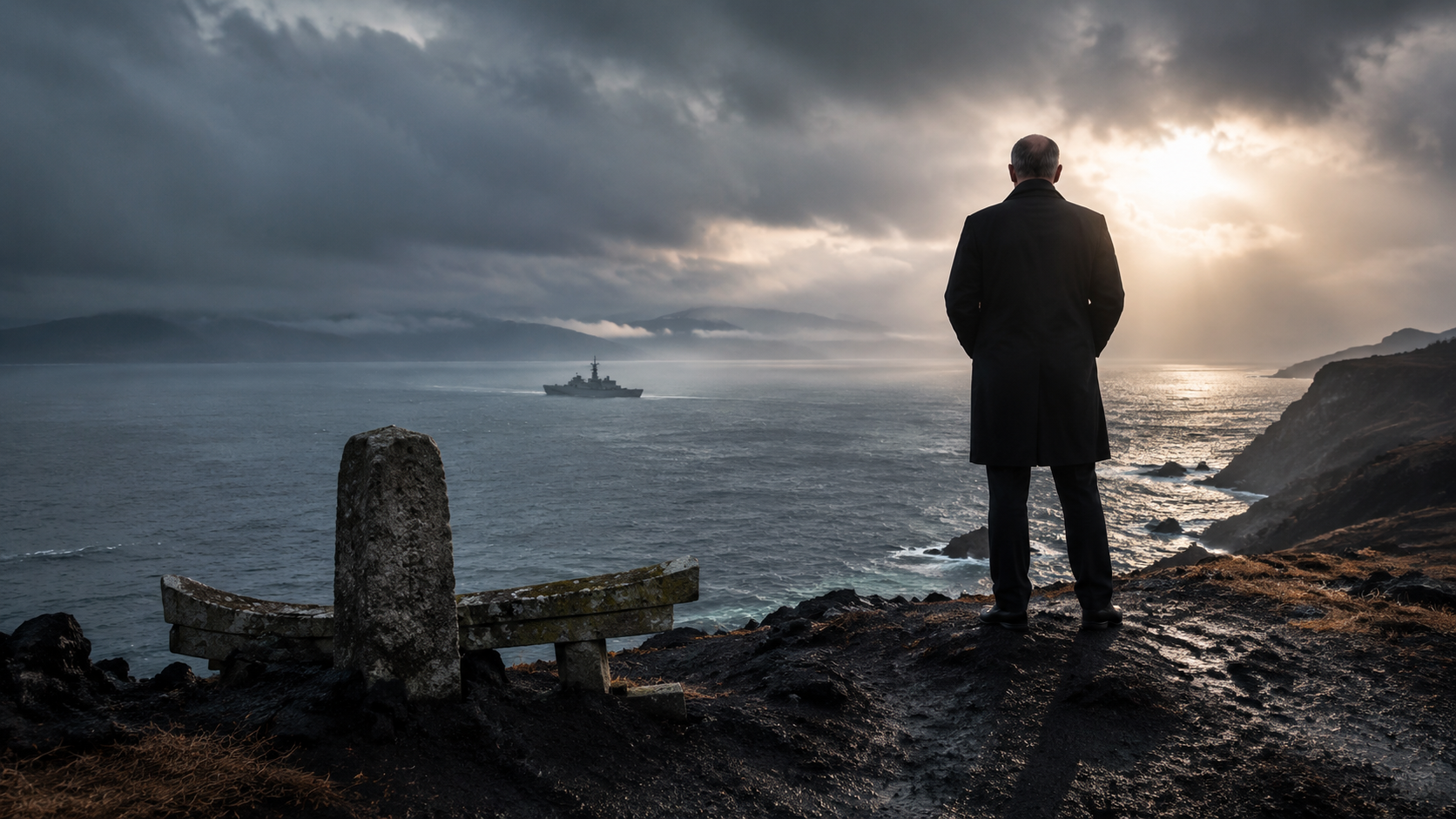
Russia Just Planted Its Flag Deeper Into Japan’s Northern Dispute
Putin Reopens An 81-Year Wound With First Visit To Japan-Claimed Island
Vladimir Putin has made his first visit to Iturup, a Russian-controlled Pacific island that Japan claims as Etorofu, transforming a decades-old territorial dispute into a highly visible demonstration of power. The Russian president toured civilian facilities, met regional officials and spoke to residents on 13 August after observing exercises involving Russia’s Pacific Fleet.
Japan responded with a strong formal protest. Prime Minister Sanae Takaichi called the visit “absolutely unacceptable”, while Foreign Minister Toshimitsu Motegi restated Tokyo’s position that Etorofu and the other Northern Territories are inherently Japanese territory.
The immediate danger is not that Japan and Russia are preparing to fight over the islands. The deeper consequence is that Moscow is turning effective control into an increasingly permanent political, civilian and military reality while relations with Tokyo collapse around it.
The Visit Was Designed To Be Seen
Putin’s itinerary presented Iturup as an ordinary and settled part of the Russian Federation. He visited a fish-processing plant, a hospital and a school, met the governor of the Sakhalin region and briefly spoke with local residents.
That apparent normality carried the message. By discussing schools, healthcare, fishing and regional development, Putin was demonstrating administration rather than merely asserting sovereignty through a speech delivered from Moscow.
The location and timing made the symbolism considerably sharper. Putin arrived shortly after overseeing Pacific Fleet exercises and two days before Japan marked the 81st anniversary of its surrender in the Second World War.
The visit therefore connected three separate forms of Russian power: military capability, presidential authority and permanent civilian control. For Tokyo, it was not simply a controversial journey by a foreign leader but a carefully televised display from land Japan considers its own.
Why Russia And Japan Still Have No Peace Treaty
The Soviet Union seized Iturup, Kunashir, Shikotan and the Habomai islets during the final days of the Second World War. Russia has administered them ever since, while Japan refers to the four territories collectively as its Northern Territories.
Japan argues that the islands are historically and legally Japanese and were not part of the Kuril chain it renounced after the war. Moscow maintains that Russian sovereignty was established by the outcome of the conflict and recognised through the post-war international settlement.
The disagreement has prevented the two countries from signing a formal peace treaty. Although their state of war was ended by the 1956 Soviet–Japanese Joint Declaration, the territorial settlement necessary for a comprehensive treaty was never reached.
That declaration raised the possibility that Shikotan and the Habomai islets could be transferred to Japan after a peace treaty. It did not resolve the status of the two larger islands, Iturup and Kunashir, and every later negotiating effort ultimately collided with the same division.
Former Japanese prime minister Shinzo Abe invested heavily in improving relations with Moscow, meeting Putin repeatedly and promoting joint economic activity. Those efforts failed to secure a territorial breakthrough, but they kept alive the possibility that economic cooperation and personal diplomacy might eventually produce a compromise.
Ukraine Destroyed The Remaining Diplomatic Space
Russia’s invasion of Ukraine in 2022 transformed the dispute. Japan joined its G7 partners in imposing sanctions on Moscow, while Russia suspended peace-treaty negotiations, withdrew from discussions about joint economic activity on the islands and blamed Tokyo for destroying the foundations of bilateral cooperation.
Relations have since deteriorated to the point where the Kremlin said in February 2026 that dialogue had effectively been reduced to zero. Japan continues to state that it wants to resolve the territorial question and conclude a peace treaty, but it has also maintained sanctions against Russia.
Putin’s visit makes that contradiction even more difficult to manage. Tokyo cannot soften its territorial position without appearing to reward Russian pressure, while Moscow is unlikely to negotiate away strategically useful territory to a country embedded in the American alliance system and participating in sanctions against it.
The result is diplomatic paralysis. Each side can still say that it theoretically supports dialogue, but neither currently has the political room or strategic incentive needed to offer the concessions that a settlement would require.
The Islands Carry Military Importance
The disputed territories lie between Japan’s northern island of Hokkaido and Russia’s Kamchatka Peninsula. The wider Kuril chain separates the Sea of Okhotsk from the Pacific and helps protect maritime approaches used by Russia’s Pacific Fleet.
Russia has strengthened its military presence across the islands over several years. That makes them valuable not merely as national territory or fishing grounds, but as part of the defensive geography surrounding Russia’s Far East and its naval forces.
Iturup is the largest of the four territories claimed by Japan. Returning it would therefore be far more consequential for Moscow than transferring a few remote and economically marginal outposts.
Putin’s appearance after naval exercises reinforced that strategic connection without requiring an overt military announcement on the island itself. Civilian development and military entrenchment can operate together, making Russian control progressively harder to reverse.
Japan Is Being Pushed Deeper Into The Western Security System
The visit is likely to strengthen the argument inside Japan that Russia must be treated as an enduring security challenge alongside China and North Korea. Tokyo has already expanded defence spending, strengthened its alliance with the United States and pursued closer security relationships with European and Indo-Pacific partners.
A direct attempt by Japan to recover the islands militarily remains extraordinarily unlikely. Russia is a nuclear-armed state, its forces control the territory, and Tokyo has consistently pursued its claim through diplomacy rather than force.
The more realistic consequence is gradual strategic hardening. Japan may increase surveillance and defensive activity around Hokkaido, deepen coordination with Washington and interpret Russian naval movements through the same wider framework as Chinese and North Korean pressure.
This does not mean that Russia, China and North Korea are operating from a single detailed plan. However, their growing political and military relationships increasingly force Japanese planners to consider the possibility of simultaneous pressure from several directions.
Moscow And Beijing Are Reinforcing The Same Historical Narrative
On the day of Putin’s visit, the Russian and Chinese ambassadors in Tokyo issued a joint statement opposing attempts to revise the outcome of the Second World War and warning against renewed militarisation in the Asia-Pacific.
For Moscow, that historical argument supports Russian possession of the islands. For Beijing, similar language can be used to challenge Japanese defence expansion and reinforce memories of Japan’s wartime conduct.
The coordination matters because it places the territorial dispute within a broader competition over who defines the post-war order. Japan presents its claim as consistent with international law; Russia portrays Tokyo as trying to reverse a settled result of Soviet victory.
China’s support gives Moscow diplomatic reinforcement in Asia, while Russia’s criticism of Japanese militarisation aligns with Beijing’s opposition to a stronger Japanese security role. Neither country needs to recognise every aspect of the other’s territorial position to benefit from the shared pressure placed on Tokyo.
A Domestic Message From Putin
The visit also serves Putin’s domestic political interests. A Russian president personally arriving on a remote, contested island projects control, national confidence and an unwillingness to concede territory under foreign pressure.
It allows the Kremlin to contrast the diplomatic ambitions of the Abe era with the sanctions and confrontation that followed Russia’s invasion of Ukraine. The implied message is that cooperation was possible when Japan engaged Moscow, but territorial consolidation followed when Tokyo aligned itself more firmly with Russia’s adversaries.
That account ignores Russia’s responsibility for launching the war that triggered Japanese sanctions. It nevertheless fits a familiar Kremlin narrative in which Russia is portrayed as defending settled borders and wartime victories against an increasingly hostile Western-aligned bloc.
What Happens Next
Japan will continue protesting Russian visits, exercises and construction on the islands, but its practical options remain limited. Sanctions can impose costs on Moscow, yet they are unlikely to change a territorial policy connected to Russian nationalism, Pacific strategy and the legitimacy of the post-war settlement.
Russia is likely to continue integrating the islands through infrastructure, economic projects, civilian administration and military investment. Every new facility, presidential visit and permanent deployment increases the political cost of any future concession.
The greatest near-term danger is therefore not an invasion or sudden confrontation. It is the disappearance of diplomatic space, accompanied by growing military activity in waters where Russian, Japanese and allied forces increasingly operate near one another.
Putin’s first step onto Iturup did not create the dispute. It signalled that Moscow now sees greater value in displaying possession than negotiating compromise—and that one of the final unresolved territorial wounds of the Second World War is becoming part of the Indo-Pacific’s modern security divide.
