Red Sea Cargo Ship Attack Raises New Fears Over Yemen’s Most Dangerous Shipping Route
Yemen’s Red Sea Flashpoint Is Back At The Worst Possible Moment
Attack Off Yemen Puts Global Shipping Back On Alert
A cargo ship has reported an attack in the Red Sea off Yemen, immediately raising the question global shipping companies hoped they could stop asking: is the Suez route safe enough to use again? The incident happened about 30 nautical miles southwest of Hodeida, a Yemeni port city controlled by the Iran-backed Houthi movement, according to maritime reporting from the United Kingdom Maritime Trade Operations centre.
The ship’s crew were reported safe, and no group immediately claimed responsibility. But the timing is the story. Major shipping firms have just begun a cautious return to some Suez Canal services after years of Red Sea disruption, making even a limited armed incident off Yemen a warning shot for global trade, insurers and Western navies.
What Happened Off Hodeida
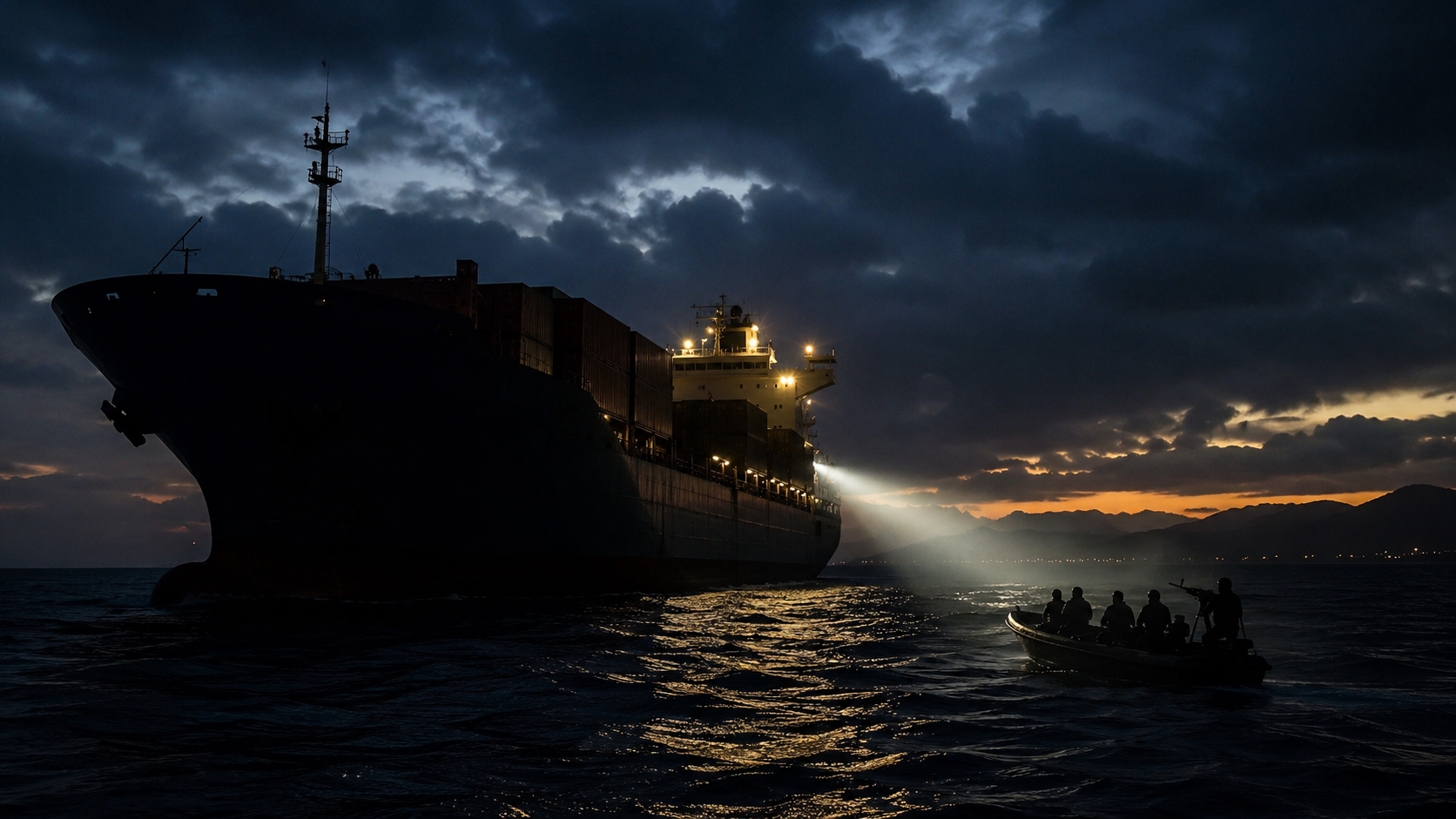
UKMTO received a distress alert from a cargo vessel reporting that it was under attack by unknown armed assailants about 30 nautical miles southwest of Hodeida. The reported attack involved a skiff approaching a bulk carrier and opening fire, after which onboard security returned fire and the attackers retreated toward a larger vessel with its automatic identification system switched off.
The available information points to a dangerous but limited incident rather than a confirmed missile or drone strike. The vessel and crew were reported safe, and authorities are investigating. The most important unresolved point is attribution: the attack occurred near Houthi-controlled territory, but there was no immediate claim of responsibility.
That uncertainty matters because the waters around Yemen can carry more than one threat at once. Houthi forces have previously used missiles, drones and armed maritime tactics against commercial shipping, while suspected piracy and armed approaches have also been reported in the wider Gulf of Aden area. In April, UKMTO reported a separate incident southwest of Hodeida involving a sailing vessel approached by a skiff carrying armed men, showing that small-boat threats remain a live concern even outside headline Houthi missile attacks.
Why The Red Sea Is So Dangerous
The Red Sea is not just another maritime corridor. It is the southern approach to the Suez Canal, the fastest sea route between Europe and Asia, and a route that previously handled about 10% of global seaborne trade. When ships avoid it, they often sail around the Cape of Good Hope, adding time, fuel cost and pressure to supply chains.
Since late 2023, Yemen’s Houthis have turned that geography into leverage. The group said its campaign was linked to the Gaza war and targeted vessels it viewed as connected to Israel, the United States or Britain. A United States maritime advisory said more than 100 Houthi attacks affected commercial vessels from more than 60 nations between November 2023 and October 2025.
The threat had appeared to ease after the Israel-Gaza ceasefire in October 2025, but the risk never disappeared. The same advisory warned that the Houthis continued to pose a threat to commercial vessels, including through drones, missiles, small arms fire, explosive boat operations, illegal boarding, detention or seizure.
Why This Attack Matters Now
This incident lands at a particularly sensitive moment because shipping confidence was beginning to return. Maersk and Hapag-Lloyd have announced a partial resumption of Suez Canal sailings through their Gemini network, while still saying they will monitor security conditions and adjust services if needed.
That creates the central tension. If the Red Sea looks stable, shipping lines can shorten journeys, release capacity and lower pressure on freight rates. If it looks unsafe again, carriers may keep vessels away from the route, insurers may price in higher risk, and governments may face pressure to protect merchant shipping more aggressively.
The attack also follows renewed Houthi rhetoric. In June, Yemen’s Iran-aligned Houthis said they would ban Israeli maritime navigation in the Red Sea, adding to concerns about misidentification, wider targeting and the possibility that ships with loose or disputed commercial links could be pulled into the conflict.
The Geopolitical Stakes
The Red Sea crisis is a local security problem with global consequences. Yemen sits beside the Bab el-Mandeb Strait, one of the maritime chokepoints linking the Indian Ocean, the Gulf of Aden, the Red Sea and the Suez Canal. A small armed attack near Hodeida can therefore affect decisions made in shipping boardrooms, insurance markets, naval command rooms and foreign ministries far from Yemen.
For the Houthis, maritime pressure is strategic because it gives a non-state force the ability to disrupt international trade and project power beyond Yemen’s civil war. For Iran, the group’s activity forms part of a wider regional network that can pressure Israel, the United States and their partners without Tehran always acting directly. For Western governments, the challenge is that protecting trade can pull naval forces closer to another confrontation in Yemen.
That is why attribution matters so much. If the latest attack is treated as piracy or an isolated armed approach, the immediate response may remain limited to warnings, investigation and tighter vessel security. If it is linked to a renewed Houthi campaign, it could quickly become part of the broader Middle East confrontation involving Yemen, Iran, Israel, the United States and European naval interests.
Could It Escalate?
Yes, but the most likely escalation would be gradual rather than instant. The first stage would be more warnings to vessels, higher vigilance, more private armed security and possible rerouting by cautious operators. The second stage would come if another ship is attacked, damaged, seized or hit by missiles or drones.
The biggest triggers would be casualties, a sinking, a confirmed Houthi claim, evidence of missile or drone use, or repeated attacks over several days. The Houthis have already shown they can turn the Red Sea into a global trade problem, including previous attacks that sank commercial vessels and killed seafarers in July 2025.
For now, the confirmed facts are narrower: a cargo ship reported an armed attack, the crew were safe, and responsibility was not immediately claimed. But the wider message is harder to ignore. The Red Sea route may be reopening on paper, but one incident off Hodeida is enough to remind shipowners that Yemen’s waters remain one of the world’s most politically dangerous stretches of sea.
