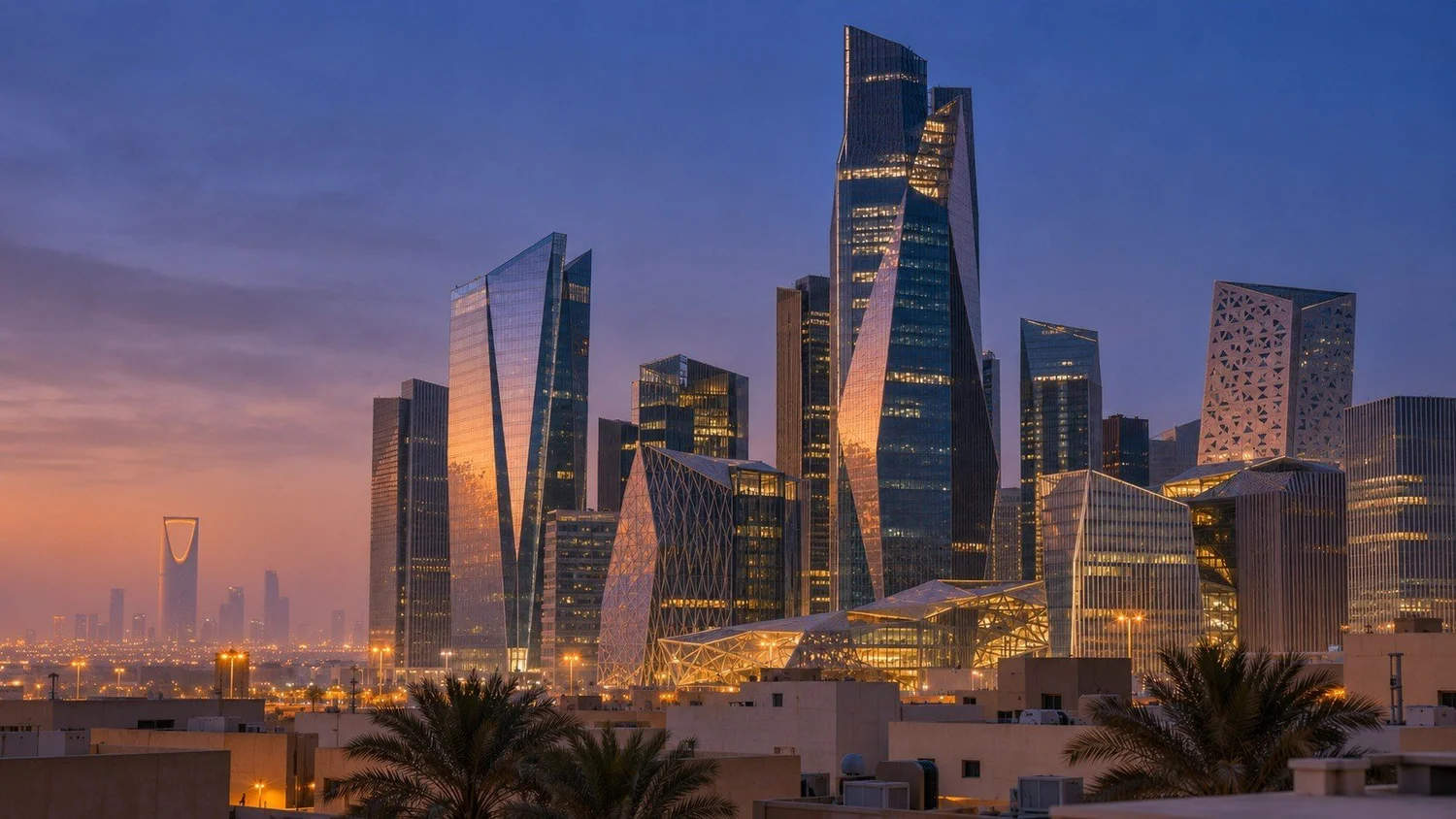
Saudi Officials Have Yet to Identify the Tower in Tuesday’s Attack.
Five days after Saudi Arabia’s sovereign wealth fund headquarters was damaged in Riyadh, the Saudi-led coalition says a tower in the capital’s financial district has again been targeted. Coalition spokesman Major General Turki al-Maliki said on Tuesday 24 November that authorities were investigating. His statement gave no casualty figure, described no damage and named neither the building nor those responsible.
Three witnesses identified the skyscraper housing the Public Investment Fund as the building hit by a projectile on Tuesday. That account raises the possibility that the same landmark has been struck twice in less than a week. The coalition’s announcement establishes the district. The more specific identification rests on what the witnesses saw.
What Happened to the Wealth Fund Tower on Thursday?
On 19 November, Saudi Civil Defence reported damage to several floors of a tower and to neighbouring buildings. A photograph distributed by Saudi authorities identified the Public Investment Fund headquarters in the King Abdullah Financial District. No injuries were reported in that incident. Saudi Arabia’s foreign ministry attributed Thursday’s attack to the Houthis.
Those details matter because a photograph of Thursday’s damage is genuine evidence of the earlier strike. It cannot show the condition of the building on Tuesday. The same applies to the injury count. Five days ago Saudi officials could say that the damage had been material. For the latest incident, people in the district and those waiting to hear from them have yet to receive an equivalent public account.
Why the Building’s Identity Matters
The Public Investment Fund manages Saudi sovereign wealth. Its headquarters is also Riyadh’s tallest skyscraper, a recognisable emblem of the kingdom’s investment ambitions. Confirmation of a second strike there would give this episode a narrower and more consequential meaning than a second attack somewhere in the surrounding business district. It would still leave open why the building was hit and who ordered it.
The wider conflict offers context. Fighting in Yemen intensified in July, and Saudi Arabia and the Houthis have since exchanged threats and attacks. An Aramco building in Riyadh was hit earlier in November. That history explains why the Houthis are central to discussion of Tuesday’s announcement. At the time of writing, the coalition had made no public attribution for this incident. A new Civil Defence assessment could settle the immediate questions about the building and the people inside it before investigators establish responsibility.
Sources
- Reuters — Saudi-led coalition says tower in Riyadh finance district targeted by 'terrorist attack' — The coalition’s account of the 24 November incident.
- Gulf Business, reporting AFP witness accounts — Saudi-led coalition says Riyadh financial centre tower targeted in “terrorist attack” — How three witnesses identified the building.
- Al Jazeera — Saudi Arabia says Houthi attack damaged Riyadh tower — The separate attack of 19 November.
Next Reads
- Saudi Arabia Strikes Yemen as Houthis Threaten Riyadh — The events that preceded the latest incident.
- Turkey Sends Military Support To Saudi Arabia As Houthi War Escalates — How neighbouring powers responded to the escalation.
- Saudi Arabia Runs Low On Missile Defences As Deadly Riyadh Airport Attack Kills 12 And Forces Urgent Calls For Foreign Help — Earlier strikes on infrastructure in the capital.
