Russia Launched Nearly 500 Drones in a Day, Zelenskyy Says — Western Ukraine Was Also Hit
Why Russia’s Drone Wave Matters Far From the Front
The Human Cost Behind Ukraine’s Daily Drone Totals
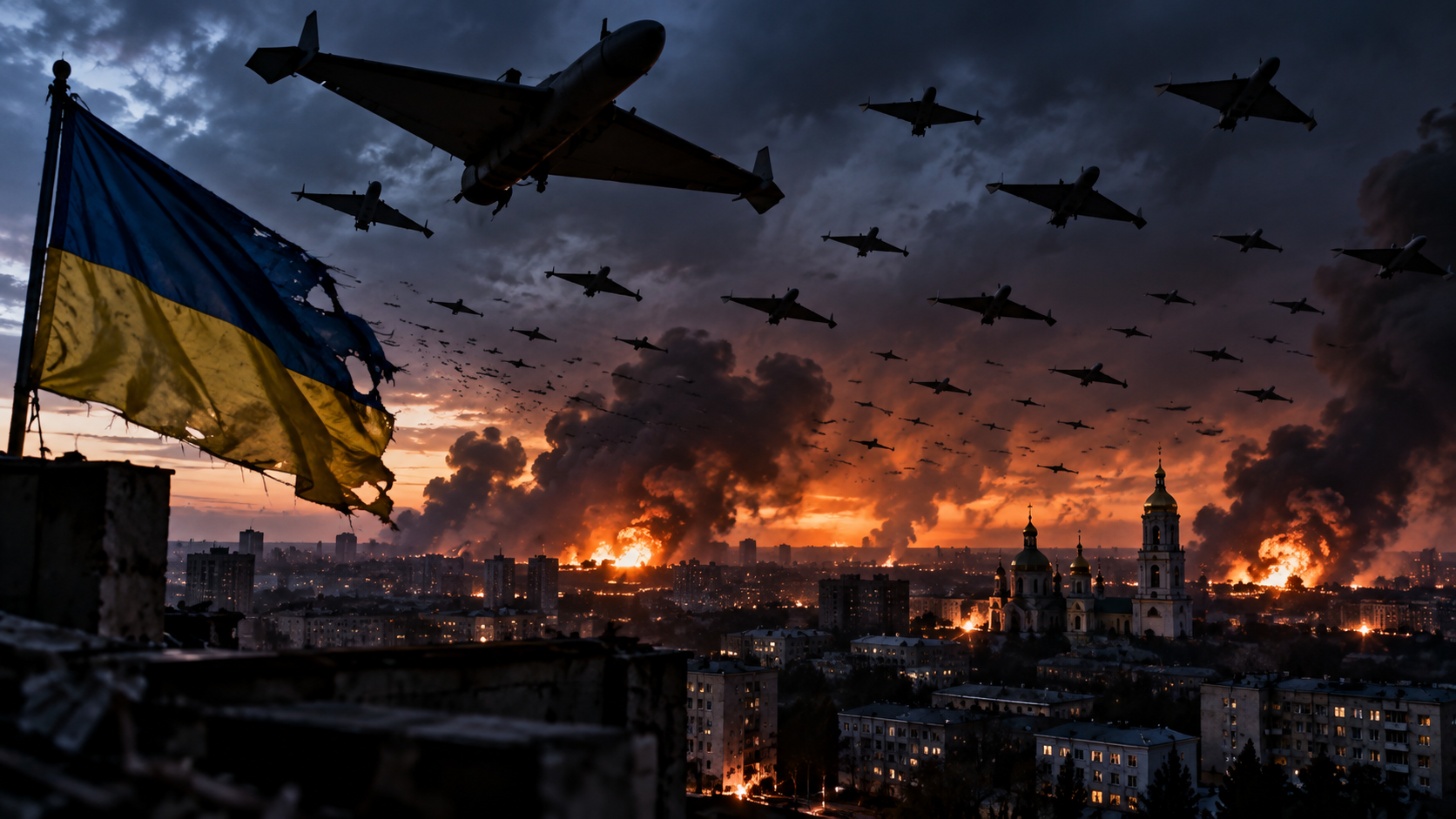
Russia launched nearly 500 strike drones against Ukraine during 12 September, President Volodymyr Zelenskyy said, as attacks reached western regions far from the main front lines.
The Kyiv Independent reported injuries in Volyn and electricity disruption in Rivne, citing regional authorities. The nationwide total is attributed to Ukraine’s president; it should not be treated as an independently audited count.
The scale attracts attention. The wider significance is the pressure that attacks on transport, power and economic activity can place on a country even where the front line is distant.
The Date and Counting Window Matter
“Nearly 500 in a day” is not interchangeable with every overnight drone total published around the same time.
Military updates can cover different periods, include different categories of aircraft and be revised while an attack is continuing. A figure reported in the evening may therefore describe a different set of launches from one issued the following morning.
The same caution applies to interceptions. A drone described as suppressed is not necessarily one physically destroyed by a missile. A drone that remains airborne at the time of an update has not yet reached a final outcome.
For that reason, this report does not add separate daily and overnight figures together or use mismatched totals to calculate an interception rate. The headline refers specifically to Zelenskyy’s account of 12 September.
That discipline matters because a misleading calculation can make defences appear either more effective or less effective than the underlying reporting supports.
Distance From the Front Does Not Remove Exposure
Regional officials described damage in north-western Ukraine. In Volyn, authorities said passengers had been evacuated before drone debris hit a train in Lutsk. Rivne officials reported local electricity outages and damage to an enterprise.
Those accounts illustrate why an attack can affect people well beyond an area of ground combat. A railway serves passengers, workers and businesses. Electricity supports homes, shops, communications and public services.
Damage to one part of that network can interrupt activity elsewhere. A journey can be delayed without the passenger’s destination being hit. A business can lose production without its own premises being damaged.
These are possible transmission effects, not a quantified assessment of losses from this particular wave. Establishing those losses would require information about restoration times, affected services and business operations.
Economic Pressure Has a Civilian Cost
Zelenskyy presented the attacks as an attempt to undermine Ukraine’s economic endurance. That is his assessment of Russia’s purpose.
The observable consequences deserve attention independently of any claim about intent. The Kyiv Independent also reported attacks on two Ukrainian steel plants, citing two deaths and six injuries. Such reports connect the aerial campaign to workplaces as well as the battlefield.
Separately, Kyiv’s mayor has described limits on the city’s ability to protect fuel stations and concerns about possible shortages. Preparations for a shortage should not be mistaken for proof that supplies have already run out.
Together, the reports raise a practical question: how much effort must be diverted into keeping ordinary economic life functioning while attacks continue?
Repairs require people, materials and time. Protecting a facility may reduce its vulnerability, but protection across an extensive network involves choices about where limited resources can do the most good.
Why the Drone Total Is Only Part of the Story
A launch count measures activity, not the complete effect of an attack.
To understand the outcome, readers also need to know where drones went, which facilities were affected, whether people were harmed and how quickly essential services returned. A large wave that causes limited disruption differs from a smaller attack that disables a critical asset for weeks.
Similarly, a high reported interception rate does not mean there was no serious damage. Even a small proportion of weapons reaching vulnerable locations can matter, while debris can create additional hazards.
This does not make interception statistics unimportant. It means they need to be read alongside the consequences on the ground, using the same period and a clear definition of what the numbers include.
What to Watch After the Attack
The most useful follow-up information will concern hospital updates, transport restoration, electricity repairs and the status of damaged businesses. These developments reveal the lasting burden more clearly than repeated images of an initial fire.
Further official launch figures should be labelled with their time windows. Any revised casualty count should replace, rather than be casually added to, earlier reporting about the same incident.
Diplomatic developments also need to be assessed separately from military activity. The possibility of future talks does not establish a current ceasefire or mean attacks have stopped.
The human reality behind the daily totals is that people must continue travelling, working and maintaining essential services while those uncertainties remain. The number of drones describes the scale of the assault. The time needed to restore ordinary life will help show its cost.
Outside the Article
The Kyiv Independent — Volyn and Rivne attacks, 12 September — Reported regional effects and Zelenskyy’s attributed daily total.
The Kyiv Independent — Steel-plant strikes, 12 September — Separate report on workplace attacks and reported casualties.
The Kyiv Independent — Kyiv fuel contingency planning — Mayor’s comments concern capacity and potential shortages, not proof that stocks were exhausted.
