Sam Neill Dies Aged 78 As Hollywood Mourns The Beloved Jurassic Park Star
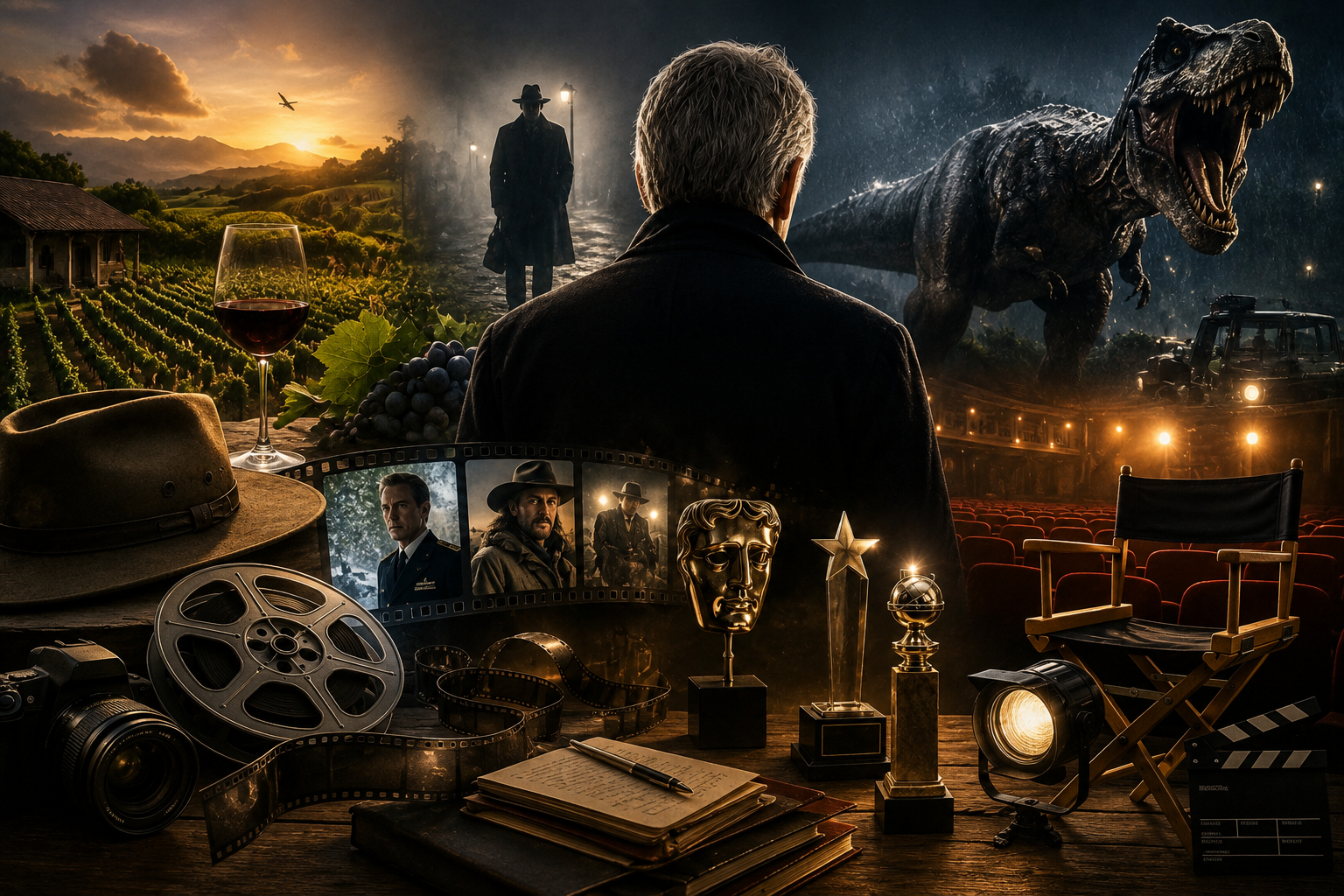
Hollywood Heartbreak As Sam Neill Dies Following An Extraordinary Career
Hollywood In Mourning As Jurassic Park Legend Sam Neill Dies Aged 78
The acclaimed New Zealand actor, whose remarkable career stretched from intimate arthouse dramas to some of cinema’s biggest blockbusters, has died suddenly in Sydney.
Sir Sam Neill, the internationally celebrated actor best known to millions as palaeontologist Dr Alan Grant in Jurassic Park, has died aged 78.
His family confirmed that Neill died in Sydney, Australia, on Monday, 13 July 2026. A statement published through his official Instagram account described the loss as “sudden and unexpected” and said he had been surrounded by his family. It also stressed that Neill remained cancer-free at the time of his death, following treatment for stage-three blood cancer.
No specific cause of death was immediately announced.
The news has prompted an outpouring of grief across the film industry, with actors, political leaders and generations of viewers paying tribute to a performer whose understated warmth, intelligence and versatility made him one of the most respected screen actors of his era.
Who Was Sam Neill?
Born Nigel John Dermot Neill in Omagh, Northern Ireland, on 14 September 1947, Neill moved to New Zealand with his family while still a child. He would eventually become one of the country’s most recognisable cultural figures, representing New Zealand cinema on the international stage for more than five decades.
Before achieving fame as an actor, Neill worked with the New Zealand National Film Unit, writing and directing documentaries. That experience behind the camera helped provide him with a broader understanding of filmmaking before his breakthrough performance in Roger Donaldson’s 1977 political thriller Sleeping Dogs. The film became an important moment in the development of modern New Zealand cinema and introduced Neill as a compelling leading man.
International recognition followed through roles in productions including My Brilliant Career, Omen III: The Final Conflict and the psychologically intense 1981 film Possession.
Neill was never confined to one type of character. He could appear commanding and dangerous, quietly vulnerable, intellectually detached or warmly humorous—sometimes within the same performance.
His television portrayal of British spy Sidney Reilly in Reilly, Ace of Spies earned him a Golden Globe nomination and further established him as a sophisticated international leading actor. Later performances in A Cry in the Dark, Dead Calm and The Hunt for Red October demonstrated his ability to move effortlessly between courtroom drama, psychological thriller and large-scale Hollywood production.
The Role That Made Him A Global Star
For audiences around the world, however, Sam Neill will remain inseparable from Dr Alan Grant.
Steven Spielberg’s Jurassic Park arrived in 1993 and became one of the defining cinematic events of the decade. At the centre of the spectacle was Neill’s Grant: an experienced palaeontologist who initially appeared more comfortable with fossils than children but was forced to become their protector when the park collapsed into chaos.
Neill gave the blockbuster its human anchor. His controlled and believable performance allowed audiences to accept a world populated by computer-generated dinosaurs because Grant’s terror, amazement and determination felt entirely real.
He returned to the role in Jurassic Park III in 2001 and again in Jurassic World Dominion in 2022, reuniting with Laura Dern and Jeff Goldblum. The character connected Neill with several generations of filmgoers and ensured his permanent place within one of cinema’s most successful franchises.
Yet Jurassic Park represented only one part of an extraordinarily varied career.
The same year it was released, Neill also appeared as the severe Alisdair Stewart in Jane Campion’s Oscar-winning drama The Piano. His performances in films including Event Horizon, The Horse Whisperer, The Dish, Hunt for the Wilderpeople and Sweet Country further illustrated the range that defined his work. Television audiences also knew him from productions such as Merlin, The Tudors, Peaky Blinders and Australian legal drama The Twelve.
A Legacy Beyond Hollywood
Neill’s legacy was not based solely on fame or box-office success.
He played an important role in the emergence of New Zealand and Australian cinema, supporting local filmmakers even after he had become an established Hollywood star. New Zealand Prime Minister Christopher Luxon described him as “one of the greats”, noting that Neill began his career when the country barely possessed a film industry and went on to represent it internationally for more than 50 years.
His contribution to acting was formally recognised through numerous honours. He was appointed an Officer of the Order of the British Empire and later became a Knight Companion of the New Zealand Order of Merit for services to acting. He also received an Equity New Zealand Lifetime Achievement Award and the Arts Foundation of New Zealand’s prestigious Icon Award.
Away from film sets, Neill developed Two Paddocks, a vineyard in Central Otago, and became widely known for his passion for wine, animals and rural New Zealand life.
During the COVID-19 lockdowns, his humorous social-media videos—frequently featuring animals from his farm—introduced another side of him to the public. They revealed a dry, eccentric and deeply likeable personality who seemed entirely unaffected by decades of international fame.
He once described himself as being in the “cheering-up business”, a phrase that captured the warmth he offered viewers both through his performances and his public presence.
His Cancer Battle
Neill revealed publicly in 2023 that he had been diagnosed with angioimmunoblastic T-cell lymphoma, a rare form of blood cancer, after experiencing swollen glands while promoting Jurassic World Dominion.
He discussed his illness and his determination to continue living and working in his memoir, Did I Ever Tell You This? After conventional chemotherapy stopped working, he underwent further treatment and subsequently entered remission.
In April 2026, only months before his death, Neill announced that he was cancer-free. His family specifically confirmed that his death was sudden and that he remained free of cancer, preventing immediate speculation that his previous illness had returned.
Tributes To A “Kind” And “Generous” Man
Tributes quickly arrived from those who had worked alongside him.
Nicole Kidman, who starred with Neill in the 1989 thriller Dead Calm, remembered him as a charming, intelligent and deeply kind friend. Richard E. Grant, Toni Collette, Karl Urban, Alan Cumming, Henry Golding and Rachel Griffiths were among the actors who publicly honoured his warmth, humour and generosity.
Australian Prime Minister Anthony Albanese praised the dignity and humour with which Neill had confronted illness, saying that the actor would be “much mourned and long remembered”.
Those tributes reflected a striking consistency. Colleagues did not remember Neill merely as a gifted performer. They remembered a thoughtful, supportive and unpretentious man whose decency appeared to match the integrity he brought to the screen.
A Quiet Giant Of Cinema
Sam Neill possessed the rare ability to become a global film star without allowing celebrity to overwhelm his identity.
He could lead a Hollywood blockbuster, disappear into a disturbing arthouse performance, elevate a television drama or playfully share life on his farm with strangers online. His work crossed genres, countries and generations without ever becoming predictable.
For some, he will always be Alan Grant removing his sunglasses in astonishment as he sees a living dinosaur for the first time. For others, he will be remembered through The Piano, Dead Calm, Possession, Hunt for the Wilderpeople or one of the dozens of quieter performances that demonstrated his remarkable control and emotional intelligence.
His death removes one of cinema’s most dependable and distinctive presences.
But across more than half a century of performances, Sam Neill created something that will endure: characters defined not merely by spectacle, but by humanity.
He leaves behind a body of work that will continue to thrill, unsettle, comfort and, as he once hoped, cheer people up for generations to come.
