Seven Suspected Somali Pirates Seize Tanker in Gulf of Aden
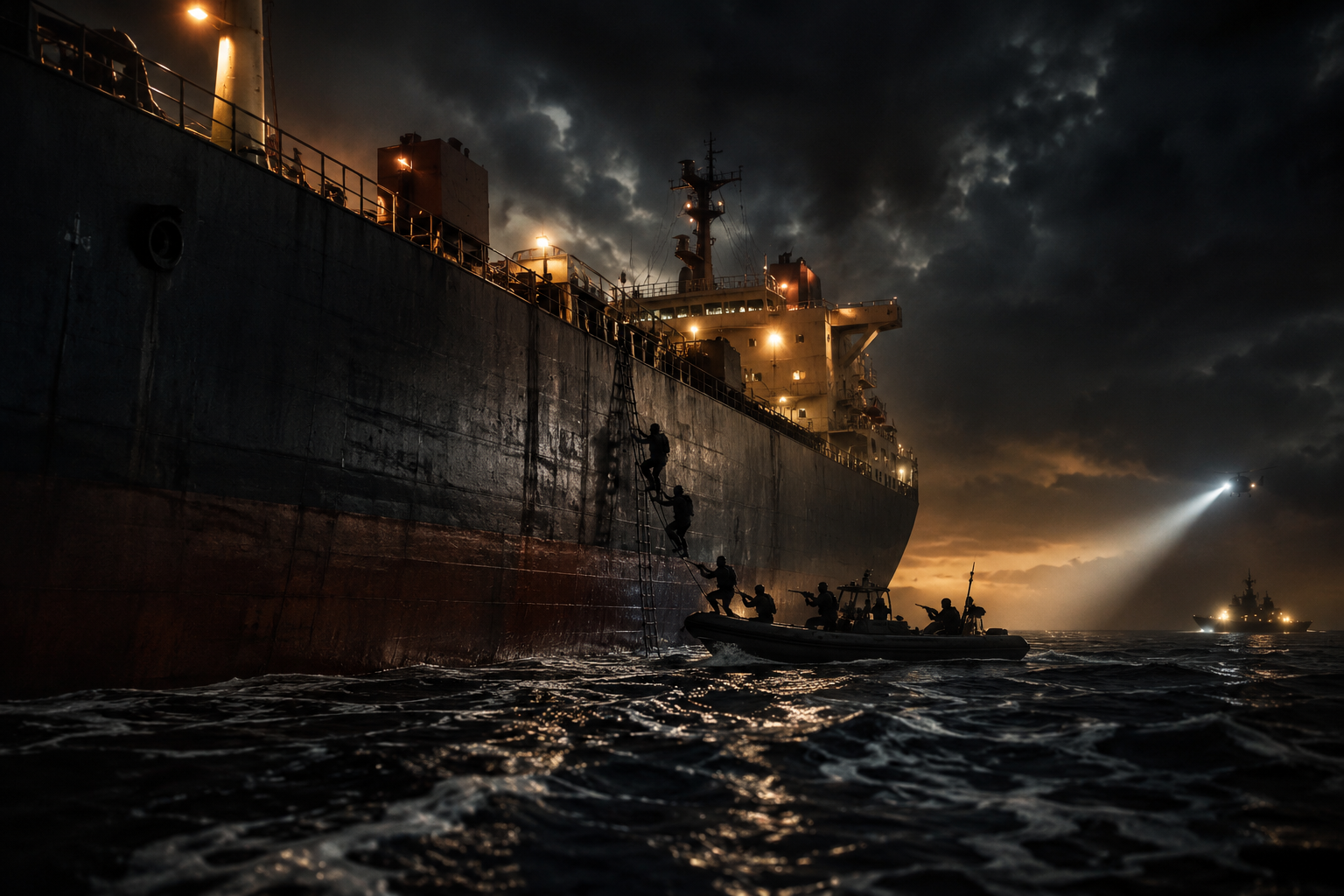
Merchant Tanker Held off Puntland After Hijacking Near Yemen
Somali Pirates Hold Hijacked Tanker as Gulf of Aden Threat Returns
A Tanzanian-flagged tanker hijacked near Yemen is reportedly being held off northeastern Somalia after suspected pirates seized control of the vessel and forced it across the Gulf of Aden. The MT Asana was taken shortly after departing the Yemeni port of Mukalla on Friday, July 17, before being moved towards waters near Caluula in Somalia’s Puntland region.
The seizure is more than an isolated attack on an ageing merchant vessel. It strengthens evidence that organised piracy is again exploiting the security vacuum around one of the world’s most important maritime corridors, where commercial crews already face instability linked to Yemen, armed groups and overstretched naval forces.
Seven Armed Men Reportedly Took Control
The MT Asana is an oil and chemical-products tanker built in 1992. It is approximately 127 metres long, has a deadweight capacity of about 10,960 tonnes and is registered under the Tanzanian flag.
The vessel was reportedly boarded south of Mukalla by seven armed men believed to be Somali pirates. Maritime authorities initially described the incident as an unauthorised boarding, while information linked to Yemen’s internationally recognised government later indicated that the attackers had gained complete control of the ship.
A South Korean naval vessel reportedly responded after the tanker transmitted a distress signal. The Asana was nevertheless seen travelling unusually slowly across the Gulf of Aden, at approximately two knots, with Bosaso in Somalia displayed as its destination. That movement was consistent with reports that the hijackers were steering the captured ship towards Puntland.
By Sunday, local sources said the tanker had reached waters near Caluula in Puntland’s Bari region. No public operation to recover the vessel had been announced, and neither Puntland authorities nor international naval forces had issued a detailed account of what was happening aboard it.
Crew Remain at the Centre of the Crisis
The number, nationality and condition of the crew have not been publicly confirmed. There have been no verified reports of injuries, but the absence of information should not be mistaken for evidence that those aboard are safe.
A commercial ship under pirate control can become both a hostage site and a mobile base. The attackers may seek payment for the vessel, its cargo and its crew, while the tanker itself could potentially be used to support further operations if it remains in their hands.
No ransom demand has been publicly disclosed. The ship’s owner or manager has also not issued a detailed statement explaining the cargo, the crew manifest, the vessel’s security arrangements or whether negotiations have begun.
The lack of reliable information leaves the families of those aboard facing the most serious uncertainty. It also prevents maritime authorities from establishing whether this is a conventional ransom hijacking, an opportunistic seizure or part of a broader pirate network operating between Yemen and Somalia.
Piracy Is Re-Emerging Around Somalia
Somali piracy was heavily suppressed for years by international naval patrols, armed guards, improved shipboard defences and stronger coordination between commercial operators. The underlying conditions that allowed it to flourish, however, were never fully removed.
Several vessels have been seized or attacked around Somalia and the Gulf of Aden during 2026. In April, suspected pirates captured a tanker and a cement carrier in separate incidents near Puntland, while another tanker was hijacked off Yemen in May and diverted towards Somali waters.
The pattern matters because successful hijackings generate money, experience and confidence. A pirate group that holds one vessel may acquire fuel, communications equipment and a platform capable of reaching targets far beyond the coastline.
Maritime advisories earlier this year warned that hijacked vessels and dhows were potentially being used as pirate motherships. That allows smaller attack boats to operate further offshore and remain at sea for longer, increasing the number of merchant ships within reach.
Yemen’s Disorder Creates an Opening
The Asana was attacked in waters where different security threats overlap. Ships moving through the Gulf of Aden must pass close to Yemen, navigate towards the Bab el-Mandeb strait and continue into the Red Sea or the wider Indian Ocean.
That geography makes the corridor essential to global trade but difficult to secure. Naval deployments focused on missiles, drones and regional conflict can leave fewer resources available for traditional anti-piracy patrols, surveillance and rapid interception.
Pirates do not need to defeat the world’s navies. They need only to locate an unprotected or slow-moving vessel, board it before assistance arrives and move it towards waters where intervention becomes more complicated.
The Asana reportedly had no armed security team aboard when it was attacked. That does not make the crew responsible for the seizure, but it may have reduced the immediate obstacles faced by the boarding party.
What Happens Next
The immediate priority is establishing the crew’s condition and determining who now controls the negotiations. Puntland security forces could attempt to contain the tanker near the coast, while naval forces may track its movements and assess whether an intervention can be conducted without endangering those aboard.
A rescue at sea would carry considerable risk. Tankers are complex environments containing fuel, machinery and confined internal spaces, while armed hijackers may be dispersed throughout the vessel and holding crew members in unknown locations.
Negotiation may therefore become the more likely route unless the pirates move ashore, abandon the ship or create an immediate threat that forces military action. Past Somali hijackings have sometimes lasted weeks or months as attackers sought ransom payments from owners, insurers or intermediaries.
The larger consequence will extend beyond the fate of one vessel. Every successful seizure raises insurance pressure, strengthens the case for armed guards and forces shipping companies to reconsider whether existing naval protection is sufficient.
The MT Asana is now a test of whether the renewed pirate threat can still be contained while it remains limited. Failure to recover the tanker and its crew could signal that the Gulf of Aden is entering a new cycle in which Somali pirates once again treat commercial shipping as accessible, movable ransom property.
