South Carolina State University shooting: two dead, one wounded, campus locked down
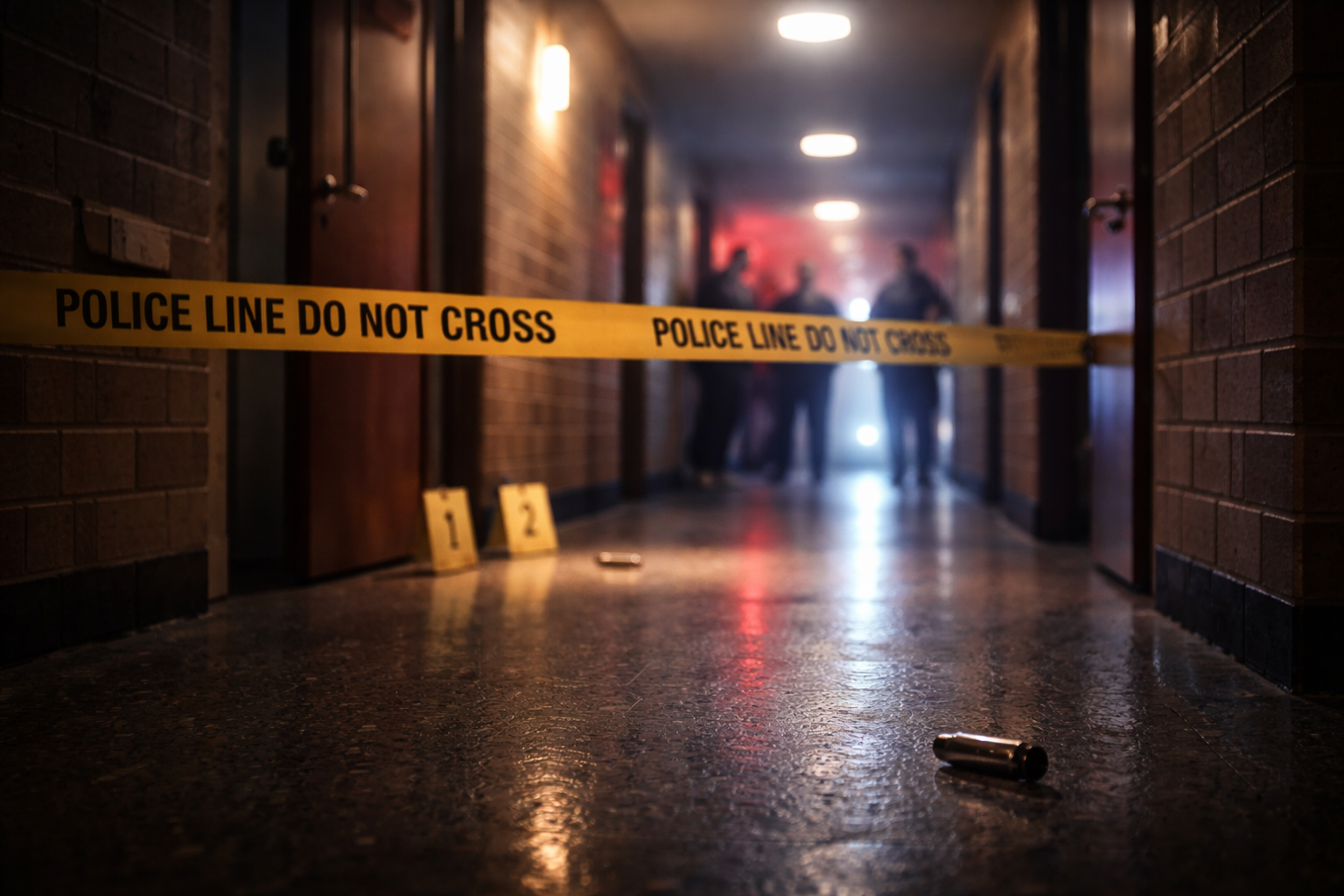
South Carolina State University shooting: verified timeline
South Carolina State University shooting: the verified timeline, what’s unclear, and what happens next
South Carolina State University went into lockdown after a shooting inside a campus residence complex, and the first public accounts are already splitting into “what’s known” and “what people think they know.”
Officials have confirmed two deaths and one injury but have not released names, the injured person’s condition, or any suspect details.
That gap matters because early reporting often blurs the operational reality: where the violence happened, how quickly it was contained, and what authorities have actually confirmed.
One under-emphasized hinge will shape everything that follows: whether this was a targeted incident confined to one room or a broader access and control failure within a residential complex.
The story turns on whether the incident remained contained to a single location with no continuing threat or whether investigators uncover signs of wider risk, additional participants, or an unresolved suspect.
Key Points
A shooting occurred in a room inside the Hugine Suites residential complex on the South Carolina State University campus in Orangeburg, South Carolina.
Officials have confirmed two fatalities: one person died at the scene, and a second person later died at the hospital.
A third person was wounded; as of the latest updates, officials have not publicly detailed that person’s condition.
The university ordered a campus lockdown at roughly 9:15 p.m. local time on Thursday; the lockdown was lifted early Friday morning.
The South Carolina Law Enforcement Division (SLED) is leading the investigation, with local agencies supporting.
Friday classes were cancelled and support services were offered, as the university community processes another high-impact safety incident.
Background
South Carolina State University is a public historically Black university in Orangeburg. The shooting took place in a campus residential setting, which tends to raise immediate questions about access control, visitor management, and the speed of containment.
The investigation is being handled by SLED, a state-level agency that often leads or supports major criminal investigations in South Carolina when requested or when incidents cross jurisdictional lines.
In events like this, the first 12–36 hours typically produce three different “timelines”: the operational timeline (calls, lockdown, clearance), the medical timeline (scene care, transport, hospital status), and the legal timeline (scene processing, witness interviews, charging decisions). Confusion usually comes from mixing them.
Analysis
The confirmed operational timeline so far
Officials have said the shooting was reported at about 9:15 p.m. local time on Thursday, inside an apartment-style setting at the Hugine Suites residential complex on campus.
The university issued a lockdown shortly after that report. A lockdown of this type usually means restricting movement, asking people to shelter in place, and deploying officers to secure perimeters while the scene is assessed.
Authorities have confirmed two deaths. One person died at the scene. A second person died later at the hospital.
A third person was wounded and taken for medical care, but officials have not provided a definitive public update on that person’s condition.
The university said the lockdown was lifted early Friday morning, after hours of restricted movement while the scene was secured and assessed.
What’s unclear, disputed, or simply not yet released
Names and affiliations of the victims have not been publicly confirmed in the official statements referenced in the latest reporting. If names are circulating online, treat them as unverified until confirmed by the coroner or law enforcement.
No official suspect description, arrest announcement, or public motive has been confirmed in the latest updates. In the earliest phase, “no suspect info released” is not the same thing as “no suspect exists” or “suspect at large.” It usually means authorities are still verifying facts, protecting witness integrity, or coordinating next-of-kin notifications.
It remains unclear whether the wounded person was the intended target, a bystander, or connected to the immediate dispute. That distinction often changes both charging decisions and campus-safety responses.
It is also not yet publicly confirmed whether the people involved were students, residents, visitors, or unaffiliated. In campus incidents, this is one of the first facts that meaningfully changes the risk narrative.
Why the “where it happened” detail matters
This incident is described as happening inside a room in a residence complex, not in an open campus space. That is operationally significant.
If the violence was contained to one room, it points towards a targeted conflict, a personal dispute, or a specific encounter that escalated quickly. That tends to narrow suspect pools and accelerates witness identification.
If investigators find evidence of movement through shared areas, forced entry, or multiple points of contact, the same event starts to look like a broader security failure, and the campus response typically shifts from reassurance to hardening access and expanding patrols.
The difference is not rhetoric. It determines whether the next 72 hours are dominated by interviews and forensic processing or by a more urgent public safety hunt involving broader alerts.
What Most Coverage Misses
The hinge is whether the shooting was truly confined to a single room with no continuing threat or whether the residential complex’s access and control systems failed in a way that allowed risk to persist.
Mechanism: if authorities can show rapid containment to one location, the immediate public-safety danger to campus drops fast, and the investigation becomes more like a conventional homicide case. If containment is uncertain, or if access control appears porous, the incident becomes a campus-wide safety and governance problem, forcing visible operational changes and longer-lasting fear.
What would confirm it in the coming hours and days is concrete, not speculative: an official statement clarifying whether a suspect is in custody, whether the public is being asked for help locating someone, and whether there is evidence of forced entry, movement across multiple locations, or a weapon recovery tied to a specific individual.
What Happens Next
In the next 24–72 hours, expect the investigation to move through predictable gates, and each gate has a “confirmation signal” that separates fact from noise.
First, the deaths will be formally identified through coroner notifications. That is usually when names and ages become public, and it also clarifies whether the victims were students, visitors, or community members.
Second, law enforcement will clarify incident status. The key confirmation is whether they announce an arrest, ask the public for information about a named or described suspect, or explicitly state there is no ongoing threat.
Third, investigators will define the scope. The confirmation signal here is whether officials describe the shooting as “isolated” and explain why, or whether they expand the scope by referencing additional scenes, additional involved parties, or ongoing searches.
Fourth, the university’s operational response will harden. The confirmation signals are visible changes: adjusted access rules for residential areas, increased patrols, temporary restrictions, and formal communications about safety measures and reporting channels.
The main consequence is trust and routine disruption, because residential shootings collapse the perceived boundary between “safe private space” and “public risk,” and that changes behaviour long after the police tape comes down.
Real-World Impact
A student wakes up to canceledbehaviorcanceled classes and a phone full of partial screenshots, trying to work out what is real enough to tell their parents.
A resident in the complex replays the night in fragments: sirens, locked doors, the thud of group messages, and the long stretch of uncertainty while the lockdown continues.
A staff member in student support services faces a familiar, difficult pattern: grief counseling mixed with fear, anger, and a rush of misinformation that spreads faster than official updates.
A local family hears “two dead” before any names are confirmed and spends the night trying to reconcile the words “campus housing” with the idea that it could be anyone.
The next statement that will settle the story
Most narratives will stabilize when two things happen: investigators clarify whether anyone is in custody, and officials confirm who the victims were and how they were connected to the location.
Until then, treat any claim that adds a motive, a named suspect, or a detailed play-by-play as a hypothesis, not a fact.
Watch for a clean, specific update that answers three questions in plain terms: where exactly it occurred, whether there is an ongoing threat, and what the public should do next.
If those answers arrive with evidence-backed detail, the story becomes a test of accountability and prevention rather than a fog-of-war event. That shift is historically significant because it is the moment when a community stops reacting and starts demanding measurable change.
