The Minneapolis ICE Shooting Just Took a Stunning Legal Turn
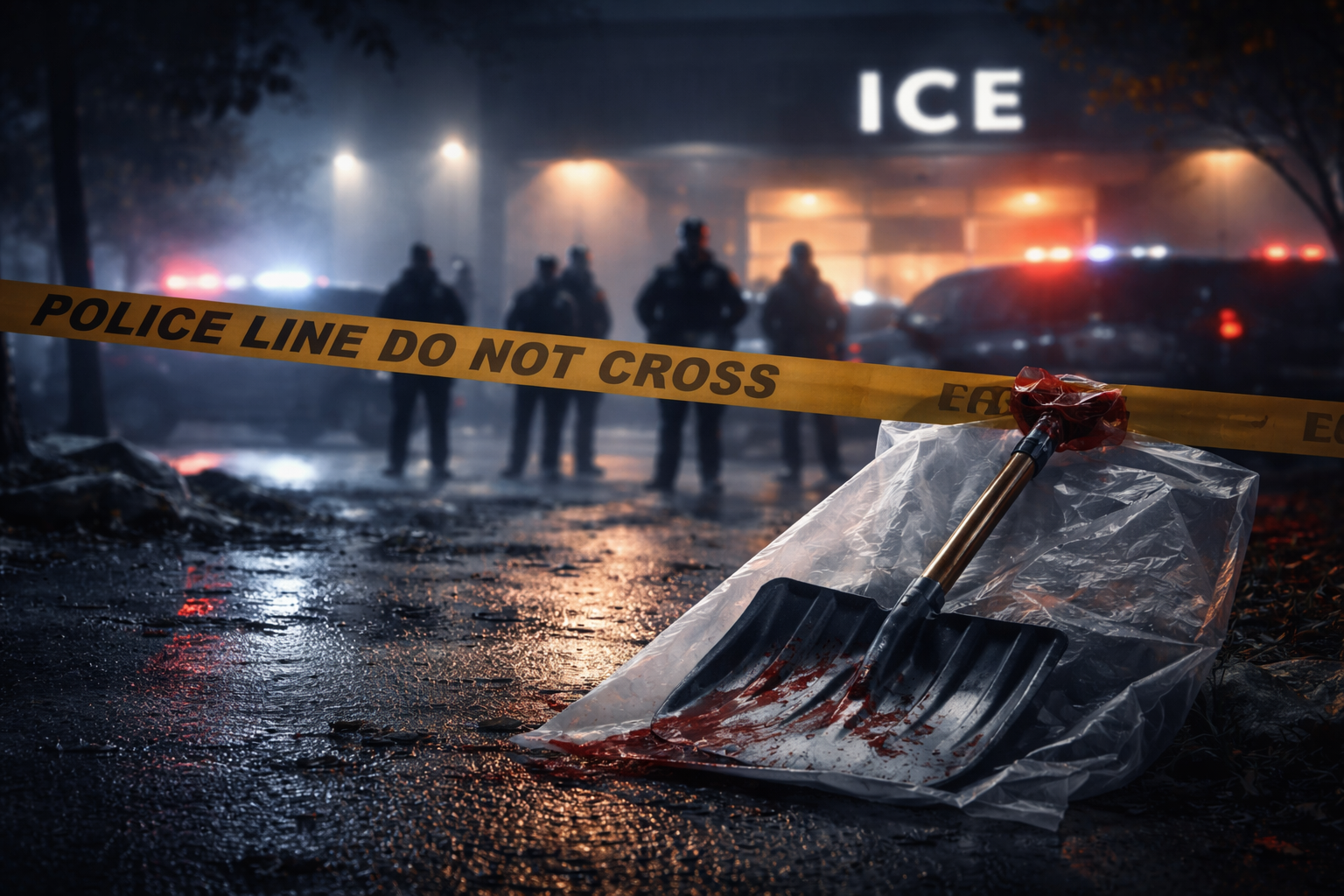
DOJ seeks to drop charges tied to the Minneapolis ICE shooting, citing new evidence. Here’s what changed, what’s disputed, and what happens next.
DOJ Moves to Drop Charges After Minneapolis ICE Shooting—And the Case Is Coming Apart in Public
A routine immigration stop turned into gunfire, a citywide backlash, and now an abrupt legal retreat that suggests something went badly wrong. Federal prosecutors have moved to dismiss felony assault charges against two Venezuelan men arrested after a January confrontation with Immigration and Customs Enforcement (ICE) officers in north Minneapolis. The filing points to “newly discovered evidence” that clashes with the government’s earlier narrative.
The shift matters because the original allegations weren’t minor: prosecutors accused the men of assaulting an officer with a broom and a snow shovel—claims used by senior officials to frame the incident as an “ambush” and justify the shooting that wounded one of the defendants.
The latest confirmed update is that the U.S. Attorney’s Office in Minnesota has asked the court to dismiss the charges with prejudice, meaning they cannot be refiled.
One underappreciated hinge: when prosecutors move to permanently drop a case built around an officer’s account, it can signal deeper credibility and evidence-chain problems that ripple far beyond one courtroom.
The story turns on whether the government’s initial version of the confrontation can survive contact with video, affidavits, and the standards prosecutors must meet to put witnesses on the stand.
Key Points
Federal prosecutors in Minnesota have moved to dismiss felony assault charges against Alfredo Alejandro Aljorna and Julio Cesar Sosa-Celis after “newly discovered evidence” emerged that is “materially inconsistent” with earlier allegations.
Prosecutors are seeking dismissal with prejudice, which would prevent the government from bringing the same federal charges again.
The charges stem from a January 14 incident in north Minneapolis during which an ICE officer shot Sosa-Celis in the thigh/leg amid a confrontation outside an apartment building.
Early official statements described the shooting as defensive after an officer was attacked with a broom handle and snow shovel; later filings and testimony highlighted contradictions and lack of corroboration.
Court records described a traffic-stop sequence that appears to have involved confusion over the intended target, raising questions about how the stop was initiated and how quickly the situation escalated.
The case is landing in a broader national argument over the use of force by armed immigration agents, especially after other recent incidents where video and eyewitness accounts diverged from initial government descriptions.
Background
The January incident began with immigration officers attempting a traffic stop that ended with a crash, a foot pursuit, and a struggle near an apartment complex. According to the government's initial account, during the attempted arrest, an officer faced an attack with household tools and responded with a "defensive" shot, which resulted in the wounding of Sosa-Celis.
Those claims were amplified quickly. A senior Homeland Security official publicly described the event as an ambush and attempted murder, using language that heightened tensions, hardened public perceptions, and potentially influenced the speed at which prosecutors pursue severe charges.
But the legal system does not run on press-release certainty. Once defendants are in court, claims meet video, witnesses, and sworn statements. During early hearings, defense attorneys acknowledged their clients were holding objects but disputed that an assault occurred the way the government described it. Available video and eyewitness testimony, as described in reporting on the hearings, did not neatly match the officer’s account.
The Justice Department now appears to be abandoning the case due to the discrepancy between the initial official narrative and the evidentiary record prosecutors must rely on.
Analysis
Why “Dismissal With Prejudice” Is a Big Deal
Prosecutors drop cases for many reasons, but asking to dismiss with prejudice is the tell. It means the government is not just pausing or reorganizing—it is asking the court to end the federal prosecution permanently.
In practice, that usually happens when prosecutors conclude they cannot ethically proceed, cannot meet the burden of proof, or cannot rely on key testimony without risking credibility collapse in front of a jury. If the core witness is the officer involved, and that account is materially undermined, the case can become structurally unprosecutable.
It also changes the negotiating posture instantly. Defendants are no longer fighting for a better plea deal; they are pushing for vindication in public, and their attorneys can argue the case should never have been charged in the first place.
What the Conflicting Accounts Suggest About the Stop Itself
Later court filings described a version of events that diverged from the early explanation of a “targeted” stop on Sosa-Celis. Reporting on unsealed documents indicated the stop may have been triggered by a license-plate scan tied to a different person and that the pursuit led officers to the wrong individual.
If that is accurate, it matters for two reasons.
First, it reframes the encounter from “suspect resisted a lawful stop” to “officers moved fast on imperfect identification.” That doesn’t automatically make force unlawful, but it changes the fact pattern jurors and judges focus on: confusion, speed, and decision-making under uncertainty.
Second, it affects how any later use-of-force justification is evaluated. If officers are trying to detain someone who is not the intended target, and the scene becomes chaotic, prosecutors must prove beyond a reasonable doubt not only that the defendants committed an assault but also that the government’s narrative is coherent and consistent across sworn statements.
The Incentive Clash Between Messaging and Prosecution
Early official messaging often aims to deter resistance, defend agency legitimacy, and reassure supporters. Prosecution has a different incentive: it has to survive cross-examination.
That tension is sharper in immigration enforcement cases, where political pressure is high and events unfold in public view. If leadership frames an incident as an ambush, prosecutors can feel pushed toward rapid, severe charging—especially when the alleged victims are federal officers.
But fast charging is risky. If video later fails to corroborate key details—or if sworn affidavits contain inconsistencies—defense counsel can turn the government’s own words into a weapon: “They told the public one story; the evidence shows another.”
Scenarios to Watch From Here
One scenario is the simplest: the dismissal is granted, the men are released from federal prosecution on these counts, and the government moves on quietly. The signposts would be a short court order granting dismissal with prejudice and no immediate substitute charges.
A second scenario is spillover scrutiny: internal review of how the stop was initiated, what information officers relied on, and whether early public statements overstated what could be supported. Signposts would include inspector general interest, congressional inquiries, or disclosures in related litigation.
A third scenario is civil litigation pressure. Dropping charges with prejudice can be used by plaintiffs to argue that the government’s initial account was unreliable and that damages flowed from wrongful prosecution, excessive force, or aggressive tactics. Signposts would include preservation letters, civil complaints, or settlement approaches.
What Most Coverage Misses
The hinge is this: when prosecutors abandon a case with prejudice after building it around an officer’s account, it can signal that the real vulnerability is not one disputed moment but the reliability of the entire evidentiary chain.
The mechanism is straightforward. If prosecutors believe a key narrative element cannot be proven—or could be disproven—continuing would risk not just losing but also creating sworn testimony and judicial findings that weaken future cases involving the same agencies, tactics, or witnesses. Walking away early can be a containment strategy.
What would confirm these facts in the next days or weeks? Watch for (1) any indication prosecutors cannot or will not call the officer as a principal witness and (2) any additional document releases showing contradictions between initial official statements, video, and sworn affidavits.
What Happens Next
The immediate next step is procedural: a judge must approve the government’s motion to dismiss. If granted as requested, the assault charges cannot return in federal court in the same form.
In the short term (24–72 hours), the practical impact is on detention and leverage. A dismissal with prejudice weakens the government’s ability to hold the defendants on those counts and strengthens arguments that the arrests and prosecution were overreaching.
In the longer term (weeks to months), the consequence is institutional. This case is now part of a wider debate over how immigration enforcement is conducted in communities, how force is justified, and how quickly agencies publish claims before evidence is fully tested—because once a narrative collapses in court, it becomes harder to restore public trust.
Real-World Impact
A delivery driver with uncertain status changes routes, shifts hours, or avoids whole neighborhoods because a traffic stop can spiral into a life-altering encounter.
A landlord and tenants stop speaking openly in the hallway after a high-profile raid and tear gas use in the area, because everyone fears being misunderstood or reported.
A local employer sees no-shows rise overnight after a widely shared incident, because workers decide the risk of commuting is not worth it.
A family replays the same question for weeks: if prosecutors dropped the case, why were the claims so definitive when it first happened?
When Court Filings Beat Press Releases
This story is not just about one shooting or one legal motion. It is about what happens when the justice system forces a public narrative to meet sworn evidence.
If the dismissal is granted with prejudice, the government will have chosen finality over a fight—suggesting it believes the fight would expose more than it can defend. The next chapter is whether that decision stays confined to this case or becomes a catalyst for broader accountability and policy changes, and the signposts will be what else the government declines to argue under oath.
