

Syria imposes Latakia's curfew after sectarian violence shakes the coast
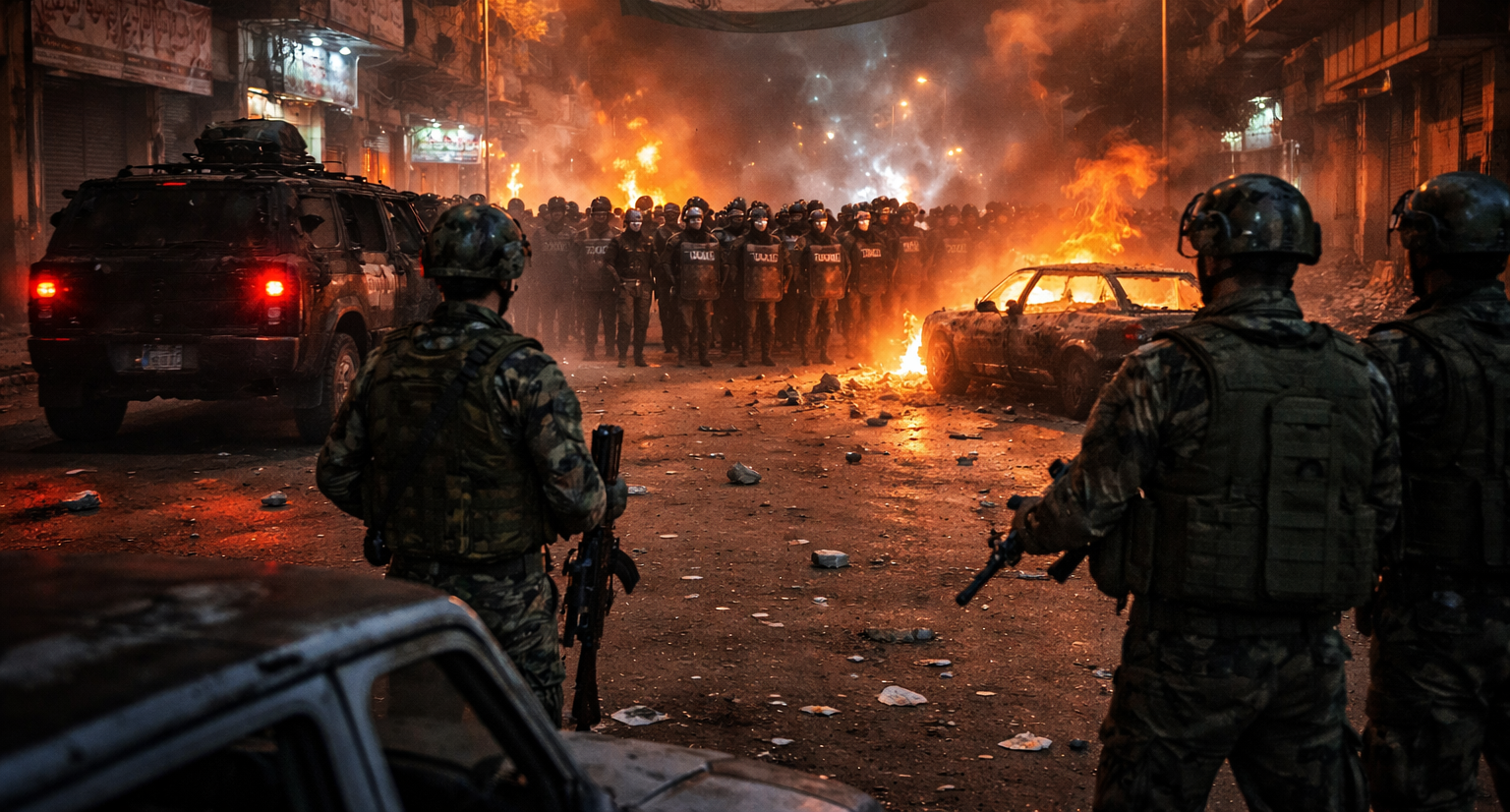
As of December 30, 2025, Syrian authorities have imposed an overnight curfew in Latakia after days of protests and reported sectarian violence in and around the coastal city. The restriction is a blunt signal that the state believes order is slipping in a region where mistrust is already high and politics is still unsettled.
Why it matters now is that Latakia is not just another flashpoint. It is a core coastal hub with deep ties to Syria’s Alawite community and a place where any security move is read through the lens of collective punishment versus public protection. Curfews can quickly calm streets, but they can also intensify grievances if communities perceive collective blame.
This piece explains what triggered the curfew, what is known about the violence and the protests, and why the coastal provinces remain uniquely vulnerable to escalation. It also lays out the scenarios to watch next and the signals that would show whether the temperature is dropping or rising.
The story turns on whether the new authorities can restore calm in Latakia without deepening sectarian mistrust.
Key Points
Syrian authorities announced an overnight Latakia curfew running from 5:00 p.m. Tuesday to 6:00 a.m. Wednesday, with exemptions for emergency and medical services.
The curfew followed unrest that included attacks and property damage in Alawite-majority areas, after large protests in Latakia turned violent over the weekend.
At least four deaths and dozens of injuries have been reported across the protest-linked clashes, with accounts indicating both civilians and a security member among the dead.
Demonstrators in Latakia rallied around demands for decentralization and the release of Alawite detainees, framing the protests as a response to insecurity and marginalization.
Tensions were inflamed by a bombing at an Alawite mosque in Homs during Friday prayers that killed multiple people and injured others, reinforcing fears of sectarian targeting.
The government has blamed “remnants of the former regime” and “external agendas” for stoking violence, while critics and activists dispute parts of the official narrative.
What happens next depends on whether security measures remain temporary and targeted, or expand into a longer clampdown that feeds resentment and retaliation.
Background
Latakia sits on Syria’s Mediterranean coast and carries outsize political weight because it is closely associated with the Alawite community, a minority group that was deeply intertwined with the former state security system and public sector under Bashar al-Assad. Assad, himself an Alawite, was ousted in December 2024, and Syria has since been governed by a Sunni-led, Islamist-influenced leadership under President Ahmed al-Sharaa.
Since that transition, the coast has experienced repeated episodes of violence and reprisal. In March 2025, fighting involving Assad loyalists and security forces triggered a wave of revenge killings that left a large number of Alawite civilians dead and drove many people to flee, creating a lasting trauma that still shapes how coastal communities interpret any new security action.
Against that backdrop, a bomb attack at an Alawite mosque in Homs during Friday prayers in late December 2025 re-ignited fears of sectarian targeting. That fear quickly translated into street mobilisation. On December 28, thousands gathered in Latakia’s Azhari Square and elsewhere on the coast, with protest messages mixing political demands, community protection, and anger over detentions.
The demonstrations did not remain contained. Gunfire and clashes were reported during the protests, and violence continued into the following days. By December 30, authorities announced an overnight curfew in Latakia and reinforced deployments in neighborhoods where unrest had spread. Officials said the aim was to restore stability, protect people and property, and also warn against vigilante-style retaliation and damage to public and private assets.
Analysis
Political and Geopolitical Dimensions
The Latakia curfew lands in a fragile political moment. Syria’s post-Assad leadership is still trying to prove it can govern a diverse society while dismantling or reshaping parts of the old security order. The coastal provinces are the hardest test of that promise because many residents fear they will be treated as presumptive enemies, while many others across the country see the coast as the former regime’s rear base.
Geopolitical sensitivities also exist in Latakia. Russia’s long-standing military footprint includes the Hmeimim air base in Latakia province, and Moscow has been negotiating with Syria’s new leadership over the status of that base and the naval facility at Tartous. That does not mean Russia is driving events on the streets, but it does mean the coast is watched closely by foreign governments, and any instability can become a bargaining chip in wider negotiations over security cooperation, sanctions relief, reconstruction access, and external influence.
In practical terms, the curfew is a signal to both domestic and foreign audiences: the government is asserting a monopoly on force in a region where non-state actors, revenge networks, and armed “remnants” can still operate. The risk is that heavy-handed enforcement may produce short-term quiet while worsening the long-term legitimacy problem.
Economic and Market Impact
Curfews hit local economies immediately. Latakia is a commercial and port-linked city, and even a short overnight restriction disrupts logistics, staffing, deliveries, and informal commerce that runs late into the evening. When fear rises, people hoard cash, pause purchases, and pull back from travel between neighborhoods, which can choke small businesses first.
The bigger economic concern is persistence. Seeing the coast as unstable complicates investment, aid delivery, and the state's ability to re-establish national supply lines. It also increases the temptation for armed groups to fund themselves through extortion, “protection,” and control of checkpoints—patterns Syrians know too well from earlier phases of the conflict.
A contained scenario looks like this: the curfew expires on schedule, targeted arrests follow for identifiable attackers, and normal trading resumes quickly. A more damaging scenario is a cycle of curfews, retaliatory vandalism, and sporadic attacks that push commerce into survival mode and deepen resentment across communities.
Social and Cultural Fallout
Sectarian fear does not need a large number of incidents to become self-sustaining. It only needs enough to convince people that the next attack could be theirs, and that the state either cannot protect them or will not. The Homs mosque bombing intensified that fear, and the coastal protests show how quickly insecurity can turn into mass mobilisation when people believe they are being targeted.
Latakia’s mixed social fabric adds a second layer of risk. The city includes Alawite-majority and Sunni-majority neighborhoods, and in a tense moment, rumors travel faster than facts. That increases the chance of “mob logic,” where individuals retaliate for alleged wrongdoing by unknown actors, and whole streets become suspect because of identity rather than evidence.
If the authorities want the curfew to reduce tension rather than inflame it, the critical social task is differentiation: separating criminals from communities, and enforcing law in a way that does not look like collective blame.
Technological and Security Implications
Speed shapes urban unrest today. Videos of violence, alleged abuses, or inflammatory claims spread instantly through messaging apps and social platforms, and they can quickly outpace official statements. That dynamic matters in Latakia because competing narratives already exist: some blame “remnants” and provocateurs, others accuse security forces and allied groups of intimidation or excessive force.
A curfew is a classic control tool, but it is not a full security strategy. The effectiveness depends on what comes with it: disciplined policing, clear rules on use of force, rapid protection of vulnerable sites, and credible investigations into the incidents that triggered public anger.
There is also a second-order security risk: if communities conclude the state cannot protect them, local armed self-defense groups can emerge. That may feel protective in the moment, but it tends to create parallel power centers, escalates tit-for-tat violence, and makes future disarmament far harder.
What Most Coverage Misses
The key driver here is not simply “sectarian hatred.” It is the collapse of trust in institutions at the neighborhood level. People are reacting to a belief that security, justice, and basic dignity are unevenly distributed—and that the system deciding who is safe is not transparent.
That is why political demands like decentralization appear alongside immediate security grievances. For many protesters, decentralization is less an abstract constitutional theory and more a practical answer to fear: local control that feels closer, faster, and less hostile than distant authorities. Whether that demand is workable is a separate question, but its presence is a clue to what people think has failed.
The other overlooked factor is the legacy of previous violence on the coast. Communities that endured mass killings and displacement earlier in 2025 are primed to interpret new incidents as the start of a repeat. That makes de-escalation harder, because every rumor feels like confirmation of a pattern.
Why This Matters
In the short term, the people most affected are residents of Latakia’s mixed neighborhoods, small business owners, and families who must decide whether it is safe to move around the city. Curfews also strain hospitals, emergency responders, and local officials who must keep services running while tensions are high.
In the longer term, Latakia is a bellwether for whether Syria’s post-Assad order can hold together. If the coastal provinces remain unstable, it threatens national reconciliation efforts, complicates security sector reforms, and increases the likelihood of recurring insurgent-style violence and retaliatory crackdowns.
Concrete events to watch next include whether the curfew is extended beyond the first night, whether authorities announce arrests tied to the vandalism and attacks, and whether there is a public update on the investigation into the Homs mosque bombing. Another key indicator will be whether protests continue—and if they do, whether they remain peaceful or again draw counter-demonstrations and clashes.
Real-World Impact
A shop owner in a Latakia coastal neighborhood closes early and boards up the storefront after reports of vandalism nearby. The next morning, suppliers refuse to deliver until they see the streets calm down, and the owner’s cash flow problem becomes immediate.
A nurse in Homs finishes a shift still shaken by the mosque bombing’s aftermath. Family members ask whether it is safe to attend prayers, and the conversation turns from faith to security planning—who travels where, and at what times.
A taxi driver in Latakia avoids certain routes after dark, not because of the curfew itself, but because passengers are afraid to cross into neighborhoods linked to “the other side.” Fares fall, and arguments over identity flare up inside the car.
A university student on the coast watches clips of clashes circulating online and decides to stay home rather than attend classes. The student’s parents are less worried about exams than about being caught in the wrong place when security forces respond to a rumor.
What’s Next for the Latakia Curfew?
The immediate question is whether the curfew is a one-night intervention or the start of a rolling security clampdown. If it ends on schedule and is followed by targeted policing, transparent updates, and protection for vulnerable communities, it may cool the streets without deepening the political crisis.
If violence continues—through further attacks, reprisals, or confrontations between protesters and counter-demonstrators—authorities may extend restrictions and increase deployments. That can suppress unrest, but it can also widen the conflict if people interpret enforcement as collective blame.
The clearest signal of where this conflict is heading will be whether the state can deliver accountability without broadening the circle of suspicion. If investigations are credible and the public sees perpetrators held responsible regardless of identity, tensions can ease. If not, Latakia risks becoming a recurring front line in Syria’s struggle to rebuild trust after regime change.
