Taylor Swift’s New AI Fight Is Sending Shockwaves Through Hollywood
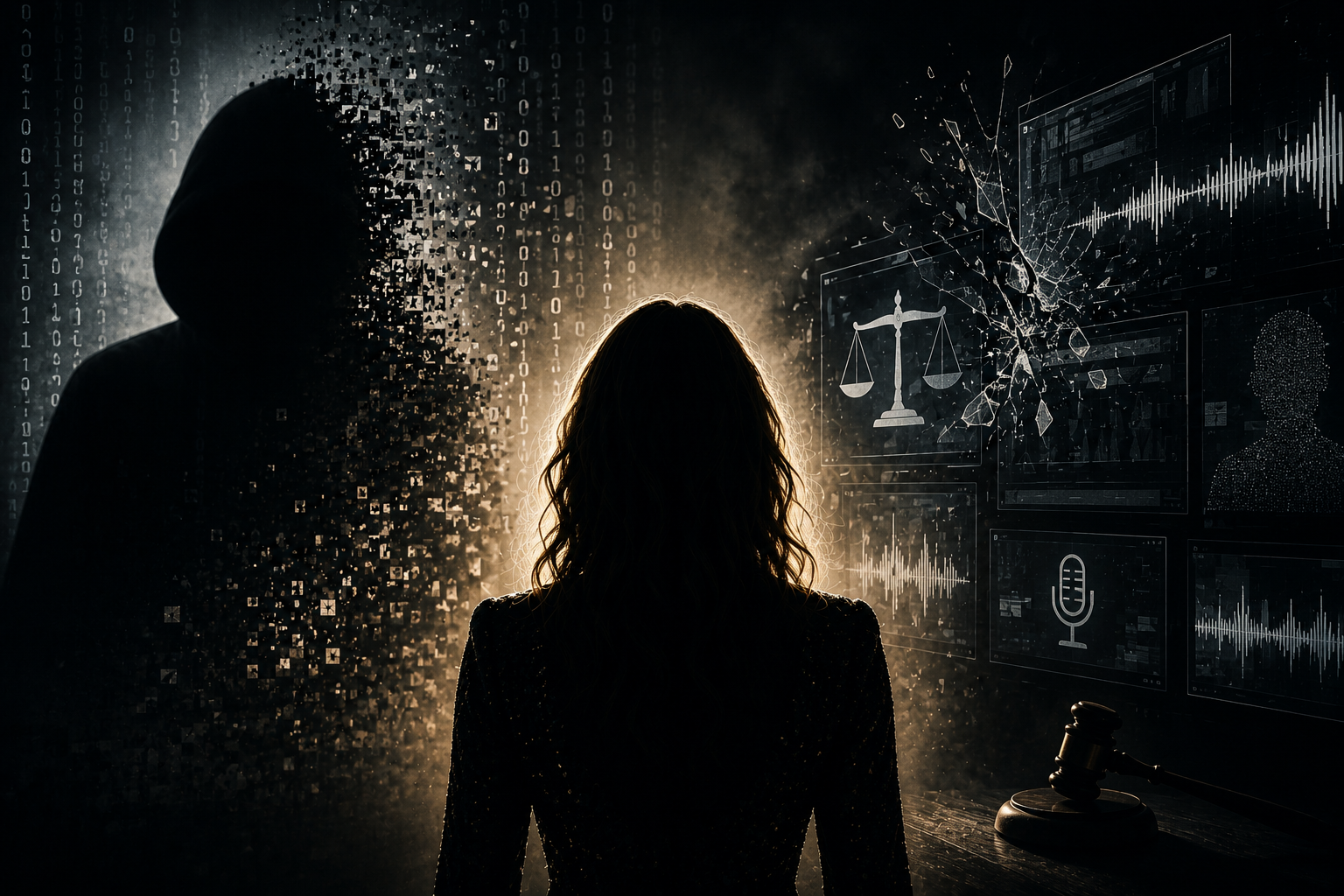
Taylor Swift Just Triggered Hollywood’s Biggest AI Panic Yet
Taylor Swift’s Legal Move Is Bigger Than It Looks
Taylor Swift recently filed new trademark applications covering elements of her voice and likeness, including audio phrases such as “Hey, it’s Taylor Swift” alongside iconic visual imagery associated with her Eras Tour. The filings appear designed to create stronger legal protection against AI-generated impersonations and deepfake content.
At first glance, this might sound like standard celebrity brand management. But the deeper reality is far more significant. AI systems are now capable of generating realistic celebrity voices, fake endorsements, manipulated interviews, fabricated songs, synthetic videos, and even explicit deepfake content at industrial scale. The old boundaries between reality and imitation are collapsing faster than most legal systems can react.
Swift is not acting in isolation. Actors including Matthew McConaughey have reportedly pursued similar protections as concern grows across the entertainment industry that AI is becoming capable of commercially replicating human identity itself.
Hollywood Is Terrified Of Losing Control
For decades, celebrity value depended on scarcity. Famous voices, faces, personalities, performances, and endorsements were valuable precisely because they could not easily be replicated. AI changes that equation completely.
A sufficiently advanced generative model can already imitate vocal tone, cadence, facial movement, image style, and conversational patterns with disturbing realism. The entertainment industry increasingly fears a future where celebrities no longer fully control how their identity appears online.
That fear is not theoretical. Taylor Swift has already been targeted repeatedly through AI-generated deepfake material, including fake endorsements and explicit synthetic imagery that spread across social media platforms.
The real panic inside Hollywood is not simply reputational damage. It is economic dilution. If AI can endlessly reproduce celebrity likenesses, the commercial value of authenticity itself becomes unstable. A celebrity’s image stops being uniquely theirs and starts becoming infinitely reproducible digital material.
That is why these trademark filings matter so much. They represent an attempt to build legal “ownership walls” around identity before AI systems become even harder to contain.
The Law Is Falling Behind AI
One of the biggest problems facing celebrities is that existing intellectual property law was never built for AI-generated humans.
Copyright law protects songs, films, photographs, and recordings. Trademark law protects brands and identifiers. Publicity rights vary significantly depending on jurisdiction. None of these systems were originally designed for AI-generated clones capable of producing endless synthetic content.
That legal vacuum is creating enormous uncertainty.
Some legal experts believe trademark law could become a new weapon against deepfakes by allowing celebrities to argue that AI-generated replicas create consumer confusion or false endorsement risks. But even supporters acknowledge the protections remain narrow and largely untested in court.
This is why the Taylor Swift filings matter beyond celebrity gossip. They may become an early legal test case for how society defines ownership of voice, likeness, and digital identity in the AI era.
The stakes are enormous because the same technologies affecting celebrities today will eventually affect ordinary people tomorrow.
The Celebrity Problem Is Becoming A Human Problem
The Swift situation is attracting attention because she is one of the most recognisable public figures on Earth. But the underlying issue extends far beyond celebrities.
AI voice cloning technology is becoming cheaper, faster, and easier to access. Deepfake tools that once required specialist expertise are rapidly becoming consumer-level products. The same systems used to imitate celebrities could eventually be used for fraud, manipulation, impersonation, political misinformation, revenge content, and large-scale social engineering.
That is why governments and regulators are increasingly discussing legislation around synthetic media and AI-generated identity abuse. But regulation is struggling to keep pace with the speed of generative AI development.
The deeper societal problem is psychological as much as technological. Humans evolved assuming audio and visual evidence could generally be trusted. AI is destroying that assumption. The world is entering a period where seeing is no longer believing.
For celebrities whose entire careers depend on public image, that threat arrives first and hardest.
Taylor Swift Is Becoming The Symbol Of A Much Larger Fight
Taylor Swift has repeatedly become a central figure in wider cultural battles involving technology, media power, digital platforms, and creator ownership. This AI trademark fight may become another example.
Her filings appear less like a simple legal formality and more like an early defensive maneuver in a much larger war over digital identity rights.
The entertainment industry now faces an uncomfortable possibility: AI may eventually become capable of generating synthetic celebrities that are commercially viable without requiring the original human at all. Even if audiences still prefer authentic stars, the existence of near-perfect replicas fundamentally changes bargaining power, licensing economics, and control over fame itself.
That is why panic is spreading across Hollywood. The fear is not just that AI can imitate celebrities. It is that AI could eventually separate celebrity identity from celebrity ownership.
Swift’s trademark strategy looks increasingly like an attempt to stop that future before it fully arrives.
The AI Identity Wars Are Only Beginning
What makes this moment so explosive is that nobody fully knows where the legal boundaries will settle.
Can someone own the commercial rights to the sound of their voice? Can an AI-generated imitation violate trademark law? Does synthetic media become illegal only when it causes harm, or does identity itself become protected property? The answers remain unclear.
But one thing is increasingly obvious: the AI revolution is no longer just about automation, chatbots, or productivity tools. It is rapidly becoming a battle over human authenticity itself.
Taylor Swift’s filings may ultimately be remembered as one of the first major celebrity attempts to build legal defenses against a future where identity can be copied endlessly by machines.
And if one of the most powerful celebrities in the world feels threatened enough to start trademarking her own voice, Hollywood’s panic suddenly looks a lot more understandable.
