From New Jersey to Virginia, the Thanksgiving Storm’s Next Test Is High Tide
The Rain Eased Before the Water Went Down
More than 600,000 US homes and businesses were without electricity on Friday morning, 27 November, after a Thanksgiving storm flooded stretches of the East Coast. The outage total had fallen from more than 900,000 on Thursday, with most of the remaining interruptions in the eastern United States. For communities from New Jersey to Virginia, a second measure of recovery mattered just as much as the number of lights coming back on: how high the water would rise at the next tide.
Cape May, on the southern tip of New Jersey, had already seen water exceed the record set during the January 2016 winter storm. In Maryland, residents of two counties received more welcome news. At 8.30am Eastern time on Friday, their water utility lifted a request to limit consumption after electricity supplies to its treatment plants stabilised.
Those developments came from the same storm. They also explain why a general forecast of improving weather could tell a household surprisingly little about the next few hours.
Why Friday’s High Tide Still Mattered
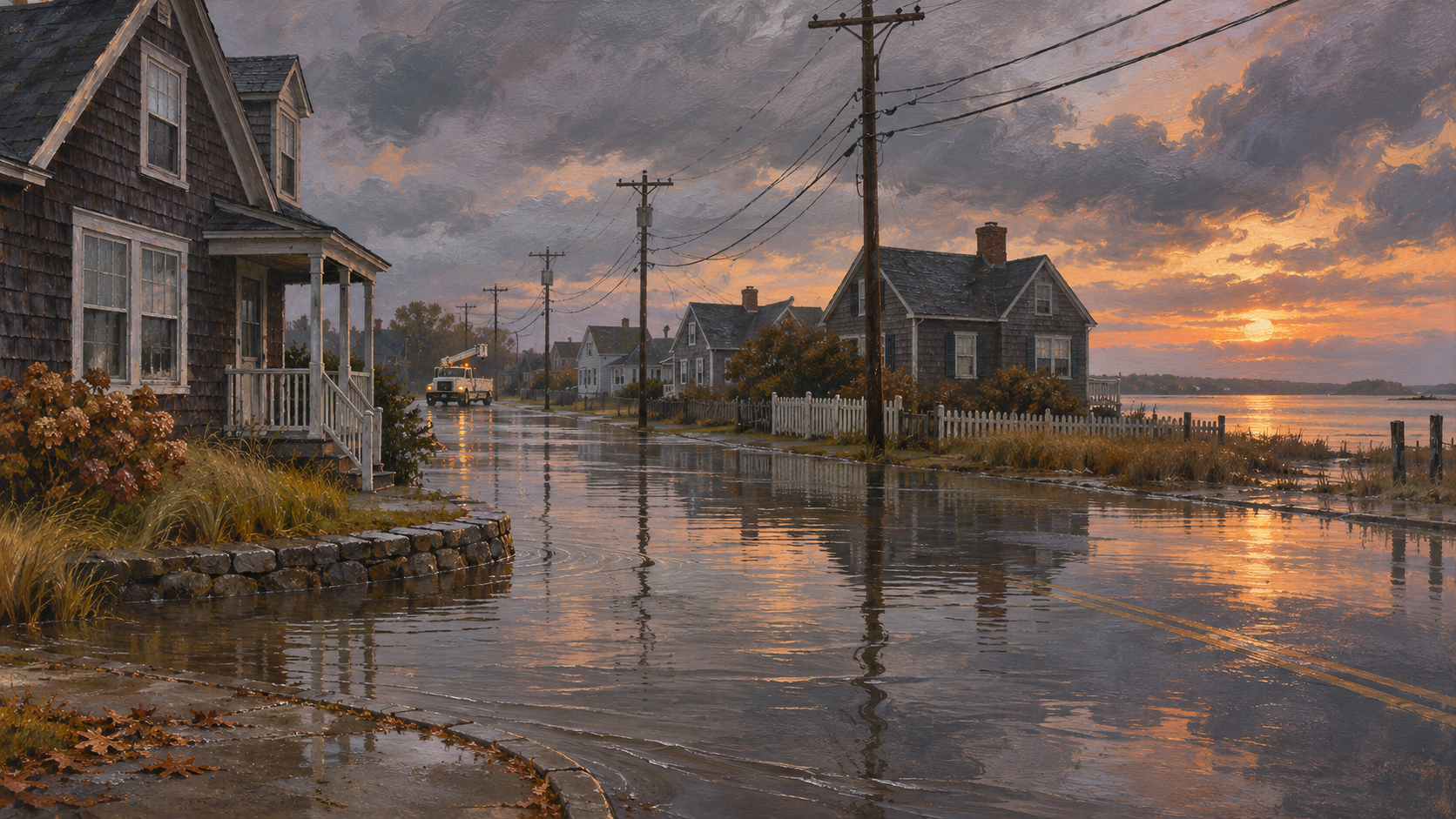
On Thursday, strong winds blowing towards the shore pushed water against the coast during already high astronomical tides. The consequences varied over remarkably short distances. At Cape May, gauges on both sides of the city exceeded their January 2016 marks. Farther up the New Jersey coast, Atlantic City and Ocean City recorded their highest storm tides since Hurricane Sandy, though the water stayed well below the levels reached during Sandy itself.
An easing downpour helps streets drain. It does much less for a tidal river while the water downstream is still rising. Before Thanksgiving, the National Weather Service office in Mount Holly had specifically identified the tidal Delaware River and the eastern shore of Chesapeake Bay as places where successive high tides could cause flooding into Friday afternoon. Someone watching the sky clear on Friday morning could still have a flooded road between home and work.
On the ground, the danger had been visible the day before. In Avalon, New Jersey, the borough administrator said floodwater washed debris across roads and that some drivers needed rescuing after passing barricades. A road can look familiar even when the water has hidden what now lies across it.
Maryland’s Water Utility Gave the All-Clear at 8.30am
The storm interrupted electricity at the Potomac and Patuxent filtration plants, which serve WSSC Water customers in Montgomery and Prince George’s counties. On Thanksgiving afternoon, the utility asked customers to restrict their water use. It wanted to preserve stored supplies, including water available for firefighting, while it established whether both plants could keep running reliably.
By 4.30am on Friday, both plants had power and were producing drinking water. The conservation request still stood. Four hours later, WSSC Water said normal use could resume for all 1.9 million customers. The water had remained safe to drink throughout. The uncertainty concerned how reliably the plants could keep up production if the electricity failed again.
That sequence matters for anyone who saw the overnight appeal shared on Friday. By breakfast in Maryland, the utility had withdrawn it.
What the Outage Figure Leaves Out
An electricity outage total counts customer connections. A house can have several people behind one connection, and a business can account for another. The Friday figure is a morning snapshot across the United States. It gives a sense of the scale of the repair work, but no restoration time for a particular street.
Travel had its own timetable. On Friday morning a fallen tree disrupted Amtrak services between Philadelphia and Harrisburg. In New York, organisers had already moved the Macy’s Thanksgiving Day Parade to Saturday. One journey depended on clearing an obstruction from a railway. The other depended on conditions suitable for a procession through Manhattan.
For someone heading home after the holiday, the useful checks were local: the operator running the train, the utility serving the address and the flood warning covering the road. Maryland could lift its water request at a precise minute. Along the shore, the next high tide would have the final say.
Sources
Associated Press — Heavy Rain Winds Down as Power Remains Out for Hundreds of Thousands on the East Coast — Friday morning’s outage figures, the rail disruption and the account from Avalon. apnews.com
National Weather Service, Mount Holly — Thanksgiving Coastal Storm Briefing — The forecast for successive high tides on the tidal Delaware and eastern Chesapeake shore. Archived Briefing
The Weather Channel — Thanksgiving Storm Brings Snow, Winds and Flooding to the Northeast — Gauge records at Cape May and historical comparisons for Atlantic City and Ocean City. weather.com
WSSC Water — Final Update: Essential Water Use Only Request Lifted — The utility’s 8.30am all-clear, superseding its early-morning appeal. WSSC Water
Next Reads
Macy’s Thanksgiving Parade Moves to Saturday. What Time Does It Start? — The revised New York and UK times for the postponed procession.
Hurricane Lowell Batters Hawaii as Almost Entire Island of Kauai Loses Power — How the scale of an outage changes when nearly every customer belongs to one island network.
Storm Goretti and the Fragility of Modern Britain — A British comparison of what happens when storms interrupt electricity and transport together.
