A Law Built on Canada's Constitutional Override Survives Its Biggest Test
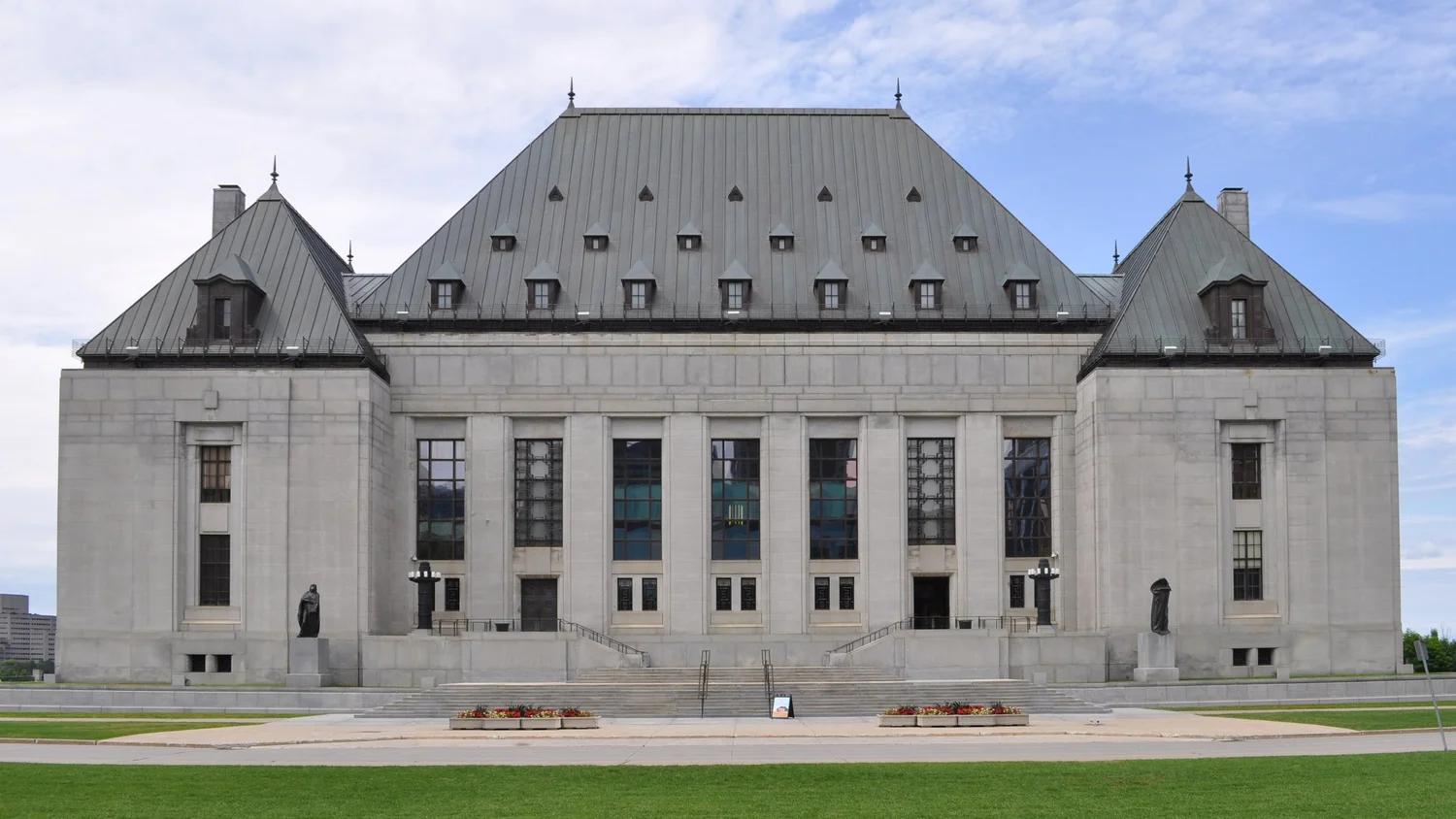
The Supreme Court of Canada has largely upheld Bill 21, Quebec's 2019 law that bars many public-sector workers, including teachers, from wearing religious symbols such as the hijab or the cross while on duty. The ruling was handed down in Ottawa on Friday 27 November 2026 and reported by the BBC at 14:55 GMT. The court struck down one narrow part of the law: the provision that stops members of Quebec's National Assembly from wearing a religious face covering while they sit.
The decision matters far beyond Quebec. Bill 21 was passed using the Charter of Rights and Freedoms' "notwithstanding clause", a mechanism that lets a legislature override some guaranteed rights for five years at a time. Quebec's use of the clause was upheld. Chief Justice Richard Wagner and two colleagues went further, holding that the clause imposes "only formal requirements" on a legislature, not substantive ones; the other four judges were divided on that point, Canadian Lawyer reports. Either way, provinces keep wide room to use the override at a time when several of them have done so with increasing frequency.
What the Court Decided
Seven judges heard the appeals over four days in March, with a record 51 intervenors, according to Canadian Lawyer. The judgment is split across four sets of reasons, and the judges did not agree on every question. The main outcomes reported by both the BBC and Canadian Lawyer are these:
- Bill 21 is valid. Quebec met the requirements for invoking the notwithstanding clause, so the ban on religious symbols for the covered public-sector workers stands.
- One provision falls. The rule barring members of the National Assembly from wearing a face covering for religious reasons while sitting was found to infringe democratic rights. The notwithstanding clause cannot override those rights.
- Courts can still speak. A majority held that Canadian courts have the power to declare that a law is inconsistent with the Charter even when the notwithstanding clause shields it from being struck down. The court chose not to make such a declaration about Bill 21.
- Other challenges failed. Canadian Lawyer reports the court found the law does not breach section 28 of the Charter, which guarantees rights equally to men and women, does not infringe the minority-language education rights in section 23, and does not offend pre-Confederation statutes or the structural principles of the constitution.
Writing for himself and Justices Suzanne Côté and Malcolm Rowe, the Chief Justice said: "Bill 21 is rooted in Quebec's legitimate and historical commitment to ensuring the laicity of the state in a free and democratic society." In his view, the courts have no role in scrutinising the rights a legislature has chosen to override, beyond checking that the formal conditions have been met.
On the separate question of declarations, Justice Andromache Karakatsanis wrote that such rulings "both vindicate affected individuals and promote democratic accountability by informing citizens how their representatives have chosen to temporarily override rights and freedoms", Canadian Lawyer reports. Justices Michelle O'Bonsawin, Nicholas Kasirer and Sheilah Martin, who has since retired, were the others in that group.
The Dissent
Three judges, Justices Karakatsanis, O'Bonsawin and Kasirer, went further. According to the BBC, they wrote that the notwithstanding clause "cannot be used to authorize laws that are incompatible with the fundamental character of Canada as a free and democratic country", and that Bill 21 infringes the Charter's guarantees of freedom of religion, freedom of expression and equality. Their view did not carry the court.
Who Brought the Challenge, and Why
The appeals combined several lawsuits brought after the law passed, including by Muslim, Sikh and Catholic teachers, who argued that it violated their fundamental rights. Civil liberties groups in Quebec say the law falls hardest on Muslim women who wear the hijab and has shut them out of jobs such as teaching. Quebec's government has defended the law as necessary to protect the secular character of the state, known in French as laïcité, which it treats as a core part of the province's identity.
The case reached Ottawa after two earlier rulings. In 2021 Quebec's Superior Court upheld most of the law but exempted English-language school boards and the National Assembly provision. In 2024 the Quebec Court of Appeal upheld that ruling except on English-language schools, bringing them back under the law. Friday's judgment confirms the appeal court's position on schools and the trial judge's position on the legislature.
Why the Notwithstanding Clause Is the Bigger Story
The clause, section 33 of the Charter, can be used by Parliament or a provincial legislature to pass laws that override the rights in sections 2 and 7 to 15, which cover fundamental freedoms, legal rights and equality. Each use lapses after five years unless renewed. For decades it was treated as a last resort. Canadian Lawyer notes that its use has risen sharply since 2018, with Quebec, Ontario, Alberta and Saskatchewan invoking it in laws on education workers' strikes, gender-affirming care for young people and parental consent for pupils' pronouns. The federal government has never used it.
The judgment gives those provinces two messages. On the first, they have won: Quebec's override stood, and three judges, including the Chief Justice, said courts should do no more than check the formal conditions. On the second, they have lost ground: a majority said judges can still declare publicly that a shielded law breaches the Charter. Four of the judges framed that power as a way to inform voters before a five-year override comes up for renewal.
What It Means, and What Is Still Unknown
For public-sector workers in Quebec, nothing changes on Monday: the ban that has applied since 2019 remains in force. The only practical change is to the rule on face coverings for members of the National Assembly. For the rest of Canada, the ruling confirms that a province can use the notwithstanding clause to protect a law of this kind from being struck down, which is likely to shape how other provinces use it, while leaving open the prospect of courts declaring such laws inconsistent with the Charter.
Several questions remain open at the time of writing. The formal responses of the Quebec government, the federal government and the groups that brought the challenge had not been reported in the sources read for this article. It is not yet clear whether Quebec will amend the struck-down provision, or how the power to issue declarations will be used in pending cases on other laws protected by the clause. This article will be updated as those answers arrive.
Sources
- BBC News: Canada's top court largely upholds Quebec ban on religious symbols for public servants (27 November 2026)
- Canadian Lawyer: SCC rules Quebec's Bill 21 is valid, legislatures face few limits in use of notwithstanding clause (27 November 2026)
