The Ebola Outbreak That Terrifies Scientists Most Is Now Escalating Fast
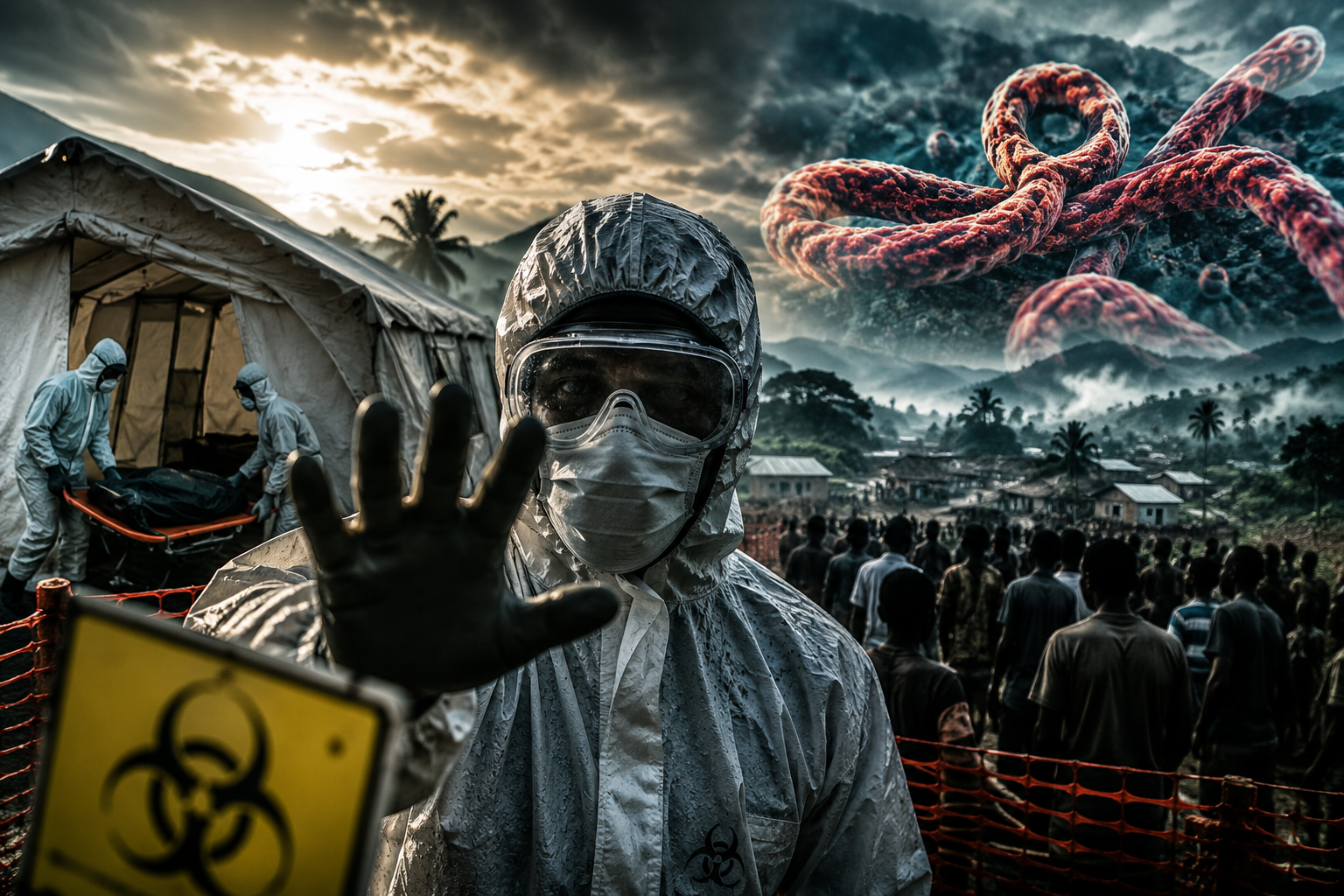
The Rare Ebola Strain With No Approved Vaccine Is Spreading Across Borders
More Than 200 Suspected Deaths And Rising: Why This Ebola Outbreak Is Triggering Global Alarm
The World Health Organization has now reported hundreds of suspected deaths and more than 900 suspected cases linked to an outbreak of Ebola caused by the Bundibugyo strain in the Democratic Republic of the Congo and Uganda. The outbreak has escalated quickly enough for WHO to declare it a Public Health Emergency of International Concern, placing it among the most serious health threats currently facing the world.
On the surface, Ebola outbreaks are not new. Central Africa has faced repeated outbreaks over the past several decades. What makes this situation different is the strain involved, the speed of expansion, the delayed detection, and the difficult conditions in which health officials are trying to respond. Those factors combined create a far more dangerous equation than many people initially realise.
The Problem Is Not Just Ebola — It Is Which Ebola Strain
Most people hear the word Ebola and assume there are established vaccines and treatment systems ready to be deployed. That assumption is only partly true.
The current outbreak involves Bundibugyo ebolavirus, one of the rarer Ebola strains ever identified. Unlike the more familiar Zaire strain, which became globally infamous during the West African epidemic, Bundibugyo currently has no approved vaccine and no approved targeted treatment. That dramatically changes the response strategy.
Health agencies are already discussing emergency vaccine trials and experimental treatment approaches. However, outbreaks do not pause while science catches up. Every delay creates more opportunities for transmission, particularly in areas where healthcare infrastructure is already under severe pressure.
The Numbers May Still Be Underestimating Reality
One of the most striking aspects of the current outbreak is how quickly official figures have risen.
Early reports in mid-May described a few hundred suspected cases. Within days, those numbers climbed sharply. WHO officials have acknowledged that the outbreak may have been spreading undetected before formal identification, meaning responders are effectively trying to catch up with an epidemic that already had a head start.
That matters because surveillance systems are often weakest in exactly the regions where Ebola can spread most effectively. Remote communities, limited laboratory capacity, poor transport infrastructure and delayed reporting can all create blind spots. By the time health authorities confirm a cluster, the virus may already have moved elsewhere.
The result is a dangerous uncertainty. Rising case numbers may partly reflect better detection, but they may also indicate a genuinely expanding outbreak. Right now, nobody can say with complete confidence where the true peak lies.
The Geography Makes Containment Far More Difficult
The outbreak is centred in eastern Democratic Republic of the Congo, a region facing extraordinary logistical and security challenges.
Parts of the affected area have experienced ongoing instability, displacement, armed violence and disrupted healthcare access. Those conditions make every stage of outbreak control more difficult, from identifying cases to tracing contacts and safely isolating infected individuals.
Ebola containment depends heavily on speed. Health workers need to identify infections quickly, trace everyone exposed, monitor communities and maintain public trust. When roads are poor, health facilities are stretched and populations are constantly moving, that process becomes significantly harder.
The virus has already crossed into Uganda through imported cases. While officials have not reported widespread community transmission there, cross-border movement highlights how difficult it can be to contain outbreaks within national boundaries.
Why The Death Rate Is Raising Alarm
WHO officials have repeatedly highlighted the severity of the outbreak's mortality risk.
The agency has estimated fatality rates ranging between roughly 30% and 50%, although exact figures remain fluid because many suspected cases have not yet been fully confirmed. Even at the lower end of that range, Ebola remains one of the deadliest infectious diseases known to humanity.
The crucial detail is that outcomes improve dramatically when patients receive early supportive care. Fluids, monitoring, treatment of complications and rapid medical intervention can save lives. The challenge is ensuring people reach care early enough.
Fear often becomes a secondary epidemic during Ebola outbreaks. Communities may avoid hospitals, distrust health workers or hide symptoms because of stigma and panic. Those behaviours can accelerate transmission while simultaneously reducing survival rates.
The World Is Watching For A Much Bigger Risk
There is currently no evidence that this outbreak is becoming a global pandemic. That distinction matters.
Ebola spreads through direct contact with infected bodily fluids rather than through the air like influenza. That makes widespread international transmission far less likely than many viral outbreaks that dominate headlines.
However, global health agencies are watching closely because outbreaks that grow unchecked become exponentially harder to control. The longer transmission chains continue, the more resources are required and the greater the risk of regional spread.
The outbreak is also acting as a stress test for the international public health system. It arrives at a time when many health programmes are facing funding pressure, humanitarian agencies are stretched across multiple global crises, and public trust in institutions remains fragile in many regions.
What Happens Next Could Define The Entire Story
The most important question is no longer whether this outbreak is serious. That has already been answered.
The real question is whether health authorities can move faster than the virus. Surveillance systems are expanding. International aid is increasing. Experimental vaccine discussions are underway. Additional treatment centres are being established. But every outbreak becomes a race against time.
History shows that Ebola can be contained when responses are rapid, coordinated and trusted by local communities. History also shows that delays can transform local emergencies into far larger humanitarian crises.
That is why this outbreak matters far beyond the regions currently affected. The numbers are significant. The strain is unusual. The conditions are difficult. And the outcome remains uncertain.
For now, the world is watching a dangerous test unfold in real time.
