

The Iran War Could End in Weeks—But That’s the Real Danger
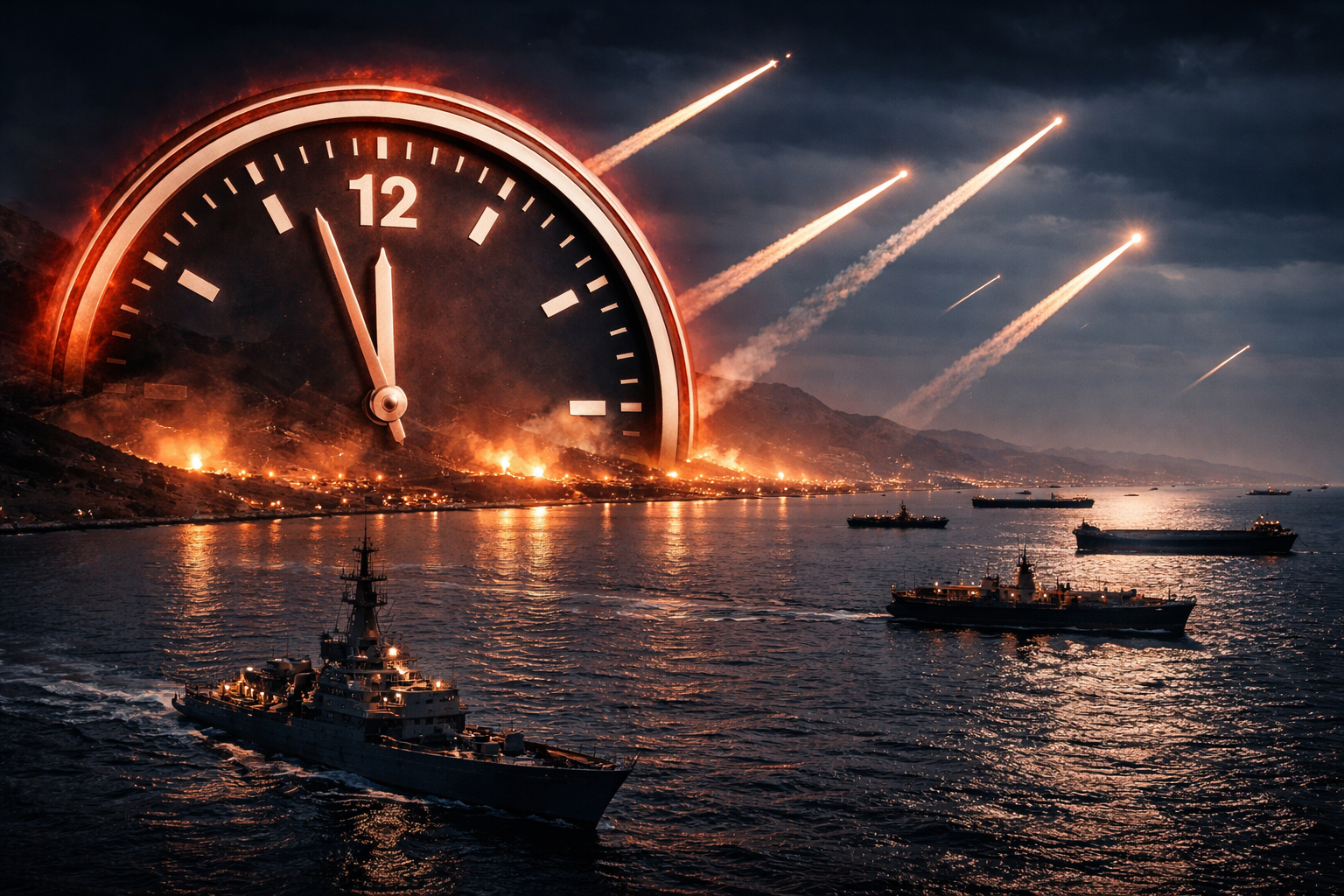
The Clock Is Ticking: US Signals Rapid Endgame in Iran War
War Timeline Collapsing: US Signals Iran Conflict Could End in Weeks, Not Months
The timeline for the ongoing U.S.–Iran war has suddenly tightened. As of March 27, 2026, senior U.S. officials are now openly signaling that the conflict could end within weeks rather than months, a major shift from earlier expectations of a longer campaign.
This matters because it suggests either rapid military success, urgent political pressure, or both—and possibly a narrowing window for escalation before negotiations take over. One overlooked factor is that this compressed timeline may say less about battlefield dominance and more about limits—political, economic, and logistical—closing in fast.
The story turns on whether the war is truly nearing a decisive end—or simply hitting constraints that force a premature exit.
Key Points
U.S. officials, including Secretary of State Marco Rubio, now expect the war to conclude in “weeks, not months,” signaling a compressed timeline.
The conflict began on February 28, 2026, meaning it is already approaching the one-month mark.
Heavy U.S. military activity—including hundreds of cruise missile strikes—has raised concerns about resource sustainability.
Diplomatic channels remain active, with indirect negotiations and a multi-point peace proposal under discussion.
Iran’s actions, including disrupting the Strait of Hormuz, have triggered global economic consequences, especially in energy markets.
Political pressure inside the U.S. is rising, with public opinion and allies pushing for a resolution.
Where This Timeline Shift Comes From
The war began with a rapid escalation at the end of February, when U.S. and allied strikes targeted Iranian military and nuclear infrastructure.
Initially, messaging from Washington suggested a short, controlled operation. But as the conflict expanded—drawing in regional actors, disrupting shipping routes, and triggering retaliation—the timeline became less clear.
Now, that ambiguity has been replaced with something more specific:
a stated expectation that the conflict will wrap up within weeks.
This shift is not just rhetorical. It reflects three converging realities:
The U.S. has already deployed large-scale firepower and achieved early objectives
The economic shock—especially oil disruption—is intensifying global pressure
Diplomatic pathways are now active, even if indirect
The Military Push vs the Diplomatic Clock
On the surface, the war still looks active and escalating.
Airstrikes continue. Iranian retaliation persists. Regional instability is spreading. Yet behind that, there is a parallel track: diplomacy.
U.S. officials are simultaneously the following:
Continuing high-intensity strikes
Pausing certain targets (like energy infrastructure) to allow negotiations
Floating structured peace proposals
This approach creates a dual-speed conflict:
Fast military pressure
Fast-tracked diplomacy
The compressed timeline only works if these two tracks converge quickly.
The Hidden Pressure: Resources and Sustainability
One of the clearest signals emerging from inside the Pentagon is that the timeline may be forced—not chosen.
Reports indicate the U.S. has used hundreds of Tomahawk missiles in just weeks, raising concerns about stockpile depletion and production capacity.
That matters because modern warfare at this scale is not just about strategy—it is about industrial throughput.
A prolonged conflict would require:
Sustained missile production
Continued logistics across the Middle East
Ongoing troop deployments
All of which become harder—and more politically costly—over time.
What Most Coverage Misses
The key driver behind the “weeks not months” narrative is not just battlefield success—it is constraint convergence.
Three constraints are tightening simultaneously:
First, economic pressure. The disruption of the Strait of Hormuz is pushing oil prices higher and creating global instability. That alone creates urgency for a resolution.
Second, political timelines. Domestic pressure in the U.S. is rising, with public opinion turning and leadership needing a visible endpoint.
Third, military sustainability. High-intensity operations are depleting precision weapons at an unsustainable rate, necessitating an increase in production.
Put together, these constraints create a situation where:
The war must either end quickly
Or escalate dramatically into a different phase (e.g., ground involvement)
That is the real fork in the road—not victory vs. defeat, but exit vs. escalation.
Who Gains If the War Ends Fast
A short war benefits multiple actors—but for different reasons:
The U.S. administration gains a controlled outcome without long-term entanglement
Global markets stabilize, especially energy and shipping
Allied governments avoid deeper regional escalation
Iran retains leverage if it avoids total collapse and negotiates terms
But a rapid end also leaves unresolved tensions:
Iran’s regional influence
Long-term nuclear capability concerns
The precedent of rapid, high-intensity intervention
The Real-World Stakes
For most people, the war’s timeline is not abstract—it directly affects:
Fuel prices and inflation
Energy security in Europe and Asia
Global supply chains
Financial market volatility
The longer the war drags on, the more these pressures compound.
A shorter timeline mitigates damage, but it also heightens the risk of leaving key issues unresolved.
What Happens Next: The Narrow Window
The next phase of the war will be defined by signals, not statements.
Watch for:
Whether strikes intensify or pause further
Whether Iran formally engages with the U.S. proposal
Whether shipping through the Strait of Hormuz resumes
Whether troop deployments expand or stabilize
If diplomacy gains traction, the “weeks not months” timeline holds.
If not, the compressed timeline could break—and the war could shift into a longer, more dangerous phase.
The Moment That Defines the Outcome
This is no longer a question of how the war started. It is a question of how quickly it can end—and at what cost.
A fast resolution could signal strategic discipline.
A forced resolution could signal limits being reached.
And a failed resolution could trigger escalation to something far bigger.
The outcome will not be defined by what officials say—but by whether pressure forces peace before the next phase begins.
