

The Night That Almost Changed America: Inside The White House Dinner Shooting And The Charges That Followed
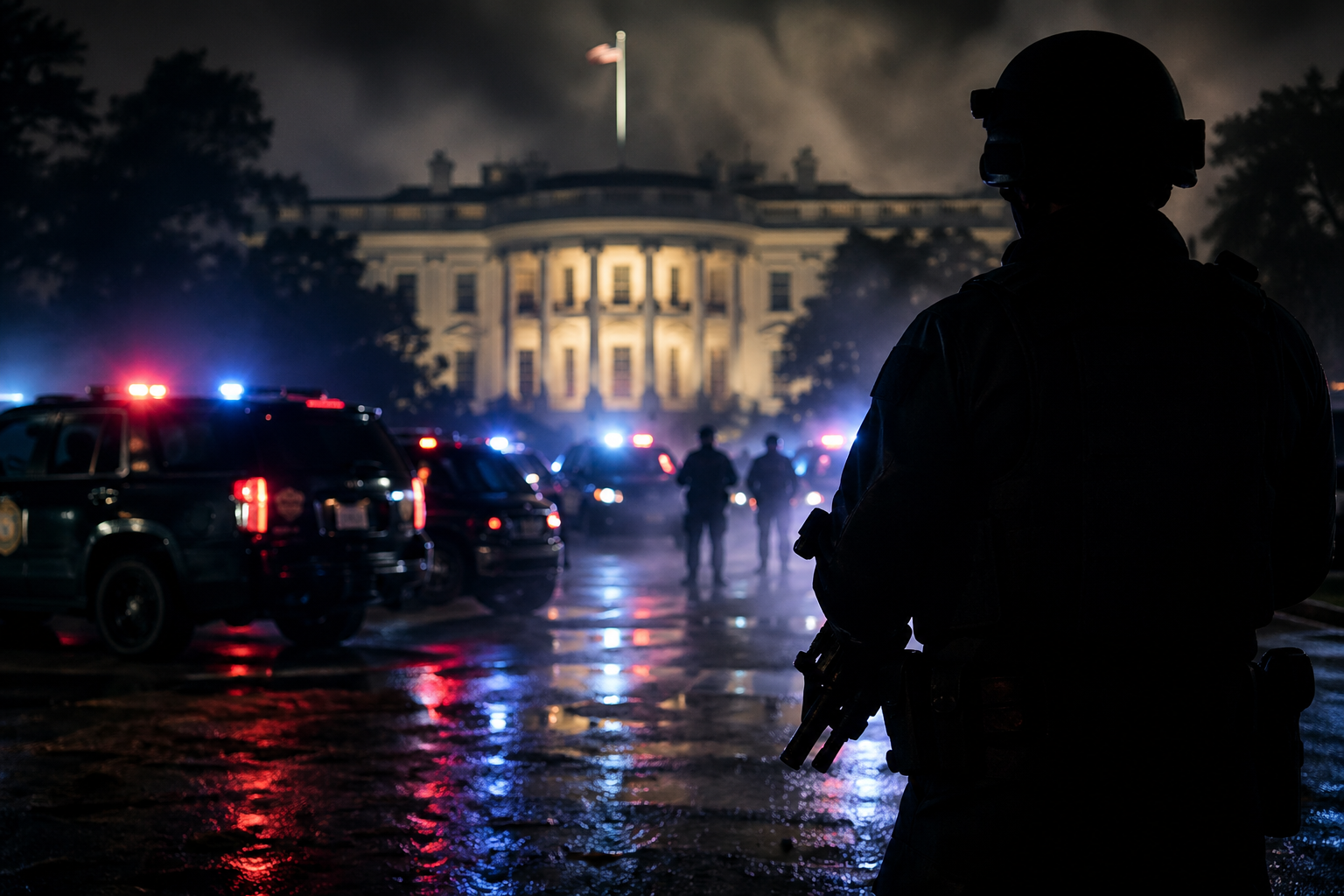
The Charges Behind The Chaos: Inside The Attempted Assassination Case
The Attempt That Shook Washington: What The White House Dinner Shooting Really Reveals
It took seconds to turn one of Washington’s most controlled environments into a scene of chaos.
Gunfire at the White House Correspondents’ Dinner—an event defined by proximity to power—has now become something else entirely: a federal case that cuts straight to the heart of American political security.
The suspect is no longer just a headline. The charges are now formal, severe, and historic.
And the implications stretch far beyond one night.
What Actually Happened
On the evening of April 25, 2026, shots were fired near a security checkpoint at the Washington Hilton, where the annual White House Correspondents’ Dinner was underway.
The event brought together a rare concentration of political authority — the U.S. president, cabinet officials, lawmakers, journalists, and cultural figures — all in one location.
According to federal authorities, the suspect, identified as 31-year-old Cole Tomas Allen, attempted to breach security armed with multiple weapons, including a shotgun, handgun, and knives.
A Secret Service agent was shot during the confrontation, though survived it. The suspect was subdued at the scene.
The president and senior officials were evacuated within moments.
No civilian attendees were killed.
But that outcome now feels secondary.
The Charges: What The Government Is Saying
Federal prosecutors have charged Allen with multiple serious offenses—the most significant being the attempted assassination of the president of the United States.
Additional charges include:
Transporting firearms with intent to commit a felony
Discharging a firearm during a violent crime
These are not symbolic charges.
Attempted assassination is among the most severe offenses in U.S. federal law—carrying the potential for life imprisonment.
The legal framing matters. It signals that prosecutors believe intent, not just action, crossed a critical threshold.
What We Know — And What We Don’t
There are confirmed facts. And then there is everything else.
Confirmed:
The suspect acted alone, according to initial law enforcement assessments.
He traveled to Washington with multiple weapons.
He opened fire at a federal agent during an attempted breach.
Partially understood:
A manifesto or written statement appears to exist, expressing extremist views and hostility toward political leadership.
Still unclear:
A definitive motive
Whether any ideological network influenced him
How security was breached at such a high-profile event
That last question is already shaping the fallout.
The Security Failure No One Can Ignore
The White House Correspondents’ Dinner is not just another gala.
It is one of the most tightly secured civilian events in the United States.
And yet, a heavily armed individual reached a point where gunfire was possible.
That alone reframes the incident.
This was not just an attack.
It was a systems test, and something in that system failed.
The presence of multiple senior officials in the presidential line of succession has also raised concerns about continuity of government planning.
Even discussions around a “designated survivor”—a Cold War-era contingency—resurfaced immediately after the incident.
That tells you how seriously the rispeople are taking the riskHidden Risk: Concentrated Power
What most people miss is not the violence.
It is the vulnerability created by concentration.
On that night, a significant portion of the U.S. political hierarchy was gathered in a single venue.
That is efficient.
It is symbolic.
It is also dangerous.
The incident has triggered renewed scrutiny over whether such events should continue in their current form—or whether they represent an outdated risk model in a more volatile era.
The Political Fallout Is Already Underway
The response has moved quickly beyond law enforcement.
Political leaders are already using the incident to argue for changes — from expanded physical security measures to structural redesigns of official venues.
There are also renewed calls for a permanent, secure White House ballroom—a proposal that had previously been debated but not prioritized.
Critics, meanwhile, are asking harder questions:
How was the suspect able to approach a checkpoint with multiple weapons?
Were intelligence warnings missed?
Is political violence becoming harder to predict—or easier to execute?
These are not abstract concerns.
They are operational ones.
The Psychological Dimension
There is another layer to this story that rarely gets addressed clearly.
The suspect reportedly framed himself in ideological and moral terms, portraying the act as justified within his own worldview.
That matters.
Because it reflects a broader pattern seen in recent political violence:
Individuals acting alone, but shaped by wider narratives, grievances, or perceived legitimacy.
This is not traditional organized terrorism.
It is something more fragmented and harder to detect in advance.
Why This Moment Matters More Than It Looks
It is tempting to see this as a narrowly avoided tragedy.
A single attacker. A failed attempt. A contained outcome.
That interpretation is incomplete.
What this incident actually revealed is structural:
High-value political gatherings remain exposed
Security systems can be penetrated under pressure
Lone actors with intent can create disproportionate disruption
The concentration of power creates amplified risk
In other words, this was not just an event.
It was a stress test.
And the results are still being analyzed.
What Happens Next
Legally, the case will move forward through federal court.
More charges may be added as investigators examine intent, planning, and any potential connections.
Politically, the debate will intensify.
Security protocols will be reviewed.
Event structures will be questioned.
Risk models will be rewritten.
And culturally, something else shifts.
Because once an event like this occurs — once the illusion of absolute control breaks — it does not fully return.
The Real Takeaway
The White House Correspondents’ Dinner shooting was not just an attack that failed.
It was a moment that exposed how close failure can come.
The charges now define the legal case.
But the deeper story is not about one individual.
It is about a system that was tested — publicly, suddenly, and unavoidably.
And a country is now deciding what to do with what it has learned.
