

The Strait That Stopped The World: Trump Rejects Iran Deal As Global Energy Lifeline Freezes
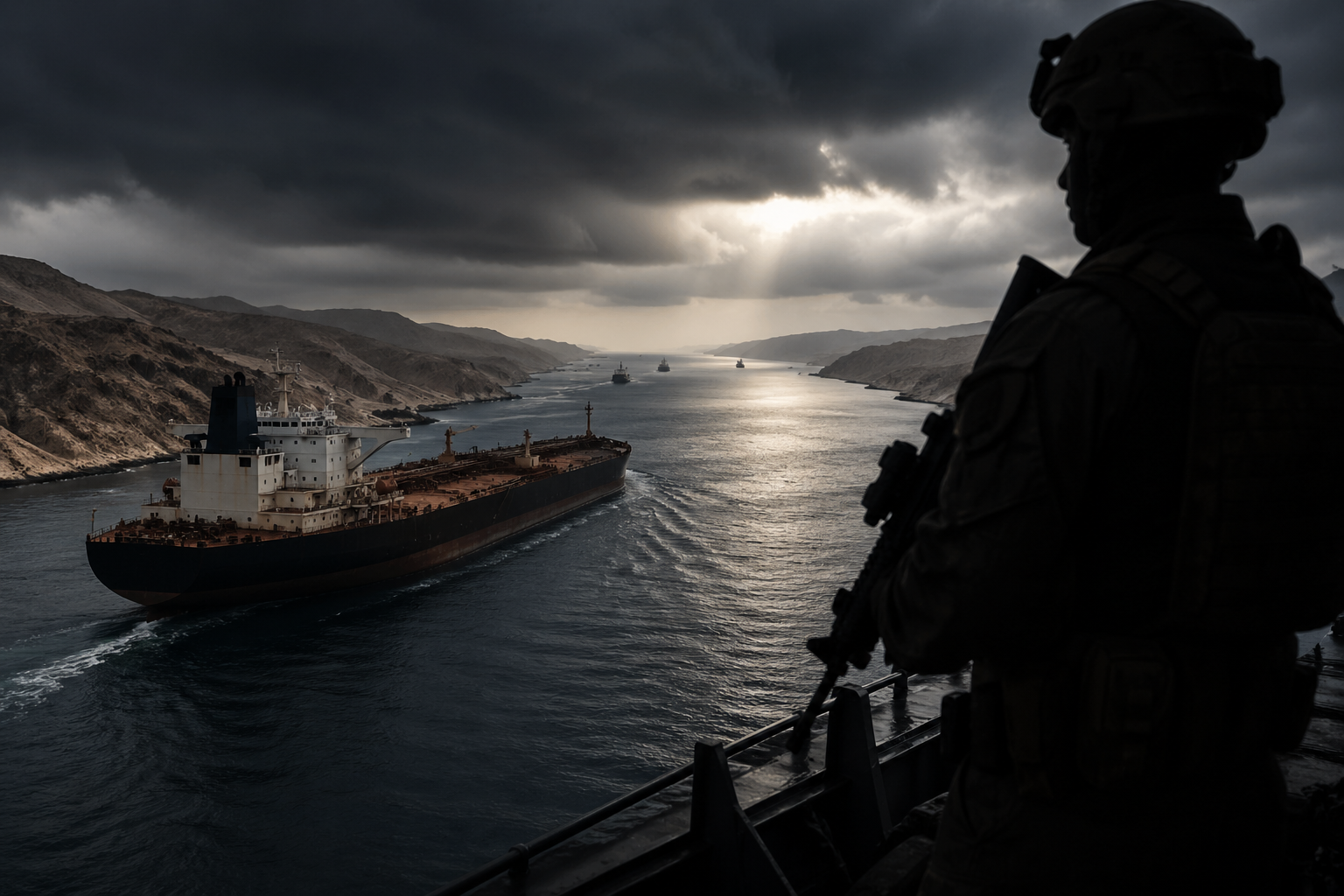
Why Seven Ships Matter More Than Any Peace Deal
Trump Rejects Iran Deal And The Oil Artery Starts To Fail
Seven ships.
That is all it takes to understand the scale of what is happening.
In a waterway that normally sees around 125 to 140 vessels pass through every single day, traffic has collapsed to single digits—in some snapshots, just two ships are moving through the Strait of Hormuz.
At the same time, the political mechanism that could have stopped the crisis — a potential U.S.–Iran deal — has stalled.
The result is not just a geopolitical crisis. It is a physical disruption of the global energy system.
And it is already reshaping risk across markets, supply chains, and strategy.
A chokepoint the world cannot replace
The Strait of Hormuz is not just another shipping route.
It is the narrow artery through which roughly a fifth of the world’s oil and gas supply moves.
There is no meaningful alternative.
Pipelines cannot absorb the volume. Shipping reroutes are either impossible or vastly slower. And inventory buffers — the hidden cushion of the global economy — are not designed for prolonged disruptions at this scale.
When traffic drops by more than 90%, the system does not bend. It tightens.
That tightening is now visible.
Tankers are turning back. Some are being blocked outright. Others are waiting, stranded in the Gulf alongside tens of thousands of seafarers.
This is not a theoretical bottleneck.
It is a real one.
The diplomatic failure behind the shutdown
The collapse in shipping is not accidental. It is the direct result of a breakdown in negotiations.
Iran floated a framework that could have reopened the Strait and stabilized transit. The United States rejected it.
That decision matters more than the headline suggests.
In this conflict, control of the Strait serves as leverage.
Iran’s strategy has been to weaponize access—tightening restrictions, detaining ships, and enforcing controlled routes. The U.S. response has been to counter with a naval blockade and sanctions pressure.
The result is a standoff where neither side can concede without losing strategic ground.
And while diplomacy stalls, ships stop moving.
The data shock no one can ignore
The most important signal in this crisis is not rhetoric.
It is data.
Pre-conflict traffic: ~125–140 ships per day
Current traffic: as low as 7 ships per day
In some 24-hour periods: just 2–5 ships
That is not a slowdown.
It is a near-freeze.
Even when occasional tankers manage to cross, analysts warn the situation does not represent recovery. It reflects isolated movement in a system that remains fundamentally broken.
Insurance markets have already priced this reality in.
War-risk premiums have surged from near-zero levels to multiple percentage points of a vessel’s value—effectively pricing many operators out of transit entirely.
Shipping is not just dangerous.
It is economically irrational.
Why this is an energy shock—not just a shipping problem
It is tempting to see the situation as a maritime issue.
It is not.
When oil and LNG stop moving through Hormuz, the impact cascades outward:
Supply tightens in Asia, heavily dependent on Gulf exports
Spot prices spike as physical cargoes become scarce
Refiners compete harder for available barrels
Strategic reserves become more relevant—and more limited
This is how a regional conflict becomes a global economic pressure point.
The system does not need to collapse completely.
It only needs to become unreliable.
Energy markets are driven as much by expectation as by supply.
What most people miss
The visible crisis is the blocked strait.
The hidden crisis is confidence.
Shipping does not depend purely on physical safety. It depends on predictability—on insurers, operators, and crews believing that routes are viable.
That belief is gone.
Even if the Strait were declared “open” tomorrow, traffic would not instantly return to normal.
We are already seeing this effect.
Some vessels that do cross are using evasive tactics — turning off tracking systems, masking identities, or relying on unofficial routing agreements.
That is not a functioning system.
That is a workaround.
And workarounds do not scale.
The fragile signs of movement
There are occasional signals that movement is still possible.
A tanker here. A cargo vessel there. Even a high-profile superyacht managed to pass through the blockade.
But these are exceptions.
Not trends.
Shipping analysts are clear: even if conditions improve, a return to normal traffic may take months.
That delay matters.
This is because markets move faster than logistics.
The strategic reality
This crisis has revealed something deeper than a temporary disruption.
It has exposed how fragile the global energy system really is.
One narrow stretch of water — controlled by geography and contested by power — can still dictate the flow of modern economies.
For all the talk of diversification, resilience and energy transition, the world remains structurally dependent on chokepoints like Hormuz.
And those chokepoints can still be closed.
What happens next
Three paths now define the next phase:
Diplomatic breakthrough
A deal restores confidence and gradually reopens shippingManaged stalemate
Limited traffic continues under high risk and high costEscalation
Further military or economic pressure reduces traffic even more
Currently, the second scenario is dominant.
This means that the disruption is not ending.
It is settling in.
The moment that matters
Seven ships is not just a statistic.
It is a signal.
A signal that the system is under strain.
This is a signal that diplomacy has failed — for now.
This is a signal that the world’s most critical energy route is no longer reliable.
And once reliability breaks, everything else follows.
Summary
Strait of Hormuz traffic has collapsed from ~140 ships daily to single digits
U.S. rejection of an Iran deal has prolonged the standoff
Shipping disruption is translating directly into energy risk
Insurance, safety and confidence breakdowns are amplifying the crisis
Even partial reopening will not immediately restore normal flow
The Strait has not fully closed.
But it has stopped functioning.
And that distinction may matter more than anything else.
