The Strait of Hormuz Is Being “Cleared” — But That Claim May Be the Most Dangerous Escalation Yet
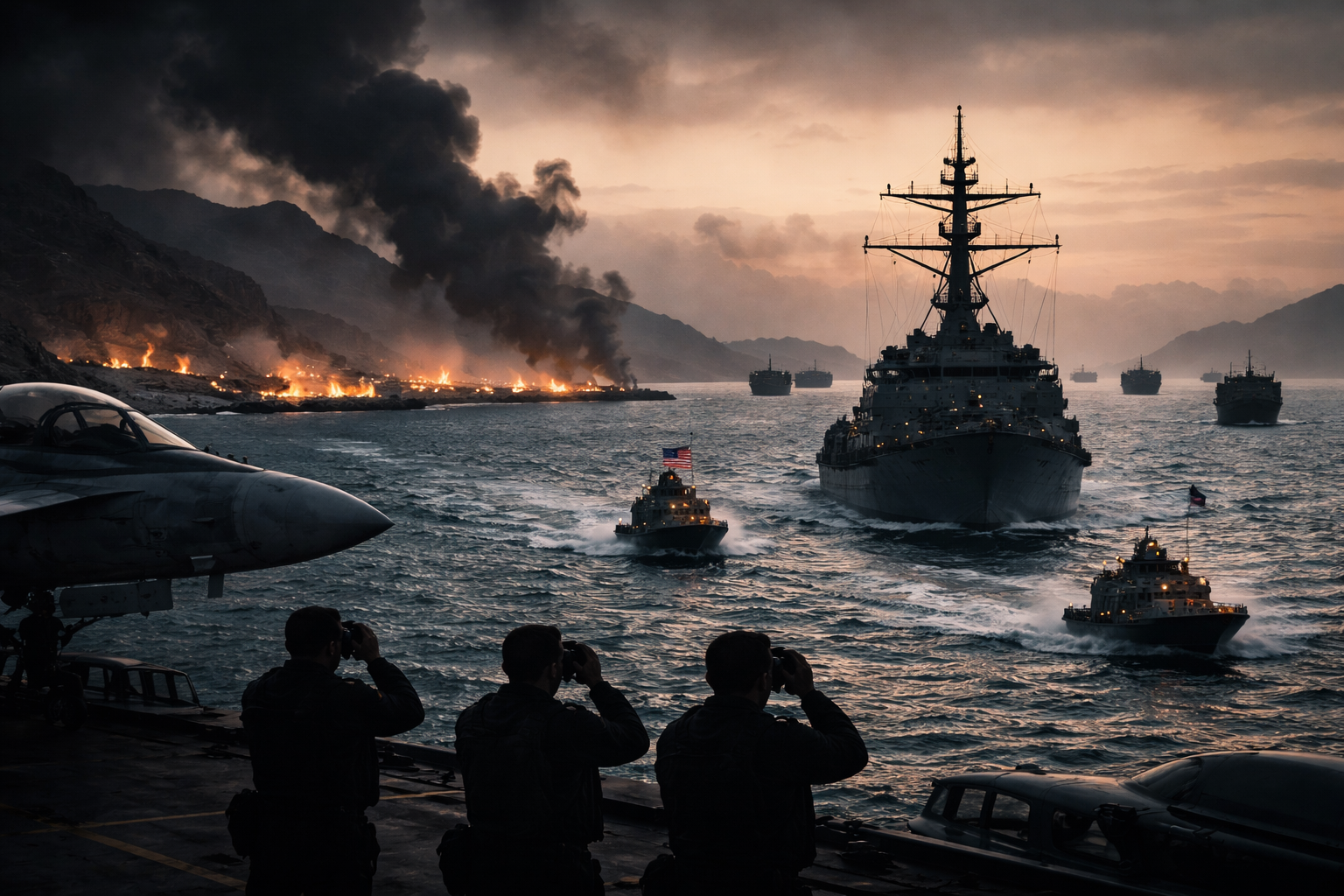
The World’s Most Critical Oil Chokepoint Is Back in Play — And Nobody Agrees What’s Happening
Conflicting claims of US military action in the Strait of Hormuz reveal a deeper truth: the world’s most vital shipping lane is no longer governed by rules but by risk.
A Critical Artery Of The Global Economy Is Effectively Frozen
There is more to the Strait of Hormuz than just another geopolitical hotspot. It is the narrow corridor through which roughly one-fifth of the world’s oil flows. When it stops, the world feels it.
Currently, it has almost stopped.
Shipping through the strait has collapsed from over 100 daily transits to barely a handful, with thousands of vessels stranded or rerouted and energy markets already tightening.
This is not theoretical disruption. It is real, immediate, and global.
And into that vacuum has come a new claim—one that could either signal recovery or trigger the next escalation.
The Claim: The US Is “Clearing” The Strait
On April 11, US leadership publicly declared that American forces had begun “clearing out” the Strait of Hormuz—specifically targeting Iranian sea mines and naval assets.
The framing is simple: restore safe passage, stabilize global trade, and reopen a vital shipping lane.
But the reality is not simple.
Because almost immediately, that claim collided with two contradictory developments:
Iran denied that US naval movements had occurred or warned they would not be tolerated
Reports emerged that US vessels either entered or attempted to enter the strait—and in at least one case turned back after direct threats
This issue is not just a dispute over facts.
It is a clash of narratives—and narratives shape escalation.
The Reality: A Waterway Controlled By Threat, Not Freedom
To understand why the issue matters, you need to understand what Hormuz has become.
Since late February, following US and Israeli strikes on Iran, Tehran has effectively asserted control over the strait—restricting passage, laying mines, and warning vessels against transit without approval.
Shipping companies didn’t need convincing.
They left.
Traffic didn’t just slow. It collapsed.
Even now, despite ceasefire discussions, insurers, operators, and governments still consider the route too dangerous. Only a fraction of normal traffic has resumed, and even that is heavily constrained.
The strait is not open in any meaningful sense.
It is conditionally accessible, politically controlled, and militarily contested.
The Contradiction: Military Action During Diplomacy
At the same time as these claims of US operations, high-level talks between the US and Iran are underway in Islamabad.
That alone creates a paradox.
On one side:
Diplomatic engagement aimed at de-escalation
On the other hand:
Potential military action in one of the most sensitive choke points on Earth
This dual-track approach—negotiating while demonstrating force—is not new.
But in a place like Hormuz, it is unusually dangerous.
Because any miscalculation is not local.
It is global.
What This Really Means: Control Is The Real Battlefield
The core issue is not mines.
It is control.
Iran’s strategy has been clear: if it cannot dominate militarily, it can dominate economically by controlling access to Hormuz.
And it has worked.
By restricting transit, Iran has:
Driven up global oil prices
Disrupted supply chains
Forced major shipping firms into retreat
Created leverage far beyond its conventional military strength
Meanwhile, the US position is equally clear:
Freedom of navigation is non-negotiable.
Allowing a single state to control a global energy artery sets a precedent Washington cannot accept.
This is why the narrative of “clearing” the strait matters so much.
It signals intent.
Not just to reopen the waterway, but to reclaim control over it.
What Media Misses
The story is often framed as a technical problem: mines, ships, and naval movements.
It is not.
It is a strategic contest over who defines reality in one of the world’s most critical economic chokepoints.
If Iran can effectively close Hormuz without full-scale war, it proves a powerful model of asymmetric leverage.
If the US can reopen it unilaterally, it reinforces global norms around free navigation.
This is not about ships.
It is about power.
The Fragility Of “Reopening”
Even if US operations are genuine and effective, reopening Hormuz is not a simple task.
Three structural problems remain:
1. Trust Is Broken
Shipping companies won't return simply because someone makes a statement.
They need sustained security guarantees.
2. Insurance Markets Are Still Pricing Risk
War-risk premiums remain extremely high, making transit economically unattractive even if technically possible.
3. The Ceasefire Is Fragile
Ongoing tensions — including regional conflicts linked to the broader war — mean any reopening could be temporary at best.
Even optimistic projections suggest recovery could take weeks or longer.
In other words, clearing mines does not clear risk.
What Happens Next
Three scenarios are now in play.
Most Likely: Controlled Instability
Limited movement resumes, but under heavy constraints, with continued tension and sporadic disruption.
Most Dangerous: Escalation Spiral
A confrontation—even accidental—between US and Iranian forces triggers direct conflict in the strait.
Given Iran’s warning that vessels could be attacked within minutes, this risk is not theoretical.
Most Underestimated: Economic Shock
Even without further escalation, prolonged disruption could deepen the global energy crisis—feeding inflation, supply shortages, and geopolitical instability.
The world is already seeing early signs of this pressure.
The Bigger Pattern: Chokepoints Are The New Frontlines
Hormuz is not unique.
It is a preview.
Modern conflict is increasingly about controlling critical systems:
Energy routes
Shipping lanes
Data infrastructure
Supply chains
You don’t need total war.
You need strategic pressure points.
And Hormuz is the ultimate pressure point.
The Bottom Line
The claim that the US is “clearing” the Strait of Hormuz sounds like progress.
It might even be true.
But it does not mean the crisis is ending.
It means the next phase has begun.
Because the real question is no longer whether ships can pass.
It is who decides if they can.
And right now, that answer is still being contested — in real time, under risk, with the global economy hanging in the balance.
