The U.S. Just Hit Iran’s Oil Lifeline — And That Changes Everything
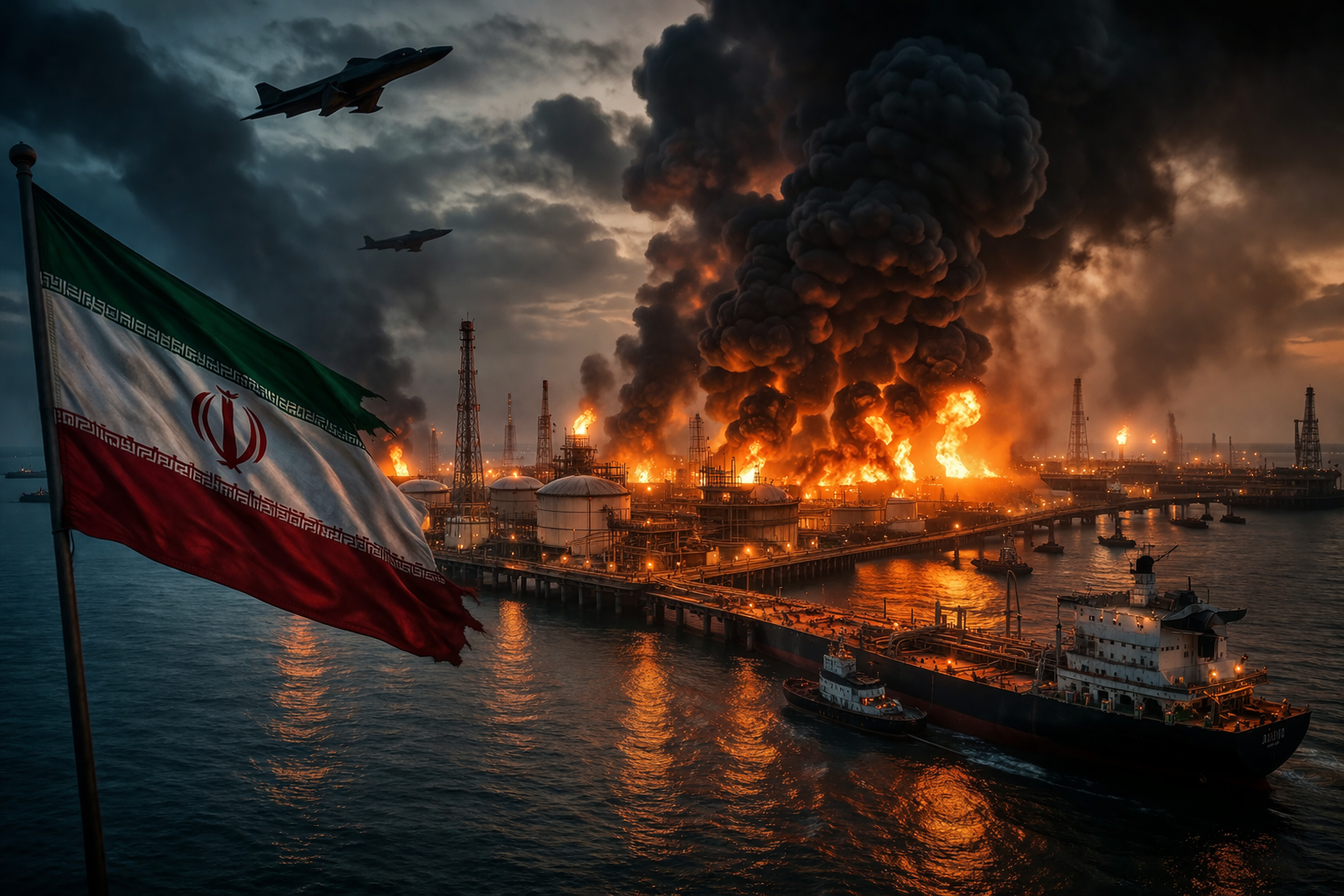
America Strikes Iran’s Energy Artery as War Logic Overtakes Diplomacy
Strikes on Kharg Island—the heart of Iran’s oil exports—signal a shift from military pressure to economic warfare, with global consequences already unfolding.
This is no longer just a military campaign — ’s an economic chokehold
The recent U.S. strikes on Iranian targets, particularly the strategically important Kharg Island, signify a significant shift.
This is not simply about degrading military capability anymore.
It is about pressure.
And more specifically, it is about pressure where it hurts most: Iran’s ability to sell oil, fund itself, and survive economically.
Kharg Island is not just another target. It is the artery through which the vast majority of Iran’s crude exports flow—historically handling around 85–95% of shipments.
Hitting around it—even if officially framed as “military targets”—sends a message that cannot be misunderstood:
Nothing is off-limits anymore.
Why Kharg Island matters more than anything else
To understand the escalation, you have to understand the target.
Kharg Island is
Iran’s primary oil export terminal
A concentration point for storage, pipelines, and offshore loading
A critical node connecting Iran’s economy to global markets
Even limited strikes near this infrastructure ripple outward instantly.
Markets reacted within hours—oil prices surged past $115 per barrel on the news.
That reaction tells you everything:
This isn’t just regional conflict anymore. It’s global economic risk.
The real shift: from deterrence to coercion
Up to this point, the U.S. strategy could be framed as:
degrading military assets
limiting Iran’s capabilities
forcing negotiation leverage
Now, the logic is changing.
By repeatedly striking near energy infrastructure—even if not directly destroying it—the U.S. is signaling a new phase:
coercive escalation.
The aim is no longer just to weaken Iran.
It is to force a decision.
And that decision is being framed clearly:
Open the Strait of Hormuz, accept terms, or face increasing systemic pressure.
What makes this moment especially dangerous
There are three overlapping risks now:
1. Energy system shock
Kharg Island sits at the center of global oil flows.
Even perceived risk—not actual destruction—is enough to spike prices, disrupt supply expectations, and trigger volatility.
Worst-case scenarios discussed by analysts include oil surging toward $200 if chokepoints close.
2. Retaliation beyond the battlefield
Iran has already warned that “restraint is over” and hinted at wider retaliation, including against regional infrastructure and beyond.
This is how conflicts widen.
Not by formal declarations—but by expanding target sets.
3. Diplomatic collapse
At the exact moment strikes are intensifying, talks are faltering.
Iran’s conditions are clear:
stop the strikes
guarantee they won’t resume
compensate for damage
The U.S. position is equally clear:
comply first
or escalation continues
That is not a negotiation dynamic.
That is a collision course.
What media misses
Most coverage treats these strikes as another step in an already escalating conflict.
That misses the real shift.
This is the moment the war starts targeting systems, not just sites.
There is a difference between hitting:
missile launchers
air defenses
military compounds
…and hitting the economic backbone of a state.
Even indirectly.
Once the pressure strategy incorporates energy infrastructure, it ceases to be contained.
It becomes:
economic warfare
market warfare
global risk transmission
And those are much harder to control.
The pattern underneath: controlled escalation with real consequences
This isn’t random escalation.
It’s structured.
The pattern looks like this:
Strike military targets
Expand to dual-use infrastructure
Apply pressure near economic lifelines
Force negotiation under stress
The problem is that step 3—where we are now—is inherently unstable.
Because:
markets react instantly
adversaries feel existential pressure
retaliation becomes more likely, not less
In other words:
The very pressure meant to force a deal can make a deal less likely.
What happens next
There are three realistic paths from here:
Most likely
Continued controlled strikes, avoiding direct destruction of oil infrastructure while maintaining pressure.
This keeps escalation high but stops short of total rupture.
Most dangerous
A direct hit on export infrastructure or a move to disrupt shipping through the Strait of Hormuz.
That would trigger:
global energy shock
rapid military escalation
possible multi-country involvement
Most underestimated
A miscalculation.
Not a deliberate escalation—just one strike too far, one response too aggressive, one assumption wrong.
That is how conflicts jump levels.
The deeper reality
The deeper reality is no longer a question of whether the conflict escalates.
It already has.
The real question now is whether it can be contained within the following:
controlled pressure
limited retaliation
managed economic disruption
Or whether it spills into something far harder to stop.
Because once you start squeezing a country’s economic lifeline, you are no longer just fighting its military.
You are threatening its survival.
And historically, that is when conflicts stop being strategic—and start becoming unpredictable.
