Iran’s “Human Shields” Strategy: Why Civilians Are Being Asked to Stand in Front of Power Plants
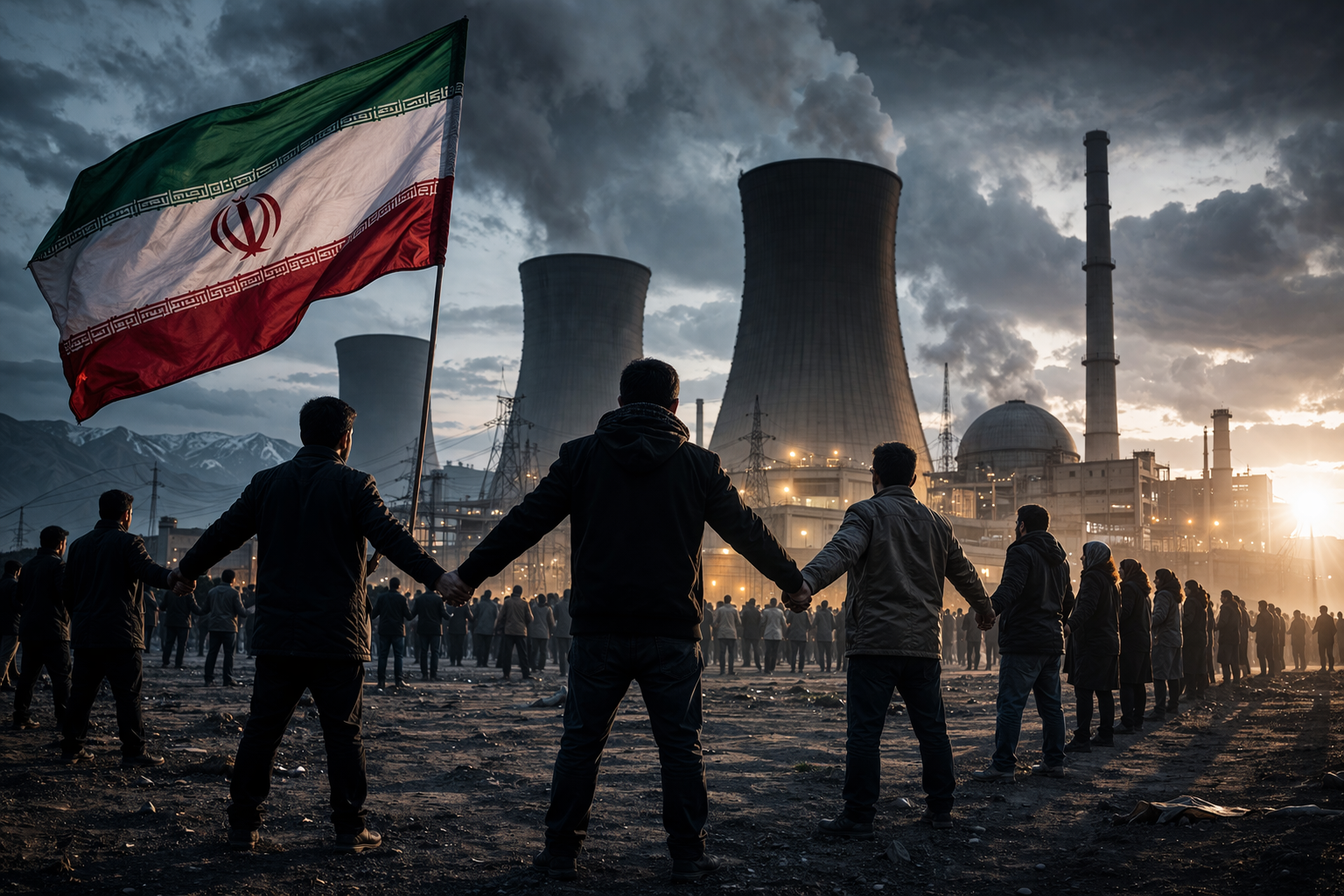
Iran Calls on Citizens to Form Human Chains Around Infrastructure as War Threat Escalates
The Return of Human Shields: Iran’s Most Dangerous Signal Yet
A country preparing its people to stand between bombs and infrastructure
Iran is now openly asking civilians to physically place themselves in the path of potential airstrikes.
Officials have called on citizens—especially young people—to form “human chains” around power plants and critical infrastructure, presenting it as an act of national defense and unity.
On the surface, it looks like a symbolic gesture.
It isn’t.
It is a signal that the conflict has crossed into a new phase—one where the line between civilian and military space is being deliberately blurred.
Why infrastructure has become the battlefield
This escalation was not unexpected.
The United States has been openly threatening to strike Iran’s infrastructure—power plants, bridges, energy systems—if Tehran does not comply with demands around the Strait of Hormuz.
That is relevant for one key reason:
Modern wars now involve targeting systems, not just armies. They are fought by targeting systems.
Electricity. Water. Transport. Communication.
And in Iran’s case, that strategy has limits. Analysts note the country’s energy grid is relatively decentralized, meaning strikes may hurt civilians more than they weaken military capability.
Which creates a brutal logic:
If infrastructure becomes the target, civilians become part of the battlefield whether they choose to or not.
The strategic logic behind “human shields”
At first glance, asking civilians to stand around power plants looks desperate.
It’s not purely desperation—it’s strategy.
Three layers sit underneath it:
1. Deterrence through optics
If civilians are visibly present at potential targets, any strike carries immediate political and moral consequences.
It raises the cost of action—not militarily, but reputationally.
2. Narrative warfare
Iran is not just defending infrastructure. It is shaping the story.
A strike on an empty facility is a military event.
A strike on a crowd of civilians becomes a global headline.
3. Internal mobilisation
Calling for mass participation reinforces unity and commitment at home—turning passive fear into active involvement.
This is war, not just on territory but on psychology.
What media misses
Most coverage treats the situation as either propaganda or desperation.
This overlooks the true essence.
This maneuver is a conversion of vulnerability into leverage.
Iran cannot fully stop infrastructure strikes.
But it can make them politically radioactive.
By inserting civilians into the targeting equation, it shifts the decision from
“Can this be hit?”
to
“Can this be justified?”
That is an entirely different war.
The dangerous precedent this sets
There is a reason this tactic alarms legal experts and governments.
International humanitarian law is built on one core principle:
the separation between civilians and military targets.
That line is now being actively eroded—from both directions.
Strikes on infrastructure blur what counts as a legitimate target
Civilian mobilisation blurs who is considered protected
Once that boundary collapses, escalation becomes easier—and restraint becomes harder.
And history shows where that leads.
This is not new—but it is evolving
Iran has used similar tactics before, including calls for civilians to protect sensitive sites during past tensions.
But this moment is different.
Because the scale is larger.
The visibility is higher.
And the global information environment is faster.
A human chain today is not just a physical barrier.
It is content.
It is a signal.
It is narrative weaponry.
What happens next
Three paths now sit ahead:
Most likely
The calls remain partly symbolic, with limited real participation—but high propaganda value.
Most dangerous
Large civilian gatherings form—and become entangled in real strikes, triggering global backlash and rapid escalation.
Most underestimated
Even without major casualties, the tactic succeeds in deterring certain types of strikes, subtly reshaping military targeting decisions.
In other words:
The strategy works even if no one is hit.
The real shift underneath this moment
The real shift underneath this moment is the deeper change most people are missing: War is no longer just about destroying capability.
War is no longer just about destroying capability.
It is about controlling consequences.
Iran’s move signals an understanding that in modern conflict,
What happens after a strike can matter more than the strike itself.
And by placing civilians at the centre of that equation,
it forces every actor in the conflict to confront a far more dangerous reality:
The battlefield is no longer somewhere else.
It is everywhere.
