

The War Isn’t Over: Iran Still Has Missiles Left
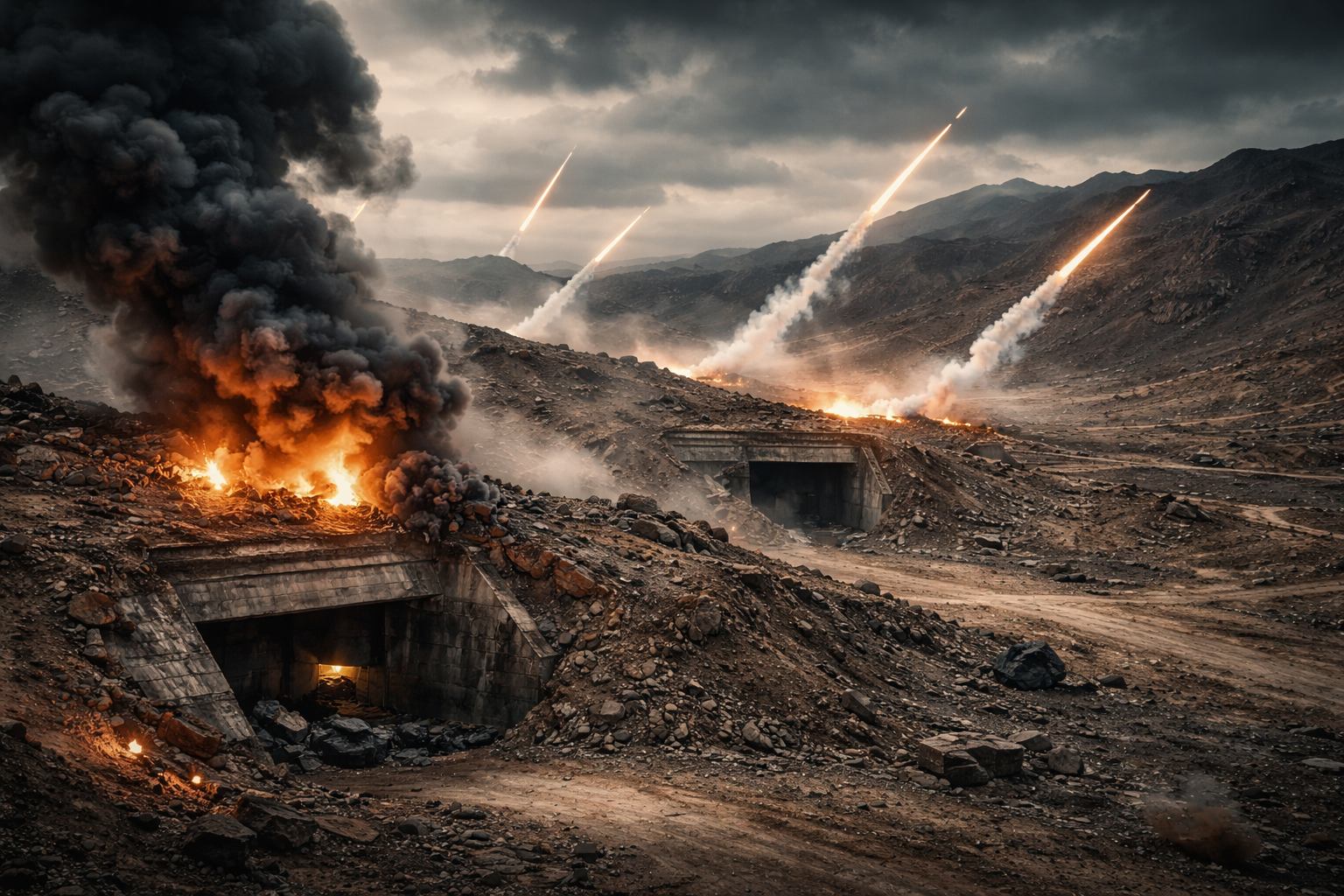
US Can’t Verify Most of Iran’s Missiles Are Gone
US Admits It Can Only Confirm a Third of Iran’s Missile Arsenal Destroyed — And That Changes Everything
The United States can only confirm with certainty that roughly one-third of Iran’s missile arsenal has been destroyed, according to newly reported intelligence as of March 27, 2026.
That matters because it directly contradicts the narrative of near-total success—and suggests Iran still retains meaningful strike capability despite weeks of intense bombing.
The overlooked hinge is simple but critical: damage is not the same as elimination, especially when the weapons are designed to survive underground.
The story turns on whether Iran’s remaining missile capacity is operational enough to sustain deterrence—or merely recoverable after the war.
Key Points
The US can verify only about one-third of Iran’s missile arsenal has been destroyed, with another third uncertain due to underground storage.
Iran still retains a significant stockpile, contradicting claims it has “very few rockets left.”
Over 10,000 targets have been struck, yet missile and drone capabilities remain partly intact.
Iran continues launching missiles, proving operational capability hasn’t been eliminated.
Underground bunkers and mobile launchers make full verification nearly impossible.
The conflict is shifting from destruction to attrition, adaptation, and long-term rebuild risk.
What the US Actually Knows—and What It Doesn’t
The headline number—one-third destroyed—is not the full story. It’s the only portion the US can confirm with high confidence.
Another third of Iran’s arsenal is believed to be the following:
buried in underground tunnels
damaged but not destroyed
inaccessible but potentially recoverable
The final third remains entirely unaccounted for.
This uncertainty isn’t a failure of intelligence — it’s a feature of how Iran built its system.
Iran’s missile program was designed over decades to survive exactly this scenario:
deep mountain facilities
hardened bunkers
dispersed launch systems
mobile platforms that relocate after firing
Even senior US officials admit they might never know exactly how much remains.
Why Weeks of Airstrikes Haven’t Solved the Problem
On paper, the campaign looks overwhelming:
thousands of strikes
major infrastructure hit
naval assets largely destroyed
But missile warfare isn’t about infrastructure alone — ’s about launch survivability.
Iran has adapted quickly:
firing fewer missiles, but from deeper inside its territory
prioritizing longer-range, higher-impact strikes
shifting toward economic and civilian disruption targets
This is a classic shift from volume to efficiency.
Even with launch rates reportedly down by over 90%, Iran can still
hit targets
create uncertainty
impose economic and political cost
That’s enough to maintain deterrence.
The Real Power Shift: From Destruction to Uncertainty
The biggest shift in this war isn’t how many missiles have been destroyed.
It’s that nobody can prove how many remain.
That uncertainty changes everything:
Military planners must assume worst-case capability
Missile defense systems stay under constant strain
Political leaders can’t declare decisive victory
In practical terms, Iran doesn’t need thousands of missiles left.
It just needs:
enough to keep firing occasionally
enough to threaten key targets
enough to force continued US and Israeli engagement
That threshold is far lower than total arsenal size.
Real-World Stakes: Why This Matters Globally
This situation situation isn’t just a military accounting issue — it’s shaping global risk.
Oil markets remain volatile due to threats to the Strait of Hormuz
Air defense systems face sustained cost pressure
Regional escalation risk remains high
Iran has already demonstrated it can still
strike Israel and regional targets
threaten US and allied bases
disrupt economic infrastructure
Even limited missile capability can have outsized strategic impact.
What Most Coverage Misses
Most reporting focuses on the percentage destroyed.
The real issue is recoverability.
Missiles that are
buried
damaged
temporarily inaccessible
are not the same as destroyed.
In many cases, they can be:
dug out
repaired
reassembled
relaunched
That means the “uncertain third” could reappear after the war—or even during it.
This creates a hidden reserve effect:
Iran may regain capability faster than expected
Post-war assessments could underestimate rebound speed
Victory declarations risk being premature
The war is not just about current capabilities—it’s about how fast capabilities can return.
The Paths Ahead: Degradation, Stalemate, or Rebuild
There are now three realistic trajectories:
1. Continued degradation
Sustained strikes reduce Iran’s usable arsenal further, limiting its ability to retaliate meaningfully.
2. Strategic stalemate
Iran retains enough missiles to keep the conflict alive, preventing decisive victory on either side.
3. Post-conflict rebuild
Iran rapidly recovers damaged stockpiles and rebuilds production, restoring deterrence within months or years.
Key signals to watch:
frequency of Iranian missile launches
evidence of underground recovery operations
strikes on production facilities vs storage sites
shifts in targeting strategy
The deeper reality is this: modern missile arsenals are not easily erased—they are degraded, hidden, and rebuilt.
And that means this war’s outcome won’t be decided by how much has been destroyed but by what survives and how quickly it comes back.
