

India Turns to Russia as Trump’s Iran War Breaks Global Oil Order
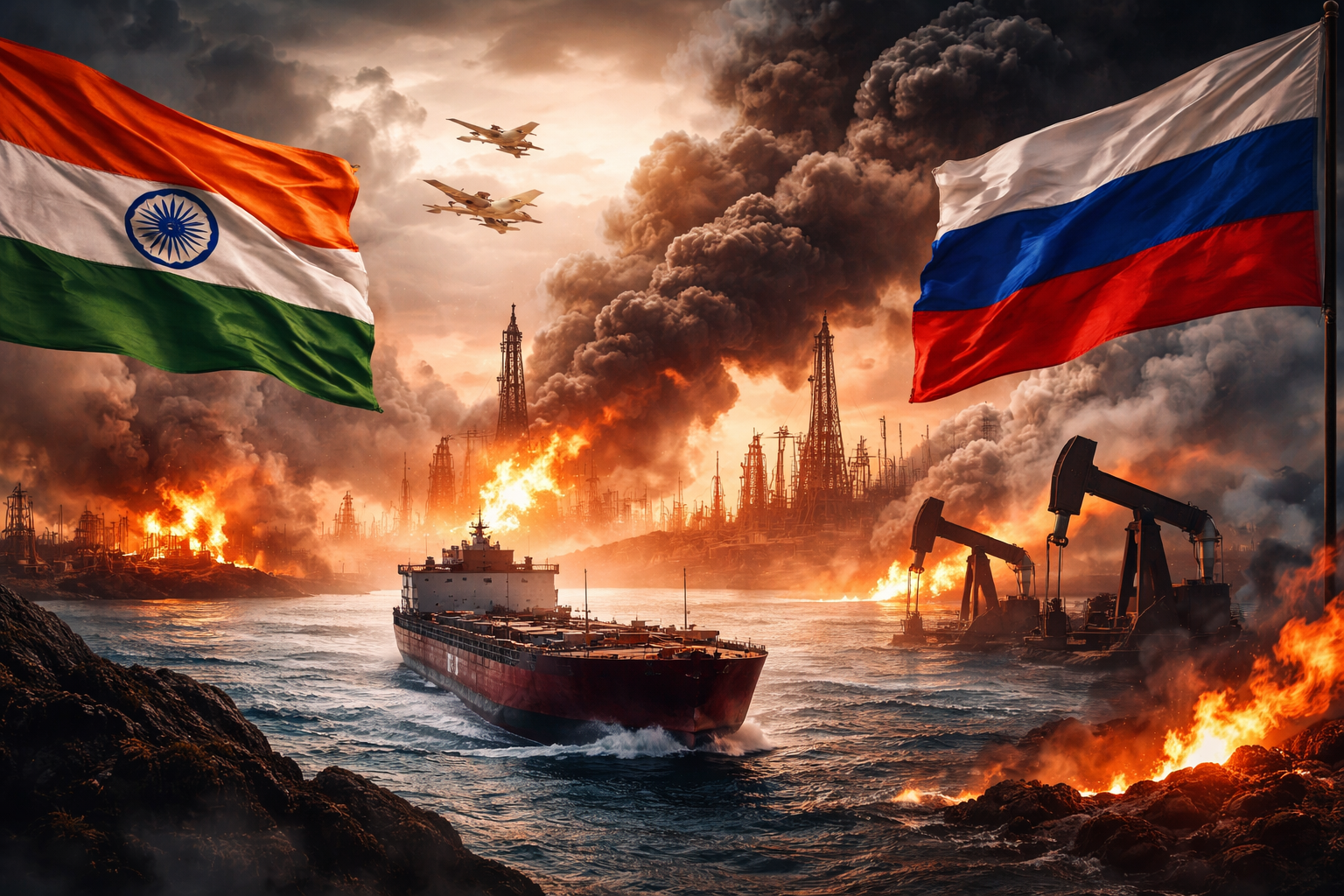
Trump’s Iran War Forces India Into Russia’s Energy Orbit
India Reopens Russia Energy Ties as Trump’s Iran War Redraws Global Power
India is rapidly rebuilding its energy relationship with Russia as the Governments must strike a balancewar triggered by Donald Trump’s confrontation with Iran disrupts global oil flows and threatens supply shortages. As of March 27, 2026, the closure and militarization of the Strait of Hormuz—one of the world’s most critical energy chokepoints—have forced New Delhi into a strategic pivot: back toward Moscow.
What looks like a short-term energy fix is actually something bigger. The crisis is accelerating a structural shift in global energy alliances—one that weakens sanctions, strengthens Russia’s leverage, and exposes the limits of US control over global supply chains.
The story turns on whether India’s energy security needs will permanently outweigh Western pressure to isolate Russia.
Key Points
India is moving to restart major oil and LNG deals with Russia after disruptions from the Iran war cut access to Middle Eastern supply routes.
The Strait of Hormuz crisis has removed a significant share of global oil and gas flows, driving prices above $100 per barrel.
New Delhi is seeking US waivers to legally import Russian energy despite sanctions, highlighting geopolitical tension.
Russia is emerging as a major beneficiary of the crisis, gaining pricing power and renewed strategic relevance in Asia.
The war is reshaping global energy routes, weakening Western attempts to isolate Moscow economically.
The longer the disruption lasts, the more likely these temporary adjustments become permanent shifts in global alliances.
Where This Story Really Begins: A War That Choked the World’s Energy Artery
The immediate trigger is the war between the United States, Israel, and Iran, which escalated in late February 2026. The conflict has centered heavily on the Strait of Hormuz, a narrow passage that carries a massive share of global oil and liquefied natural gas (LNG).
Iran’s actions in the strait—combined with military strikes on energy infrastructure—have effectively choked supply. At one point, roughly a fifth of global oil and gas flows were disrupted.
For India, the impact is direct and severe. A large portion of its crude and LNG imports typically passes through this route. With shipping disrupted and prices spiking, the country faced a familiar problem: how to secure reliable energy fast, at scale, and at a tolerable cost.
The answer, again, was Russia.
The Pivot Back to Moscow
India had already been a major buyer of Russian crude following the Ukraine war, taking advantage of discounted oil under Western sanctions. But in early 2026, under pressure from Washington, it had begun scaling those purchases back.
That pause didn’t last.
With Middle Eastern supplies suddenly unreliable, India is now actively negotiating renewed deals with Russia—covering crude oil, LNG, and even infrastructure cooperation. There are discussions about Russian energy making up a significantly larger share of India’s imports.
At the same time, India is seeking formal waivers from the US to avoid breaching sanctions while doing so.
This is not just opportunistic buying. It is strategic hedging.
India is trying to balance three competing realities:
dependence on imported energy
alignment with Western economies
and the need for supply stability in a crisis
Right now, stability is winning.
Russia’s Quiet Advantage
While the war has created chaos in global energy markets, it has also created opportunity—especially for Russia.
With Middle Eastern supply constrained, Russian oil is no longer just a discounted alternative. In some cases, it is becoming a preferred and even premium source.
This flips the narrative of the past two years. Instead of being isolated, Moscow is
regaining leverage in key markets like India
strengthening alternative trade systems (including non-dollar transactions)
and positioning itself as a stabilizing supplier in a volatile market
The crisis has also exposed a broader reality: global energy demand cannot easily be reshaped by sanctions alone.
What Most Coverage Misses
Most reporting frames this as a short-term reaction to a supply shock. That misses the deeper structural shift.
The real story is about trust in supply chains.
Energy markets do not just run on price—they run on reliability. The Iran war has demonstrated that key Western-aligned supply routes can be disrupted quickly and unpredictably. That changes how countries think about risk.
India is not simply buying cheaper oil from Russia. It is diversifying away from geopolitical choke points.
That distinction matters. Because once supply chains are reconfigured around resilience rather than alignment, they tend to stick.
This is how temporary crises become permanent realignments.
The Power Shift: Who Gains and Who Loses
The immediate winners are clear:
Russia gains pricing power, market share, and renewed geopolitical relevance.
India gains flexibility and bargaining leverage.
The losers are more complex:
The United States retains enormous energy production capacity but faces limits in how quickly it can replace disrupted global flows.
Europe and US allies face higher costs and tighter supply.
Sanctions regimes lose credibility when major economies find ways around them.
The broader shift is subtle but significant: power is moving from producers aligned with Western systems to those operating outside them.
What This Means in the Real World
For households, this shows up as higher fuel prices, inflation, and supply instability.
For businesses, it means volatile input costs—especially in industries tied to energy, transport, and manufacturing.
For governments, it becomes a balancing act between the following:
economic stability
diplomatic alignment
and strategic autonomy
India’s move is a case study in that trade-off. It is prioritizing domestic stability over geopolitical consistency.
The Paths Ahead: A Temporary Adjustment or a Lasting Realignment?
There are three plausible directions from here.
If the Strait of Hormuz reopens quickly and supply stabilizes, India may scale back Russian imports again, returning to a more balanced portfolio.
If disruption continues for months, Russian energy could become deeply embedded in India’s long-term supply mix.
If the conflict escalates further, the entire global energy system could fragment into competing blocs—reshaping trade, pricing, and alliances for years.
The real signal to watch is not just prices. It is contracts. Long-term agreements, infrastructure deals, and payment systems will reveal whether this shift is temporary or structural.
Because once energy relationships harden, they rarely unwind quickly.
And in that sense, the Iran war is not just a regional conflict—it is a stress test for the entire global energy order.
