This Is How Wars Spiral: Kharg Island Struck Again
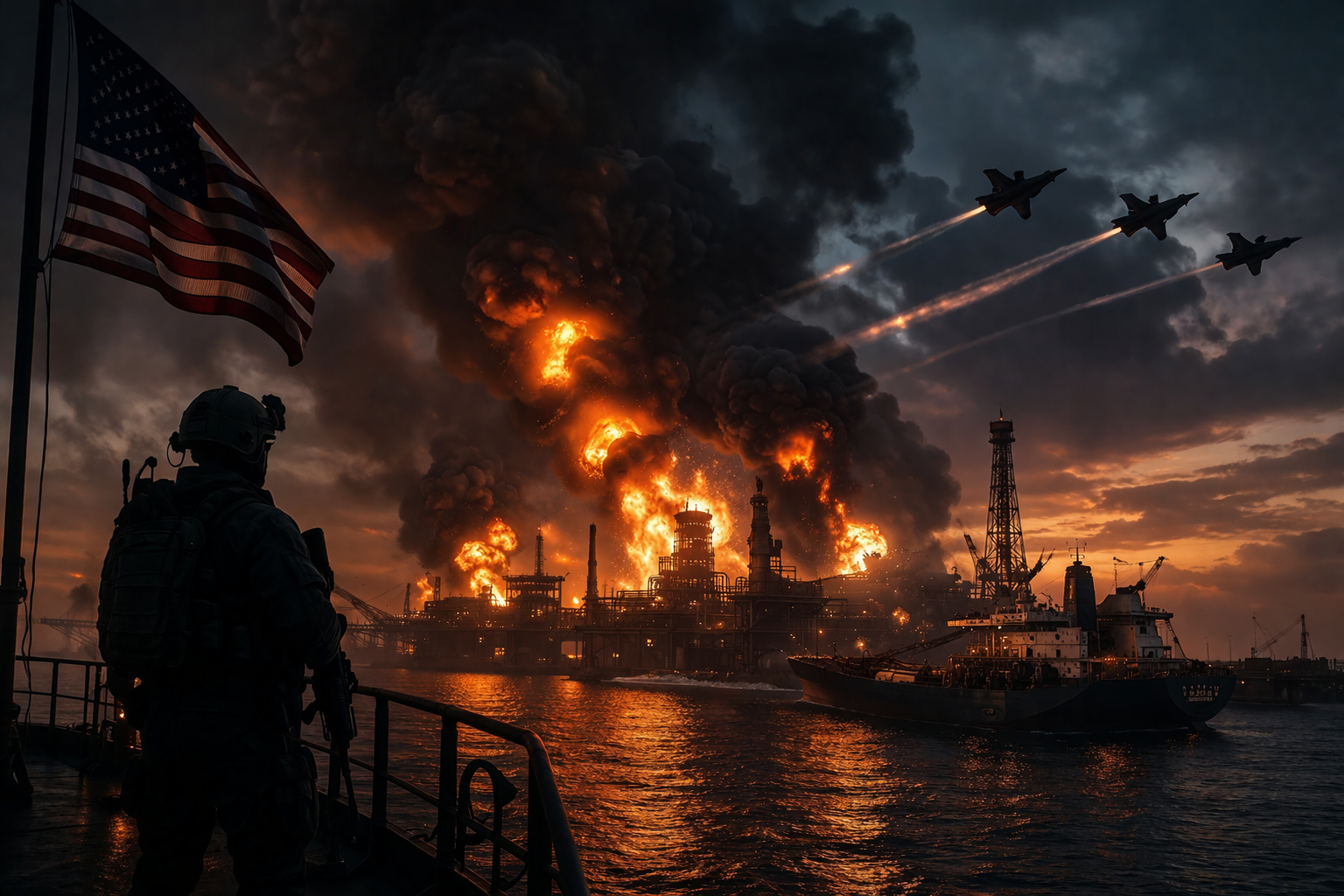
The War Just Crossed the Line Between Pressure and Pattern
What looks like a targeted strike is becoming something far more serious: a sustained campaign aimed at control, leverage, and escalation.
This is no longer a one-off strike — ’s a signal of intent
The confirmation of repeat US strikes on Iran’s Kharg Island changes the meaning of the war overnight.
The first strike could be interpreted as pressure.
A warning.
A calculated demonstration of capability.
But restrikes? That’s different.
That is a pattern.
And in war, pattern is strategy.
US officials have now confirmed multiple hits on military targets on Kharg Island, including sites previously struck—a deliberate decision that reinforces continuity rather than escalation-by-accident.
This isn’t chaos.
It’s repetition with purpose.
Why Kharg Island matters more than almost anywhere else
Kharg Island is not just another target.
It is Iran’s economic heart artery.
Handles up to 90% of Iran’s oil exports
Sits at the edge of the Persian Gulf’s most critical shipping lanes
Functions as both a military node and economic choke point
For weeks, strikes have carefully avoided oil infrastructure, focusing instead on military assets.
That restraint is not humanitarian.
It’s strategic.
Because the moment oil facilities are hit, the conflict stops being a regional war and becomes a global economic shock event.
The real shift: from coercion to control
Here’s the part most people miss:
The goal is no longer just to hurt Iran.
It’s to shape its options.
By repeatedly striking military infrastructure on Kharg, the US is doing three things simultaneously:
1. Removing Iran’s ability to defend its most valuable asset
Air defenses, naval capabilities, and logistics are being degraded in layers.
2. Keeping the oil flowing — for now
Avoiding energy infrastructure maintains global stability while maintaining leverage.
3. Creating the option for escalation later
Once military defenses are gone, oil infrastructure becomes exposed at will
This is escalation with restraint—but restraint that can be removed instantly.
What media misses
Most coverage is framing this as “another strike.”
That’s the wrong lens.
The real story is repetition.
One strike is a message.
Two strikes is a system.
Repeat targeting of the same strategic location signals:
Intent to dominate the area over time
Confidence in sustained operational capability
Willingness to escalate in controlled phases
This is not reactive warfare.
This is sequenced pressure.
And once a sequence starts, it rarely stops cleanly.
The Trump deadline changes everything
Overlay this with the political layer:
A hard deadline for Iran to reopen the Strait of Hormuz
Explicit warnings of catastrophic consequences
Public rhetoric escalating to existential language
This isn’t just military pressure.
It’s a ticking clock.
And the strikes are the countdown mechanism.
Reports indicate the latest attacks came just hours before the deadline, reinforcing that they are directly tied to negotiation leverage rather than isolated battlefield decisions.
The dangerous middle phase of war
This moment—right now—is the most unstable phase of any conflict:
Not peace.
Not full war.
But something in between.
That’s where the
Miscalculations happen
Red lines get crossed accidentally
Retaliation spirals begin
Iran has already signaled willingness to respond if escalation continues, including threats of retaliation across the region.
And here’s the problem:
The more Kharg Island is hit,
The more likely it becomes that something critical—intentionally or not—gets struck.
History is quietly repeating itself
Kharg Island has been here before.
In the 1980s, during the Iran-Iraq War, it was heavily bombed as part of a strategy to cripple Iran’s oil exports.
Now, decades later, it’s back at the center of conflict.
Same logic.
Same vulnerability.
But much higher stakes.
Because today:
Global oil markets are tighter
Supply chains are more fragile
The Strait of Hormuz is more critical than ever
History isn’t repeating exactly.
But it’s rhyming louder this time.
What happens next
Three paths are now realistically in play:
Controlled escalation (most likely short-term)
Strikes continue targeting military assets only, maintaining pressure without triggering global shock.
Economic escalation (most dangerous)
Oil infrastructure is hit — either deliberately or accidentally — triggering a surge in oil prices and global instability.
Regional spillover (most underestimated)
Iran retaliates indirectly:
Gulf shipping
Regional infrastructure
Allied targets
This expands the conflict beyond Iran itself.
The real meaning of the restrikes
The second strike is always more important than the first.
Because it tells you what the first one really was.
These restrikes confirm:
This is not a warning phase anymore.
This is a structured campaign.
And once a war becomes structured —
It becomes much harder to stop.
