Trump Declares Hormuz Demined — Then Gives Iran A Brutal Warning: Try It Again and We Destroy the Boats
The World’s Oil Lifeline Under Watch
The Strait Trump Says Iran Can No Longer Mine
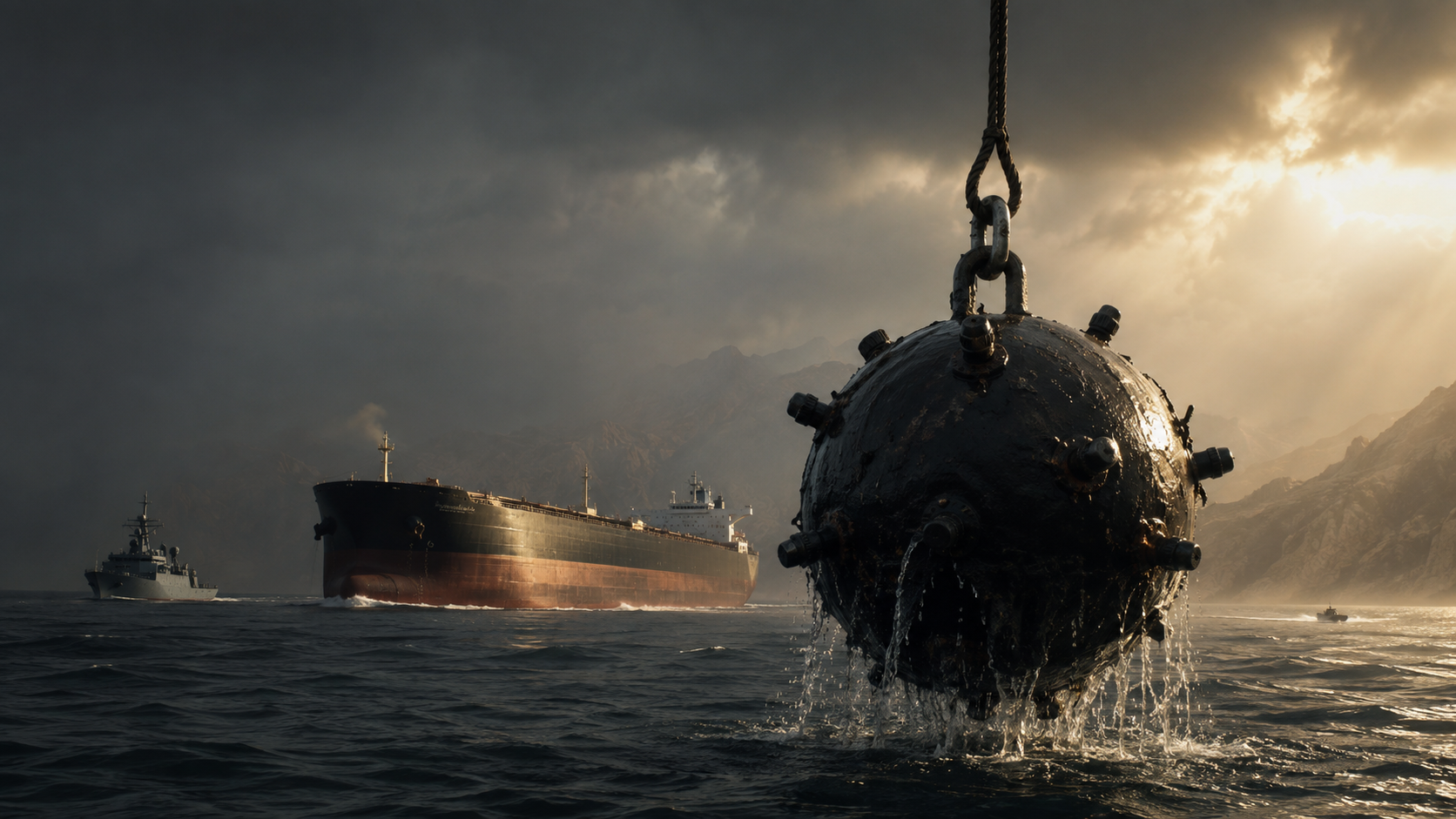
Donald Trump says the United States Navy has removed or detonated every mine from the international waters of the Strait of Hormuz, declaring one of the most dangerous physical obstacles to Gulf shipping cleared after months of conflict. He coupled the announcement with an unmistakable warning to Iran: any vessel caught laying new mines will be destroyed.
It is potentially one of the most important breakthroughs in the battle over the world's most critical oil chokepoint. But it does not mean the Hormuz crisis is over. Commercial traffic remains far below normal levels, ships continue to face attack risks, and a tanker was disabled near Oman after being hit by an unidentified projectile only hours before Trump's declaration.
Trump Says the U.S. Navy Has Cleared the Mines
Trump said on Tuesday that he had been informed by the U.S. Navy that all mines had been removed or detonated from the international waters of the strait. His announcement goes further than earlier White House claims that the waterway was open and establishes a much clearer American position: Washington believes the physical mine threat inside the international shipping lanes has been eliminated.
The claim is significant because mines offer Iran a cheap and asymmetric way of challenging vastly superior American naval power. Tehran does not have to defeat a carrier group or sink dozens of ships to disrupt Hormuz. The possibility that a commercial tanker could strike a mine can be enough to frighten crews, insurers and shipping companies away from the route.
Trump's statement effectively argues that one part of that Iranian leverage has now been stripped away.
But it should still be treated as a U.S. claim rather than proof that every maritime danger around Hormuz has disappeared. The latest publicly available information does not independently establish that the entire broader operating environment is mine-free, and the threat facing merchant shipping extends beyond mines.
Iran Gets a New Red Line
Trump did more than announce the clearance operation. He said Iran had been informed that any ship or boat placing new mines would be "immediately and systematically destroyed", while declaring a "Zero Tolerance" policy on new mine placement.
That changes the deterrence equation.
Instead of waiting for mines to be discovered and cleared, Washington is threatening to attack the vessels attempting to deploy them. Trump also said the U.S. was using Space Force capabilities to watch "every square inch" of the strait, presenting the waterway as an area under persistent American surveillance.
For Iran, the warning creates a choice. Attempting to restore the mine threat could invite immediate American military action against Iranian maritime forces. Leaving the shipping lanes unmined, however, would weaken one of Tehran's most powerful tools for imposing economic pressure during the war.
That is why the announcement matters far beyond the removal of individual explosives.
The struggle over Hormuz has always been about control.
The Strait Is Still Nowhere Near Normal
The danger for Washington is declaring the problem solved before commercial shipping behaves as though it has actually been solved.
Before the conflict, more than 20 million barrels of oil per day moved through the Strait of Hormuz. Recent estimates put flows at roughly 5 million barrels per day on Monday — a dramatic reduction that shows how far the world's energy artery remains from normal operation.
Shipping data has told the same story. Earlier in August, only five commodity vessels were recorded transiting the strait on one Saturday and none the following Sunday, compared with 31 during the previous weekend.
That contradiction has become one of the defining features of the Hormuz crisis.
Washington can say the channel is open. It can escort vessels, remove mines and threaten Iranian forces.
But a shipping route is not genuinely back to normal until commercial operators believe they can use it predictably and safely.
The distinction is crucial. Recent shipping data has repeatedly challenged the idea that declaring Hormuz open automatically restores normal traffic.
A Tanker Attack Shows Why the Danger Has Not Vanished
The timing of Trump's announcement makes the remaining danger impossible to ignore.
An oil tanker near Oman was struck by an unidentified projectile late on August 24 and left disabled after its engine room was damaged. The crew was reported safe and no pollution was detected, but the incident demonstrates that removing naval mines does not remove missiles, drones, projectiles or other potential threats to vessels moving through the region.
That is the weakness in any simple victory narrative.
Hormuz can be cleared of mines and still be dangerous.
It can technically remain open while most shipping companies remain reluctant to use it.
And American naval superiority can coexist with an Iranian ability to make commercial navigation expensive and unpredictable.
This is why the deeper battle has never depended solely on whether Iran can physically seal the strait. Iran only needs to make Hormuz dangerous enough that commercial shipping begins treating it as unreliable.
Why Hormuz Matters So Much
The Strait of Hormuz is a narrow entrance to the Persian Gulf sitting between Iran and Oman. In normal conditions, roughly a fifth of global petroleum consumption passes through it, making disruption there capable of affecting energy prices, shipping costs and economic confidence thousands of miles away.
Major Gulf exporters have alternatives, including pipelines that bypass parts of the strait, but those routes cannot replace its full capacity. That leaves the world unusually dependent on one small piece of geography.
It also explains why Washington has invested so much military power in keeping it accessible.
The White House announced an agreement with Iran earlier this year that it said would restore free navigation through Hormuz, but the subsequent deterioration in relations and renewed attacks demonstrated how fragile any apparent reopening could be.
The latest American mine-clearance claim therefore represents another attempt to move the contest from Iranian disruption towards dependable international passage.
Whether shipping companies believe it is another matter.
Trump Is Trying to Remove Iran's Greatest Bargaining Chip
The larger strategic picture is increasingly clear.
Iran's geography gives it something that conventional military strength alone cannot provide: the ability to threaten a route central to the economies of countries that are not direct participants in the war.
Mines magnify that advantage.
They are comparatively cheap, difficult to detect and capable of forcing enormously expensive naval clearance operations. Even uncertainty about their location can slow shipping.
Removing them therefore does more than protect tankers. It attacks the mechanism through which Iran can convert control of nearby waters into global economic pressure.
That sits alongside Washington's widening economic campaign against Tehran. New U.S. sanctions are targeting Iranian trade and oil networks while the administration attempts to force Iran towards concessions after nearly six months of conflict.
The pressure is becoming simultaneous: military control at sea, economic isolation on land and the threat of further force if Iran rebuilds its maritime barriers.
But Iran Still Has Ways to Escalate
Mine warfare is only one option available to Tehran.
Iran retains the ability to create uncertainty through missiles, drones, fast boats, attacks on individual commercial vessels and threats against regional infrastructure. Iranian officials have also threatened retaliation against countries participating in American economic measures, demonstrating that Tehran continues to view regional commerce as a source of leverage.
That matters because the central contest is no longer simply whether a tanker can physically navigate the waterway.
It is whether companies will risk doing so.
Insurers, shipowners and crews respond to probability rather than presidential declarations. If attacks continue while mines disappear, commercial confidence may remain weak.
The U.S. Navy can clear a channel.
It cannot instantly clear fear from the market.
What Happens Next
The next major test will be visible in the ships themselves.
If Trump's declaration is followed by rapidly increasing tanker movements, lower insurance risk and sustained passage without successful attacks, the mine-clearance operation could mark a genuine turning point. Washington would have demonstrated that Iran cannot permanently choke the world's most important energy artery.
If traffic remains severely depressed, however, the claim that Hormuz has been secured will become harder to sustain.
That is especially important because current flows remain only a fraction of pre-war levels. The gap between military control and commercial confidence is now one of the most important measurements in the entire conflict.
Iran also has to decide whether Trump's threat is a bluff.
A new minelaying attempt could immediately test the promised zero-tolerance policy and risk another direct American attack. Avoiding mines would preserve Iranian vessels but concede part of the battlefield to Washington.
Trump has therefore drawn a remarkably simple line across an extraordinarily complicated war: the mines are gone, they are not coming back, and America says it is watching.
The real victory will not be measured by how many mines the Navy destroyed. It will be measured by whether hundreds of commercial ships once again believe the Strait of Hormuz is safe enough to use.
