What Is Actually Closing the Strait of Hormuz?
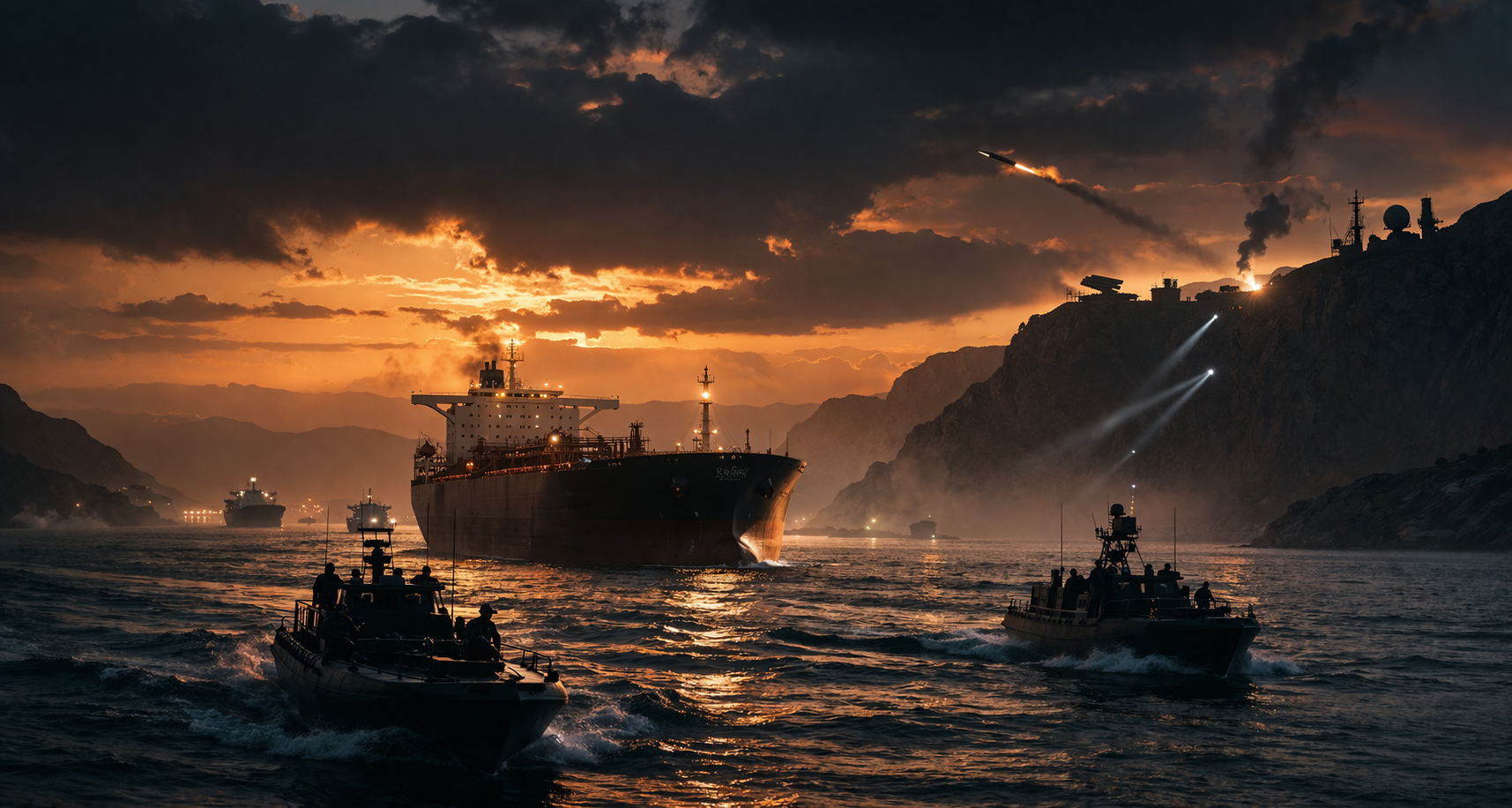
The Strait of Hormuz Is Being Strangled—And the World Is Already Feeling It
Iran is effectively closing the Strait of Hormuz using military pressure, selective access, and economic control—not a full physical blockade.
This is happening because:
A US–Israel war with Iran began in late February 2026
Iran responded by asserting control over the strait, a key global shipping route
It is using threats, attacks, and restrictions to deter most ships from passing
Iran has explicitly warned it would attack vessels trying to pass under certain conditions, making transit too dangerous for most commercial shipping.
How It’s Being “Closed” (Mechanically)
This process is the critical part most people misunderstand.
The Strait is not blocked by a wall or fleet sitting across it.
It is being shut down through four overlapping mechanisms:
1) Military Threat + Deterrence
Iran’s naval forces and Islamic Revolutionary Guard Corps (IRGC) patrol the area
Ships risk missiles, drones, or seizure
Even the threat alone is enough to stop traffic
Result:
Shipping companies simply refuse to enter
2) Insurance Collapse (The Hidden Switch)
This is the real choke point.
Maritime insurers have pulled coverage due to war risk
Without insurance, ships cannot legally operate
Result:
Even if physically possible, shipping becomes commercially impossible
3) Selective Access / “Gatekeeping”
Iran is not treating all ships equally.
Some vessels (e.g. Chinese, Iranian-aligned, or negotiated routes) are allowed through
Others are blocked or face extreme scrutiny
In some cases, Iran has reportedly:
Charged millions per transit
Required payment in alternative currencies or crypto
Result:
The strait becomes a controlled corridor, not an open route
4) Physical Disruption (Mines, Attacks, Risk)
There are credible concerns about:
Naval mines
Drone strikes
Tanker attacks
Even limited incidents have an outsized effect because:
One attack = global insurance spike
One damaged tanker = traffic collapse
How “Closed” Is It Right Now?
Not fully closed, but functionally crippled.
Traffic has dropped to ~5% of normal levels
From ~130 ships/day → just a handful daily
Hundreds of ships have been stranded
Some ships are getting through—but only under:
Political negotiation
High risk
Specific approvals
Why This Strait Matters So Much
This route is not just another shipping lane.
Roughly 20–25% of global oil trade passes through it
A major share of global LNG (gas) flows through it
It connects Gulf producers (Saudi Arabia, UAE, Qatar) to the world
So when Hormuz slows down:
Oil prices spike
Energy costs rise globally
Food, transport, and manufacturing costs follow
The UK, for example, is already seeing warnings of:
Food price increases
Supply chain disruption
Medicine shortages risk
What Most Coverage Misses
The key insight:
You don’t need to fully block the Strait of Hormuz to shut it down.
A small amount of uncertainty—
a few attacks, some mines, unclear rules—
…is enough to collapse:
insurance markets
shipping confidence
commercial viability
That’s precisely what’s happening.
This is economic warfare through risk, not just military force.
And it’s far harder to reverse.
Why It Hasn’t Been Reopened Yet
Even if countries want to reopen it, there are major constraints:
Mine-clearing operations can take months
Naval escorts require large multinational coordination
Many countries are reluctant to escalate militarily
The US is not fully coordinating a global response
Meanwhile, over 40–60 countries are now involved in emergency talks
What Happens Next
There are three realistic paths:
1) Diplomatic reopening
Pressure on Iran → partial reopening
Likely outcome: controlled, expensive passage
2) Military intervention
Naval coalition clears mines and escorts ships
High risk of escalation into wider war
3) Prolonged chokehold (most likely short-term)
Limited ships pass
Global prices stay elevated
Supply chains distort
Bottom Line
The Strait of Hormuz is being “closed” not by a physical barrier but by
fear + force + financial shutdown + selective control
This combination is sufficient to disrupt a quarter of the world's oil supply without resorting to any decisive action.
And that’s why this situation is so dangerous:
It’s not a clean blockade you can quickly reverse—
it’s a systemic disruption that spreads through the global economy almost instantly.
