Trump Just Fired His Attorney General—Here’s Why It Matters Now
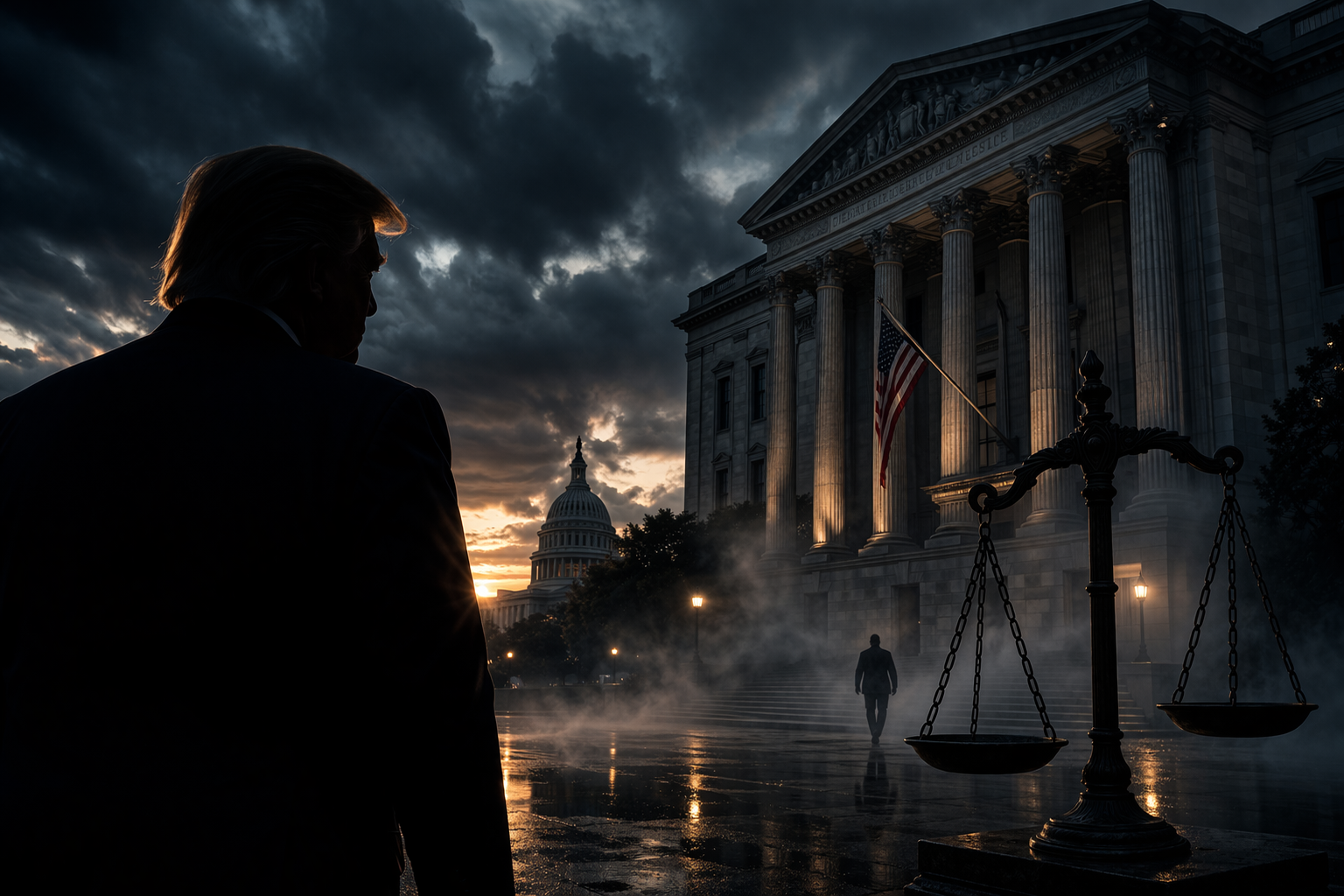
The Real Reason Trump Fired His Top Law Enforcer
Inside the Shock DOJ Shake-Up: Power, Pressure, and Control
The United States has entered a new phase of internal political tension after Donald Trump abruptly removed Attorney General Pam Bondi on April 2, 2026.
The move, confirmed by multiple major outlets within hours, places the country’s top law enforcement body—the Department of Justice—directly at the center of a widening power struggle inside the administration.
This is not just a personnel change. It is a signal event.
It comes amid mounting geopolitical pressure, ongoing war tensions, and growing scrutiny over how justice is being used—or not used—at the highest levels of government.
Within minutes of the announcement, it was clear this decision carries implications far beyond one official’s job.
The story turns on whether the Justice Department is operating as an independent institution—or as an extension of presidential power.
Key Points
Donald Trump has fired Attorney General Pam Bondi, marking a major internal shake-up
The decision follows sustained criticism over her handling of the Jeffrey Epstein case and broader DOJ performance
Deputy Attorney General Todd Blanche, previously Trump’s personal attorney, will serve as acting head of the DOJ
The firing reflects deeper tensions over prosecuting political opponents and controlling legal strategy
It is the second high-level cabinet dismissal in recent weeks, signaling instability inside the administration
The long-term question is whether this accelerates politicization of U.S. law enforcement—or triggers institutional pushback
What Actually Happened—and Why It Matters Now
The removal of Pam Bondi was expected.
Reports indicate that frustration inside the White House had been building for months, particularly around her handling of sensitive investigative material linked to Jeffrey Epstein.
That issue became a political flashpoint.
Critics across both parties accused the Justice Department of delays, redactions, and a lack of transparency.
At the same time, there were growing signs that the president wanted faster and more aggressive legal action against political rivals—something he reportedly felt was not being delivered.
The result was a paradox:
Bondi was considered loyal—but not effective enough in executing the administration’s legal priorities.
That combination is often fatal in power structures built on personal alignment.
The Justice Department as a Battleground
The attorney general is not just another cabinet role.
It is one of the few positions designed to sit at a critical distance from the president, precisely to prevent political interference in law enforcement.
That boundary has been under strain.
During Bondi’s tenure, the Department of Justice was widely viewed as more aligned with presidential priorities than in previous administrations, including pursuing investigations into political opponents and reshaping internal leadership.
Her removal suggests that even that level of alignment was not enough.
The expectation appears to have shifted from alignment… to execution.
The Immediate Power Shift
The appointment of Todd Blanche as acting attorney general is not a neutral move.
Blanche is not a career prosecutor rising through the ranks.
He is a former personal attorney to the president.
That changes the equation.
It places someone with direct personal and professional ties to the president at the helm of the country’s top law enforcement agency—at a moment of heightened political and geopolitical tension.
This is where the stakes escalate.
The question no longer solely revolves around who will lead the Department of Justice.
It is about how decisions will now be made—and for whose benefit.
War Tensions and Domestic Control
This development is unfolding alongside rising international instability.
In that context, internal control becomes more—not less—important.
Governments under external pressure tend to centralize authority.
They tighten messaging, accelerate decision-making, and reduce internal friction.
Replacing the Attorney General can be part of that process.
This is not necessarily a reaction to external threats, but rather a proactive measure to prepare for them.
That is what makes this moment structurally significant.
What Most Coverage Misses
Most reporting frames the story as a reaction to a single issue: the handling of the Epstein files.
That is incomplete.
The more important mechanism is performance alignment under pressure.
The attorney general sits at the intersection of law, politics, and timing.
When an administration feels exposed—legally, politically, or strategically—it needs speed, coordination, and predictability from that role.
If any one of those breaks down, the position becomes a liability.
Bondi’s removal suggests that the issue was not just what she did—but how reliably she could execute under escalating pressure.
That distinction matters.
This implies that the threshold for remaining in power has shifted.
Real-World Stakes: What Changes Now
For most people, this might feel like distant political maneuvering.
It is not.
The Department of Justice affects the following:
criminal prosecutions
federal investigations
regulatory enforcement
corporate oversight
civil rights protections
A leadership shift at that level changes priorities, pace, and outcomes.
Immediately.
For businesses, it alters regulatory risk.
For political actors, it changes exposure.
For institutions, it raises questions about independence.
What Comes Next
There are three paths from here.
First, consolidation.
If the acting leadership aligns tightly with presidential direction, the Justice Department could become more centralized and more predictable from the White House perspective.
Second, resistance.
Institutional pushback—from courts, Congress, or internal DOJ figures—could slow or constrain any shift in direction.
Third, escalation.
If legal actions begin targeting high-profile figures more aggressively, this move could mark the start of a more confrontational phase in U.S. domestic politics.
The signals to watch are clear:
who gets investigated
what cases move quickly
what cases stall
who is appointed permanently
This is no longer about a single dismissal.
It is about the operating model of American power.
And whether the system absorbs this shift—or reshapes itself in response.
