Iran Tells Civilians to Hunt US Pilot — War Just Crossed a Line
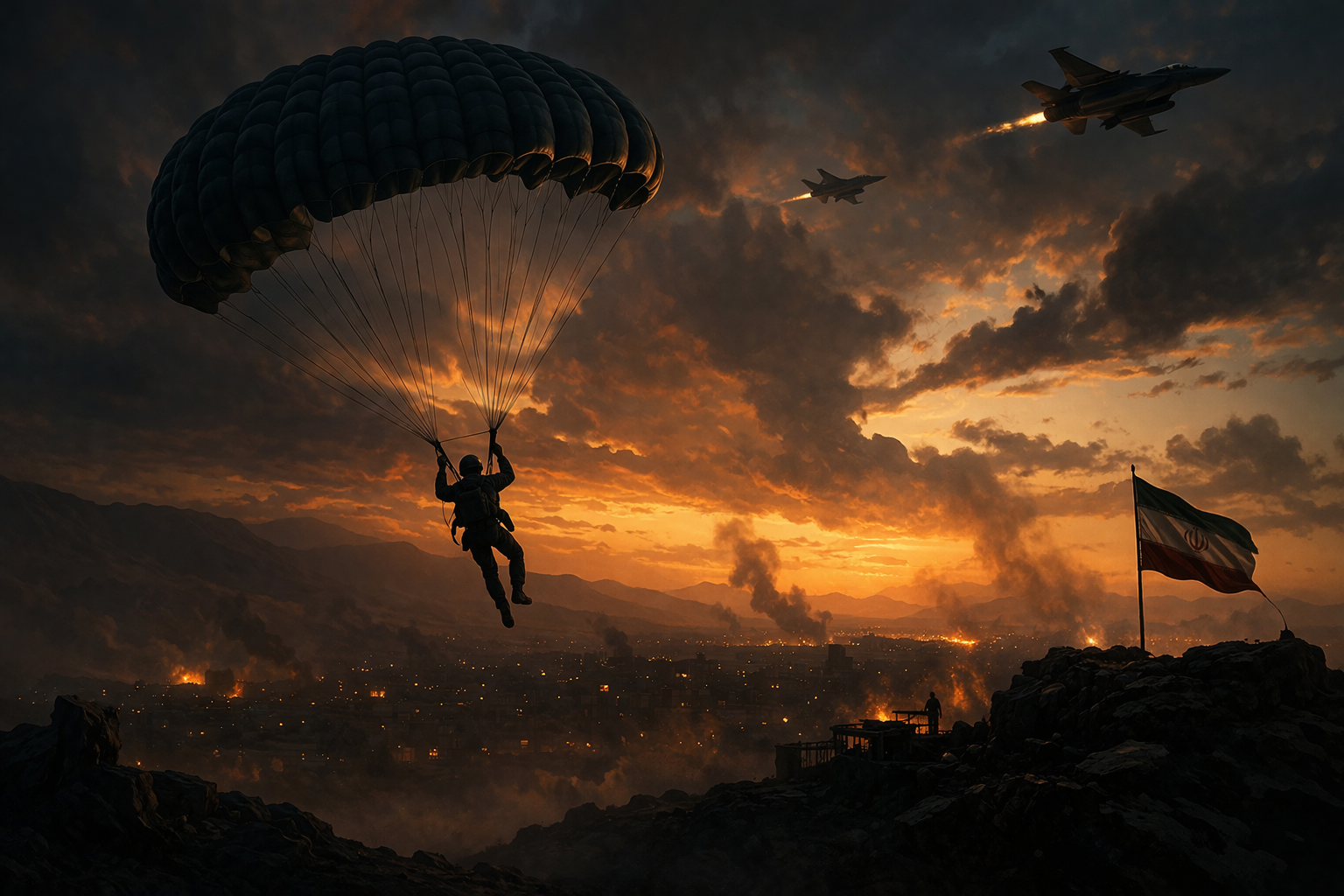
Downed US Pilot Feared Inside Iran — Civilians Ordered to Find Him
A fast-moving and highly volatile claim has emerged: Iranian authorities are urging civilians to locate and capture a reportedly downed US pilot following an aerial incident over Iran.
Multiple sources indicate that a US aircraft may have been brought down, with search-and-rescue operations underway—but official confirmation remains contested and incomplete.
Iranian state-linked media have gone further, broadcasting calls for the public to find the pilot and hand them over—even offering rewards.
If true, the incident marks a sharp escalation: not just a loss of aircraft, but the exposure of US personnel inside hostile territory—one of the most sensitive thresholds in modern warfare.
The story turns on whether a US pilot is actually alive and on the ground inside Iran.
Key Points
Iran claims a US fighter jet was shot down and a pilot ejected over its territory
Iranian media urged civilians to capture or report the pilot, offering incentives
US officials have not fully confirmed the loss, with past Iranian claims disputed
Search-and-rescue operations suggest the US is treating the incident as plausible
This would be the first confirmed US aircraft loss inside Iran in the current war
A captured pilot would trigger a major geopolitical and military escalation
The situation remains fluid, with conflicting narratives and limited verified detail
The Core Development: From Air War to Human Exposure
Air wars are usually fought at a distance—jets strike, disengage, and return.
This scenario is different.
Reports indicate a US aircraft may have gone down inside Iran, with at least one crew member ejecting.
Iranian state-linked channels then escalated the situation dramatically:
They called on civilians to locate the pilot and hand them over to authorities, offering a reward.
That move matters.
It shifts the incident from a military engagement to a public mobilization event—where ordinary civilians become part of the capture process.
That is rare and dangerous.
Why This Is a Strategic Escalation — Not Just a Battlefield Event
There are three layers to what just happened:
1) Aircraft Loss (if confirmed)
A shootdown of a US jet by Iranian air defenses signals a shift in capability.
Iran has long claimed it can contest US air superiority.
A confirmed shootdown would validate that—at least in specific conditions.
2) Personnel Exposure
A downed pilot changes everything.
Aircraft can be replaced.
Pilots cannot.
Once a pilot is on the ground:
they are vulnerable
they may be injured
they are dependent on rescue timelines
This scenario creates immediate operational pressure.
3) Capture Risk
The moment civilians are told to help locate a pilot, the situation becomes unpredictable.
You are no longer dealing purely with military actors.
You are dealing with:
civilians
militias
local opportunists
fragmented control
That dramatically increases the risk of:
capture
mistreatment
rapid escalation
The Rescue Window—and Why Time Matters
Search-and-rescue operations are already reportedly underway.
Timing is crucial in these scenarios.
There is typically a very narrow window:
before local forces locate the pilot
before communication is lost
before terrain or injury reduces survivability
If the pilot is alive, the US priority becomes immediate extraction.
That can involve:
helicopters
special operations teams
electronic tracking and signals
But here’s the problem:
The target is inside Iran.
That means any rescue attempt is effectively a direct incursion into hostile sovereign territory—a far more escalatory act than standard battlefield recovery.
What Most Coverage Misses
The key hinge is not the aircraft.
It is custody.
If the pilot is:
killed → the incident remains tragic but contained
rescued → it becomes a tactical success story
captured → it becomes a geopolitical crisis
Iran has a long history of detaining foreign nationals as leverage in negotiations and conflict dynamics.
A captured US pilot would immediately become
a propaganda asset
a negotiation lever
a trigger for retaliatory pressure
That is the real escalation risk — not the shootdown itself, but what happens next.
Competing Narratives: Fog of War Is Thick
There is a critical uncertainty layer here.
Iranian media claims success and pilot ejection
Some US-linked channels previously denied similar claims
Independent confirmation remains limited
The issue matters because Iran has previously made unverified claims of downing US aircraft during the conflict.
At the same time, credible reporting now suggests a search operation is active—implying the US is not dismissing the possibility outright.
So the reality sits in a dangerous middle ground:
Possible.
Unconfirmed.
Highly consequential if true.
The Broader War Context
This incident is unfolding inside a rapidly escalating regional conflict that began in late February 2026.
US and allied strikes hit Iranian targets
Iran responded with missile and drone attacks across the region
Infrastructure, energy assets, and civilian sites have been hit
Airspace disruptions and evacuations have spread across multiple countries
Until now, much of the fighting has remained:
remote
aerial
infrastructure-focused
A downed pilot changes the nature of the war.
At the core of the conflict, it presents human vulnerability.
The Immediate Fork in the Road
Everything now depends on one question:
Where is the pilot?
There are three realistic scenarios:
1) Rapid US recovery
The pilot is extracted
Incident contained
US demonstrates reach and capability
2) Pilot unaccounted for
Ongoing search
Rising uncertainty
Escalation pressure builds
3) Pilot captured
Immediate geopolitical crisis
Potential hostage dynamics
Major escalation in military and diplomatic response
Each path leads to a different phase of the conflict.
What to Watch Next
Official confirmation from the Pentagon or US Central Command
Evidence: wreckage, signals, verified imagery
Iranian claims of capture or custody
US rescue operations — especially any cross-border incursions
Diplomatic signals or sudden negotiation channels
The next few hours matter more than the next few days.
Because once custody is established—or lost—the trajectory of this conflict changes in ways that are very difficult to reverse.
